

In partnership with

March 30, 1976 is widely regarded as a foundational moment in the political history of Palestinians inside Israel. The killing by Israeli soldiers and police of six unarmed Palestinians, during nationwide protests against the government’s plans to confiscate land for the “Judaization” of the Galilee, has been commemorated every year since as Land Day.
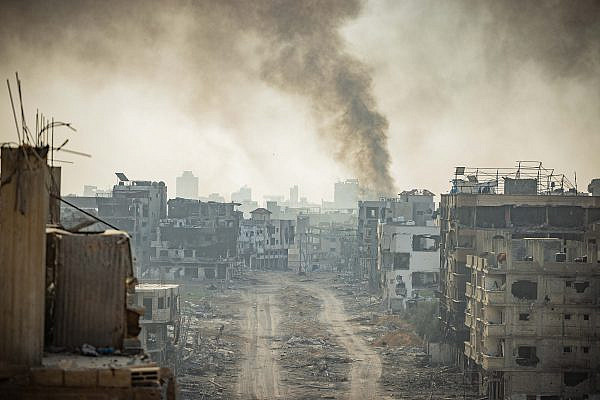
Fifty years on, its legacy continues to shape the community’s political and public consciousness. Yet this anniversary arrives under exceptionally grim circumstances: Israel’s ongoing war of annihilation in Gaza, escalating state-backed violence and displacement in the West Bank, and the crisis of organized crime ravaging Palestinian citizens of Israel.
To reflect on the meaning of Land Day today, I spoke with Dr. Nabih Bashir, a leading Palestinian scholar of sociology, political science, and Jewish thought. A native of the northern city of Sakhnin, Bashir has engaged with Land Day over the years through both research and his own experience as an activist; in his 2006 book “Land Day — Between the National and the Civil,” he offers one of the first comprehensive analytical studies of the event, examining how it continues to function as a national and political compass.
In our interview, Bashir discusses the place of Land Day in historical memory, the transformations within Palestinian society since 1976, the impasse facing Palestinian political mobilization today, and the challenge of preserving the spirit of this day as a living political idea rather than a static memory.
The interview has been edited for length and clarity.
What is the personal significance of Land Day for you?
Land Day has accompanied me since childhood. In March 1976, I was 7 years old, and I still remember that day vividly. I stood with my mother and siblings on the balcony of our home in Sakhnin, listening to the sounds of commotion and gunfire that filled the air.

Our house was located on the northern edge of the city, about three kilometers from the main street where the central events unfolded. At the time, my father, together with several landowners, was on our land in Al-Mal, the area then threatened with expropriation by Israeli authorities and declared a closed military zone.
That early experience fused in my consciousness the connection between land, dignity, and existence. Over time, I came to understand that Land Day was not a fleeting protest, but a moment of collective transformation that imposed itself on Palestinian leadership within Israel and united the public around the recognition that we are not rightless subjects, but landowners entitled to a dignified future.
How has the meaning of Land Day changed for you over the years? And what does that reveal about broader changes in Palestinian society in Israel?
My understanding of it has indeed changed over the years, especially after the High Follow-Up Committee for Arab Citizens decided to turn Land Day into a day of protest, and at times even into a kind of festival where people demand civil equality. This shift eroded the national dimension of the event, which originally demanded recognition that we are part of the Palestinian people and a national group within Israel, entitled to collective rights and not merely individual civil rights.
This transformation began after the First Intifada in the late 1980s. At the time, I saw it as reflecting Arab leaders’ fear of how the Israeli state apparatus would respond. Later, with the Madrid talks that preceded the Oslo Accords, Land Day increasingly became a rhetorical event, with its national dimension further weakened. Meanwhile, various parties and movements competed for leadership of the event, including the Communist Party, the Progressive Movement, and Abnaa Al-Balad (“Sons of the Land”).

At the same time, Palestinian society itself has changed enormously since 1976. The political and social reality shifted, as did the tools of action. Yet one thing has remained constant: society’s capacity to awaken and resist when its existence is perceived to be under threat. At times, the problem is not the public’s will, but the absence of courageous, far-sighted political leadership.
As crises intensify — as we can clearly see in the struggle against organized crime — the street once again puts the struggle on the agenda. This shows that the forces within society are not extinguished. Alongside this, each new generation grows up with a greater sense of confidence, more open to global experiences and ready to develop new tools that express its own language and aspirations.
However, there is a visible decline in the quality of political leadership and its degree of courage, both locally and in the Arab world more broadly. Many leaders have become captive to narrow calculations. What remains constant is the public’s political instinct and its ability to distinguish between constructive and harmful platforms.
Is the crisis we are living through today deeper than the one that existed before Land Day?
No. We face many crises today, but they are no deeper than those that preceded 1976. At the time, our political consciousness was forged under military rule, in a reality shaped by fear and the struggle for basic survival. Today, the challenges are different: discriminatory policies in education, economics, land, and housing; the absence of effective support from the Arab world; and the weakening of international institutions.
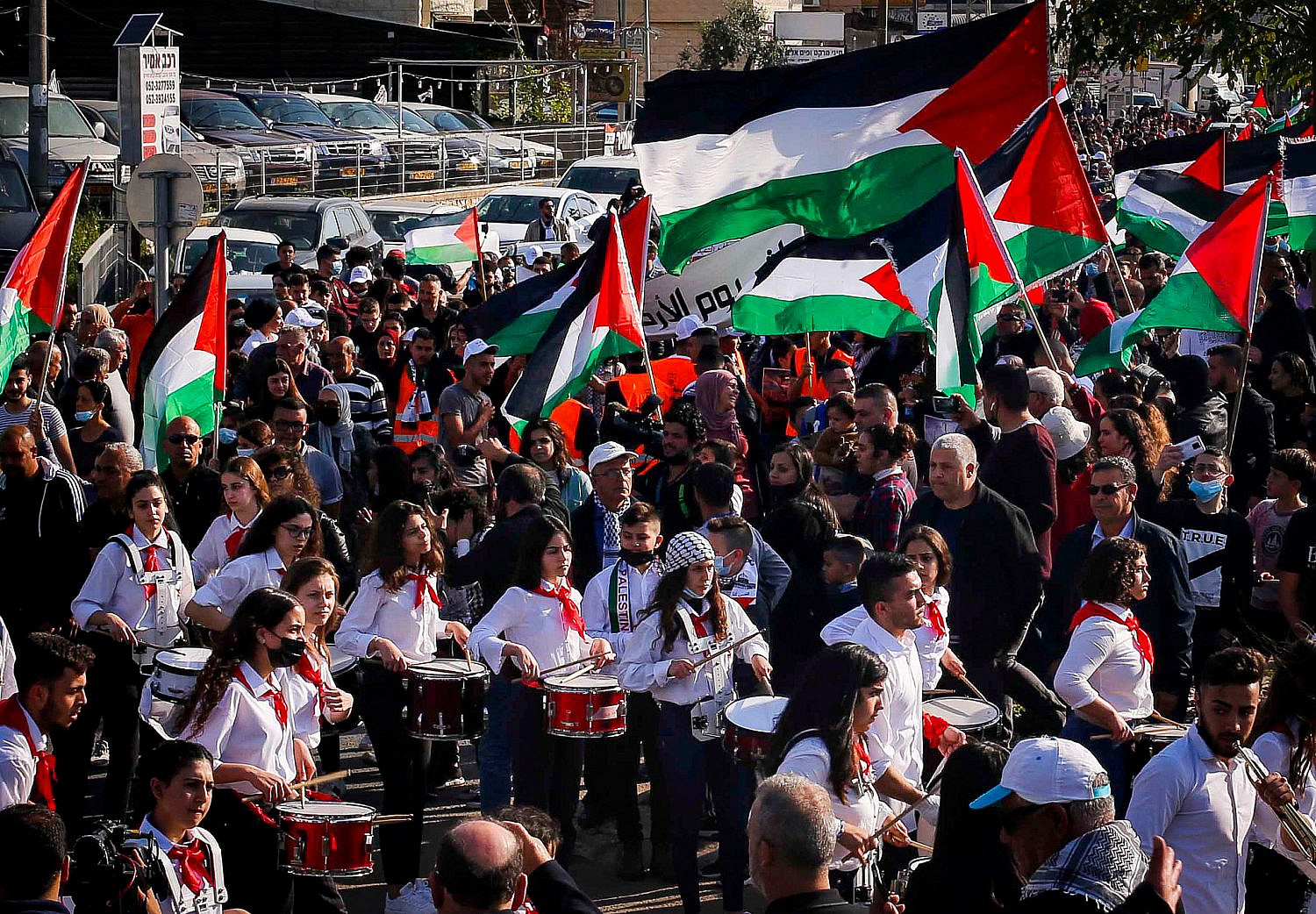
At the same time, a profound social transformation is underway. The role of the family has weakened, crime is spreading, and divorce rates are rising. These are signs of erosion in the social fabric, but also part of a broader process of change that requires conscious leadership capable of guiding it.
In your book, you describe Land Day as a compass for society and a moral-political moment. Does it still function in that way 50 years on?
Yes. Its form may change, but its essence remains the same. Land Day embodies a belief in our collective capacity to resist policies that threaten our existence and seek to deny our rights. This compass is not a slogan, but a renewed awareness that continues to guide political and social action.
Some argue that Land Day has, over time, become merely symbolic. Why is that, and what is the danger that this poses?
It became symbolic primarily because political leaders claimed a monopoly over political action and sought to confine it within narrow boundaries. Yet even in years when Land Day appears largely ceremonial, symbolism carries a cumulative educational power. Collective memory shapes consciousness, and consciousness in turn generates new tools for struggle.

The danger lies in reducing Land Day to an empty annual ritual. Its educational role is to raise awareness, provoke questions, and encourage a renewed examination of reality each year. The challenge is to pair commemoration with clearly defined goals suited to the present moment — goals that reflect a broad Palestinian national consciousness, rather than being limited to civil demands alone.
The issue of land and housing lies at the heart of Land Day. How do land and housing policies shape Palestinian society’s sense of security and belonging?
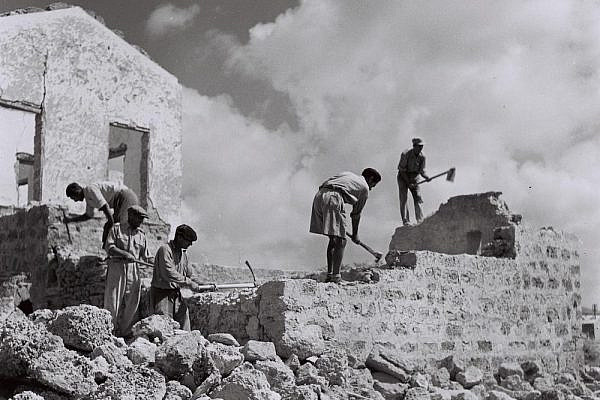
The issue of land and housing remains a ticking time bomb, given Israel’s discriminatory policies and the absence of serious, timely solutions. Villages and cities have become almost as densely packed as refugee camps, intensifying social and psychological pressures and affecting all segments of society, rich and poor alike. Land reserves have nearly been exhausted, and opportunities for expansion have narrowed significantly.
However, this does not necessarily weaken the sense of belonging. On the contrary, the concept of belonging today is broader and more mature than in the past. If, in the 1970s, moving between towns or villages was often perceived as severing one’s connection to a place, today historic Palestine is increasingly understood as a single space of belonging. Movement within it does not diminish that sense, and may even strengthen it.
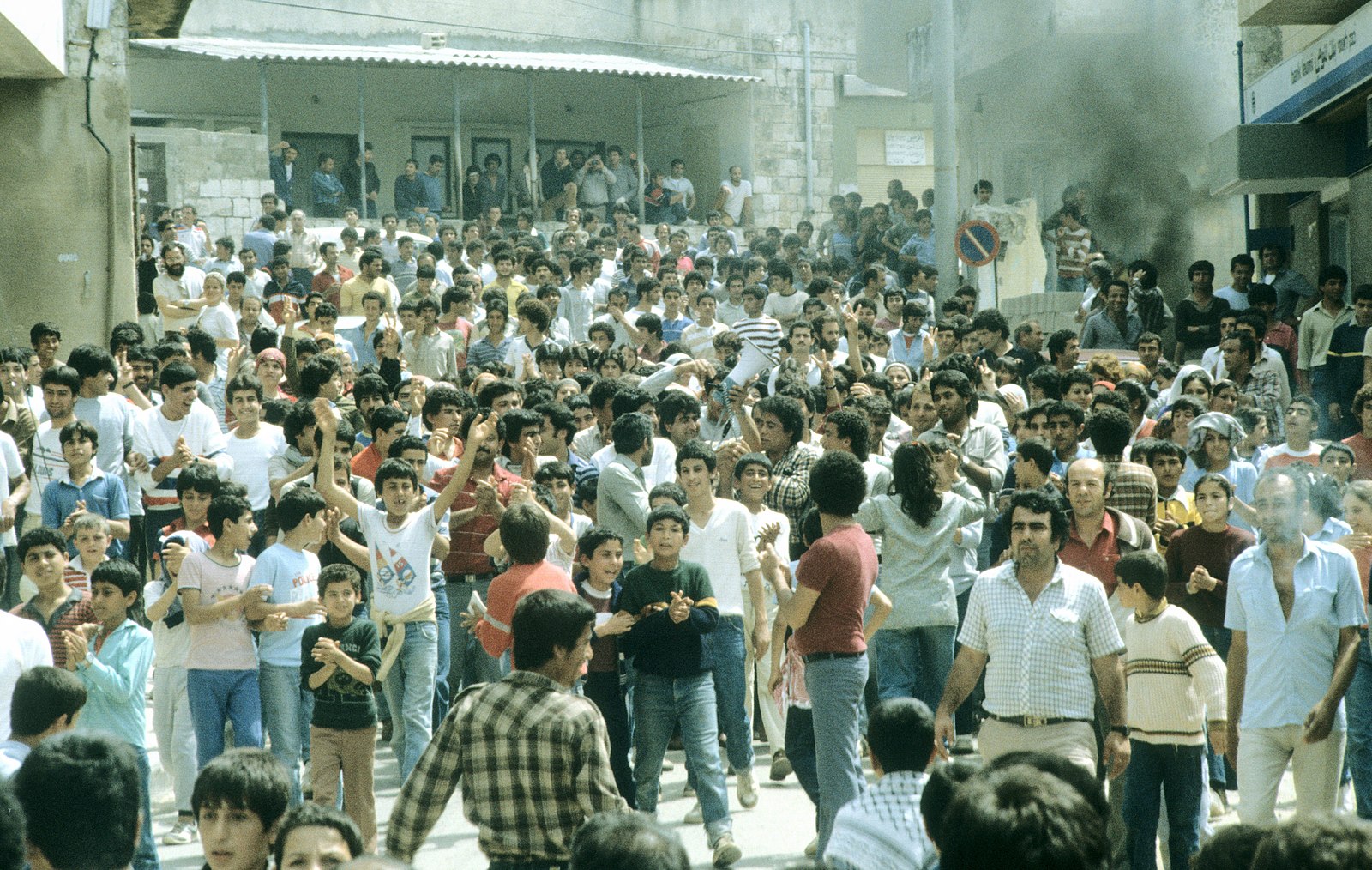
What is the place of Land Day in the consciousness of the younger generation of Palestinians in Israel?
Young people do not experience Land Day in the same way we did, but neither are they alienated from it. They engage with it in their own language, one that brings together personal and collective concerns, and they seek new forms of expression beyond the traditional frameworks of political parties and movements. Within their consciousness there are still layers that have not yet been fully explored, but they point to latent forces and a real potential for renewal.
Most read on +972
How would you summarize 50 years of Land Day, and what is the message that should endure today?
Land Day was a decisive moment in shaping our collective political consciousness. Its meaning continues to evolve with each generation and shifting political context, and it remains alive as long as the public energy and political dynamics that gave birth to it are sustained.
The central message [that should endure] is that rights are not given; they are achieved through conscious, organized action. We do not have the luxury of waiting or relying on external institutions. The responsibility lies with us: to organize, to defend our existence, and to secure the future of the generations to come.
A version of this article was first published in Hebrew on Sabra. Read it here.