


A young man dressed in black, his face obscured by a helmet, rides a motorcycle into a gas station. The TikTok clip is unremarkable at first glance, but with the sound on, it tells a different story: Lyrics reference “the killer in a black helmet.” A few scrolls down on my feed, a photo montage shows a similarly dressed figure holding a firearm beside a row of motorcycles. “We will take our right and beyond, in front of the world, and we will shoot,” the background track declares.
As I swipe further, I find variations on the same imagery. Bundles of cash are displayed inside the glove compartment of a luxury car cruising in traffic. Another post features a faceless motorcyclist and a caption that reads like a coded threat: “Tell the birds to sing away, for it is time to hunt them.”
Hundreds of TikTok videos like these are circulating widely among Palestinians in Israel. Black clothing, concealed identities, weapons, motorcycles, luxury cars, and cash: This is the visual identity of a new intimidation campaign, as criminal organizations tighten their grip on Palestinian communities and continue to escalate their attacks.
Last year, Palestinians accounted for 252 of the country’s 305 murder victims, despite making up just 21 percent of the population. The pace has not slowed: Since the start of 2026, 81 Palestinian citizens of Israel have been killed in incidents related to criminal networks, while four more have been killed by police. Protests against the spread of organized crime, which many see as a deliberate Israeli policy of inaction against the perpetrators, have been largely blunted by the recent war with Iran.
Now, the same criminal networks that instill fear in Palestinian neighborhoods project it onto phone screens. While some videos show young men firing weapons, much of this content rarely shows explicit acts of violence; instead, it relies on suggestion. A slow-motion shot of a Mercedes G-Class cruising beside a black motorcycle is paired with a looping line: “Abu Jourano does not joke, and the killing is getting closer.” In that grey area between suggestion and direct incitement, these clips can be framed legally as performance to help remain outside the bounds of prosecution.
@mohamad.abo.ghaza #ماشاءالله_تبارك_الله????✋ #حيفا_فلسطين_عرب_48_الناصرة???? #تمكس560_???????? #كسبورررررر???? #صلوا_على_النبي♥????????
Dr. Eilat Maoz, an anthropologist who studies the relationship between state institutions and organized violence, told +972 Magazine that such performances serve a purpose beyond mere bravado. “Power must be displayed, narrated, and recognized,” she explained, especially “when state authority feels distant or ineffective.”
At times, the boundary between performance and documentation collapses. Some videos appear to show real attacks — gang members filming themselves killing their victims or shooting at businesses to extort protection fees — uploaded by burner accounts linked to prepaid SIM cards. The clips are often removed soon after, but not before they circulate more widely, amplifying their intended effect.
Afnaan Kanaan, a media and communication researcher at the Palestinian digital rights organization 7amleh, sees the phenomenon less as a collection of isolated clips than as a sustained pattern that gives the criminal imagery its force. “For us, the question is not just whether the content shows violence,” but rather “how repeated exposure shapes perception,” she explained. “When certain aesthetics like black clothing, motorcycles, and war metaphors are circulated thousands of times, they shift from exceptional to familiar.”
At the same time, the effects are not uniform. “There are two reactions we observe: For some, the constant visibility produces fear and withdrawal from public space. For others, particularly young men in economically marginalized positions, the imagery can create a sense of power and belonging.”
But perhaps the most powerful impact of these TikTok clips is to compress the distance between public and private space. “When violent imagery enters your home through your phone, it changes the scale of fear,” Kanaan added. It also reinforces a clear message: There is no place criminal organizations cannot reach.
A new genre of Arabic music
Alongside these clips, music videos from the same visual world are spreading just as quickly on TikTok. Many feature singers who have developed what now resembles a distinct genre. The tracks are fast, abrasive, and repetitive, often naming individuals, praising known criminals, and referencing weapons in blunt, unvarnished terms.
Some songs go further, alluding to specific killings, glorifying those involved, and expressing pride in the perpetrators and their associates. These tracks focus almost entirely on themes like dominance, loyalty, and personal power.
Watching these scenes, it is hard to escape the sense that these young men are operating within a parallel reality, one with its own language, symbols, and codes that sits uneasily alongside the everyday life of most Palestinians in Israel.
@abrahemheeb3
“The imagery reinforces the music, and the music reinforces the story these guys want to tell society — the same society that has given up on them,” said Rami, a young Palestinian man from a village in Israel’s north who works in video production and requested a pseudonym. He grew up among some of the gang members now highly visible on social media.
On TikTok, these performers command large audiences. According to Kanaaneh, 7amleh found that around 1,000 of these videos had generated more than 117 million views, highlighting the wide exposure of this type of content. Their songs are used as background audio in the clips of masked men, motorcycles, cash, and the same names of members of crime organizations recur across multiple music videos.
“This pattern may suggest that certain personalities play a central role in a broader ecosystem,” said Ameer, a young Palestinian man who is in casual contact with people involved in criminal networks in Nazareth’s Old City and who asked to use a pseudonym for safety reasons.
Rami said the content posted online is rarely incidental. Prominent individuals in crime networks are hiring these singers “just to send a message,” he said. “If there’s a singer, there’s money,” he added, explaining that when a singer mentions a particular name or praises an individual’s strength or reputation, attendees — usually figures seen as influential in these crime circles — place cash into their shirt in front of the camera.
Here, TikTok functions to make the power and threat of organized crime visible to all. “If someone wants to send a warning, they do it on TikTok. Let everyone see [and] be afraid,” Rami said. “They want a public threat.”
For criminal gangs, the platform also serves as a tool for branding and even recruitment. Rami attributed the pull of these gangs to deeper socioeconomic fractures. Many of the young men joining these networks, he said, grew up in unstable homes and face limited job prospects. What often begins as minor criminal activity can escalate quickly — to selling weapons, drugs, and even the prepaid SIM cards used to coordinate these transactions, which can be sold for up to tens of thousands of shekels. “Money is fast,” Rami added.
Rami also pointed to the lack of public recreational spaces available to youth in Arab towns and villages. During his own childhood in a small village in northern Israel, the only football field was closed by the municipality without explanation, removing what had been a rare safe space for boys to meet and spend their time after school.

Rawyah Handaqlu, a Palestinian lawyer and head of Eilaf–The Center for Advancing Security in Arab Society, explained that the absence of youth centers and organized activities creates a daily vacuum in which young people become more vulnerable to recruitment by criminal groups that offer income, power, and a sense of belonging.
“Young men who grow up without institutional recognition, whether economic, educational, or civic, may seek belonging in alternative hierarchies,” Maoz, the anthropologist, added. “Crime networks offer structure, status, and immediate validation.”
So why TikTok?
What draws these criminal networks to Tik Tok is not just its scale, but the way it captures attention. Unlike traditional platforms built around follower connections, TikTok’s “For You” feed relies heavily on algorithmic recommendations. Publicly available descriptions of the platform’s design indicate that videos travel far beyond an account’s immediate reach, propelled by watch time and interaction rather than audience size.
That dynamic becomes more consequential when the material in question is associated with criminal activity. TikTok’s community guidelines prohibit “threats, glorifying violence, or promoting crimes.” They also state that “a specific, credible, and imminent threat to human life or serious physical injury” may be referred to law enforcement. Yet many of the videos reviewed in this article — including clips that appear to threaten named individuals, and songs celebrating violent acts — remain publicly accessible.
Not all of this material meets the threshold of a “specific, credible, and imminent threat.” Still, its persistence highlights a gap between written policy and enforcement. The ambiguity of coded language and symbolic intimidation complicates moderation even as the underlying message remains abundantly clear to its intended audience.
In response to +972’s request for comment, a TikTok spokesperson stated that “All content on TikTok is reviewed and enforced in line with our Community Guidelines, and content that violates these guidelines is removed. Our definitions and classifications, including of credible and imminent threats, do not change based on language, local dialect, or coded language. We continuously work to strengthen detection across languages, including Arabic, and employ Arabic-speaking moderators familiar with regional linguistic and cultural contexts, including in Israel.”
The company also stated that it cooperates with law enforcement through formal legal channels, and that content promoting violent or criminal behavior, including material involving firearms, is subject to removal or restriction depending on context.

From a policing standpoint, the open displays of weapons and references to members of criminal groups in these videos do not automatically translate into prosecutable evidence. Abeer Baker, an independent human rights lawyer, cautioned against assuming that disturbing content automatically constitutes a criminal offense.
“Everything published online can serve as evidence,” she noted. But under Israeli criminal law, publication itself is not illegal unless it constitutes direct incitement, explicit threat, extortion, or another concrete offense. Content that functions as intimidation may fall short of these crimes if it remains ambiguous or stylized.
Baker, however, rejected the idea that the legal framework is inherently inadequate. “The law can address real offenses,” she said. “But someone has to transform what they see into a legal process. If there is material that appears to incite violence or cross a legal line, it must be documented and submitted as a formal complaint; without documentation, a complaint, and follow-up, the video remains only a video.”
As with violent crime, Palestinian communities also expect prevention, not only post-incident investigation. In that context, the question becomes not only what is legally prosecutable, but whether there is any structured policy to address open intimidation by criminal groups online.
“If this is a widespread phenomenon, it should not be handled only case by case,” Baker said. She pointed to the need for a more systematic approach — whether through police initiative, regulatory oversight, or even a civil society-based initiative — as opposed to relying on individual complaints to trigger action.
In February, speaking at a conference hosted by the Van Leer Institute and Tel Aviv University, former Commissioner of the Israel Police Kobi Shabtai claimed the police’s investigative capacity has been constrained in recent years. After the 2022 “Spies Affair,” in which the police’s use of Pegasus spyware against Israeli citizens was exposed, some of the technological tools previously used against organized crime were curtailed, leaving officers, in his words, “with their hands tied.”

The fallout from the Pegasus controversy continues to shape the public debate about surveillance power and oversight. Critics argued that surveillance practices had exceeded legal authorization, while law enforcement maintained that such tools were essential for tracking criminal networks.
Baker remains unconvinced that these constraints alone fully explain the current enforcement gaps. “The police have received expanded powers in recent years, including precautionary restrictions related to internet use,” she said, referring to legal tools that allow authorities to intervene even before a crime is committed, and permit imposing constraints on online activity that could contribute to violence or intimidation.
For Baker, the issue is not only the limits of the law, but how existing tools are applied in environments where threats are often conveyed indirectly — through symbolism, music and coded language. “Yet we have not seen clear evidence that broader tools alone reduce organized crime.”
Most read on +972
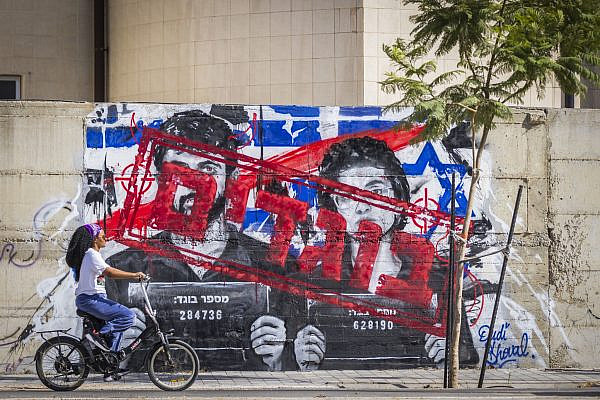
This gap becomes more visible when compared with how police handle other forms of online speech. In recent years, Palestinian citizens of Israel have been arrested or questioned over social media posts, including political expression and criticism of government policy.
The recent cases of Majd Asadi and a Palestinian woman from Harish, both detained for posting dissent against the current war with Iran, demonstrate that Israeli authorities can monitor online content, identify users, and act decisively when an issue is deemed a priority. That contrast raises questions about claims that online activity is too complex or difficult to police when it comes to organized crime networks.
Taken together with the spike in homicides, the proliferation of online activity by criminal groups leads many Palestinians to believe that the issue is not simply neglect. Rather, it is seen as an intentional decision by the Israeli state to allow these groups to take over Palestinian society and destroy it from within. Now, their authority is no longer confined to the streets, but asserts itself in the virtual sphere as well — and the state shows no interest in challenging it.
The Israel Police did not respond to +972’s request for comment.