
In partnership with

On Sunday morning, Ayman Dar’ama was watching over his children in Khirbet Samra, a small Palestinian Bedouin shepherding community in the northern Jordan Valley. Suddenly, four bulldozers approached, accompanied by several Israeli military and civilian vehicles.
“Someone from the army got out and told me, ‘If there are things you want to take out, do it quickly. We want to demolish [the structures],” Dar’ama told +972 Magazine. “I told the soldier to show me a demolition order. The soldier said, ‘You have the order,’ but there are no such orders.”
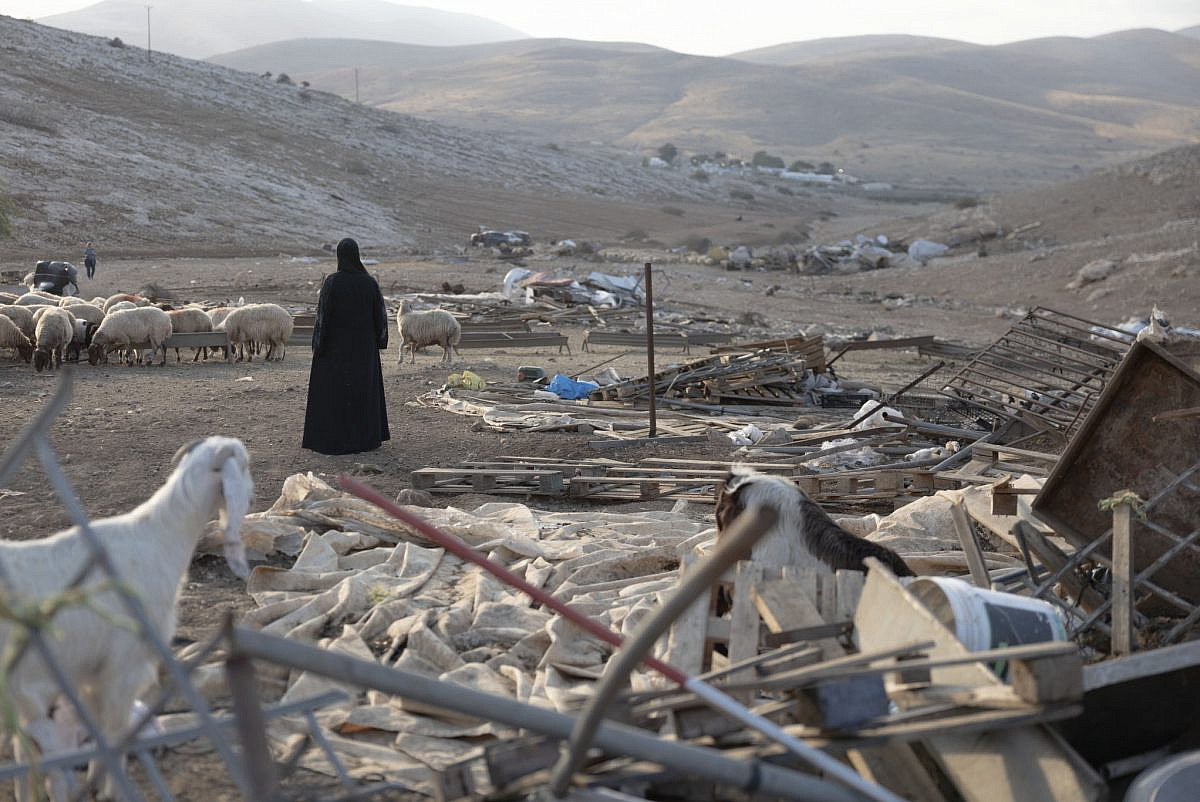
The bulldozers proceeded to demolish every structure in Khirbet Samra, including residential shacks, sheep pens, and bathroom facilities. They also uprooted trees and rendered the community’s solar panels, water tanks, and livestock feeding facilities unusable. The goal of the operation was clear: to leave nothing behind that could sustain life.
Khirbet Samra’s several dozen residents live on land they privately own in the occupied West Bank, and have long endured harassment by Israeli settlers. Over the past year, these attacks have intensified: An outpost was established on a nearby hillside, just a short distance from the community’s homes, and settlers have since invaded its lands, prevented residents from grazing their flocks, and even stolen livestock.
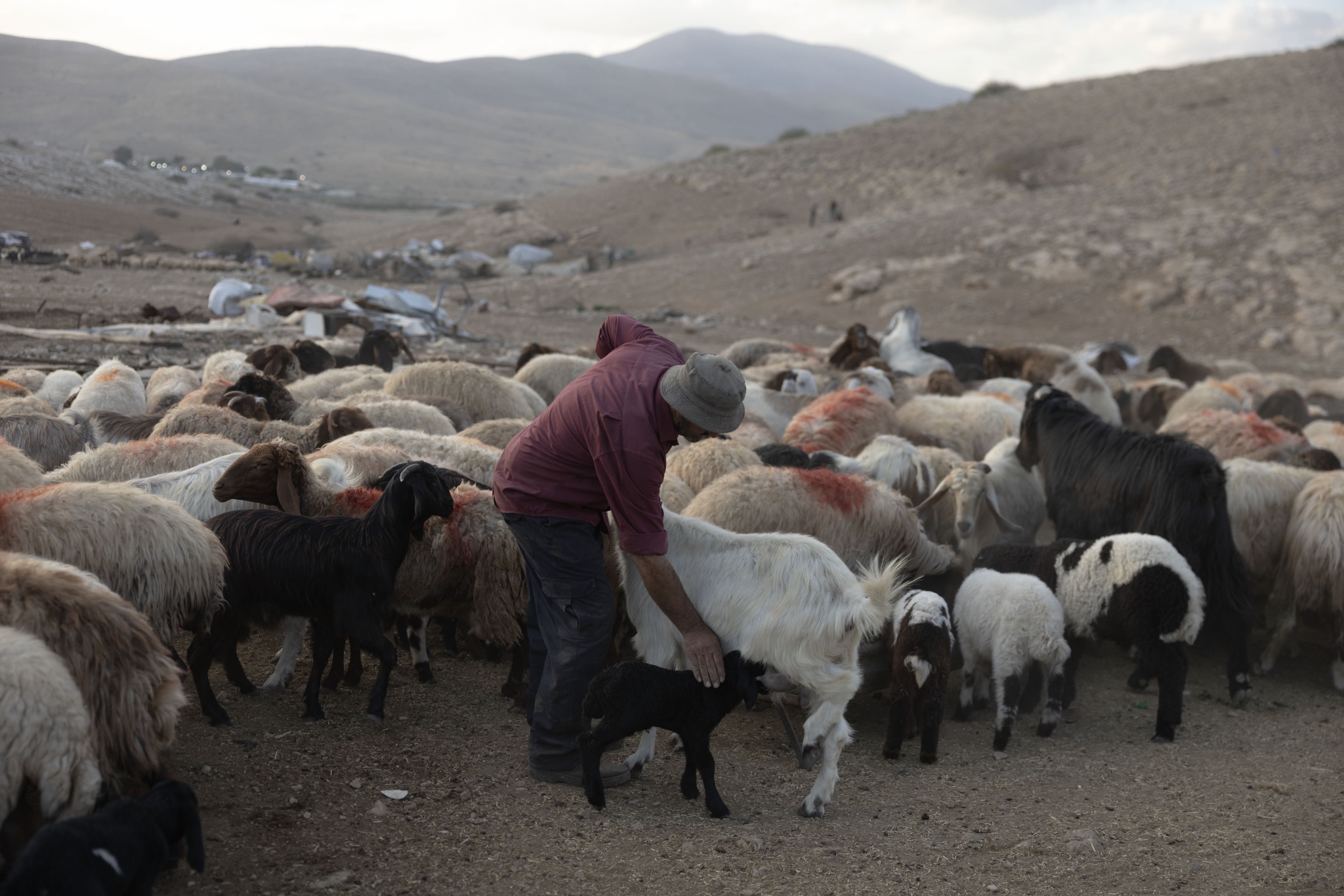
“The demolition wasn’t carried out under a military order, but was intended to appease [the settlers],” Dar’ama explained as he set up a temporary enclosure for his sheep the day after the community was demolished. “They destroyed everything — the trees, the water tanks. Their goal is to make sure we are no longer here. But I’ve lived here since I was five — where am I supposed to go? Just as they have the right to live with their children, so do I.”
According to the Israeli planning rights NGO Bimkom, as of May this year, there were about 30 structures in Khirbet Samra. In 2009 and 2010, Israeli authorities issued demolition orders for 10 of the community’s structures, some of which Israel subsequently destroyed, while others were dismantled by the residents themselves. Of the orders issued during those years, only four remained unexecuted.
In a legal opinion published following Sunday’s demolition, Bimkom noted that “for most of the structures, no demolition orders were issued at all,” so that “the destruction of the village was carried out without authority and in violation of the law.”
Since October 2023, state-backed settler violence has displaced residents of at least 13 communities and residential compounds in the northern Jordan Valley. Only 11 shepherding communities remain in the area, and in recent weeks settlers have intensified their efforts to drive them out — establishing outposts, bringing their flocks onto the communities’ land, and attacking residents. At the same time, the military has stepped up its arrests of Palestinian shepherds, often at the behest of local settlers, in some cases placing them in administrative detention.
The demolition in Khirbet Samra is part of a broader campaign that includes the construction of a separation barrier across the northern Jordan Valley, in an attempt to effectively annex tens of thousands of dunams of agricultural land and force Palestinian residents to leave. In March, Col. Gilad Shriki — commander of the Israeli military’s Jordan Valley Brigade — visited several communities in the area, including Khirbet Samra and told residents that they were permitted to graze their flocks only within the limited plots registered in their names in the land registry. In the vast open terrain surrounding them, meanwhile, Israeli settlers graze their livestock undisturbed.
“It would be better if you left,” Shriki informed the residents, “recommending” that they relocate to the western side of the barrier. “He said the homes required permits, and that in a week or a month he would come to demolish them,” one resident testified at the time. Yesterday, that threat became reality.
‘The power is in their hands’
In July, the Association for Civil Rights in Israel (ACRI) filed a petition with the Israeli Supreme Court demanding the state prevent the displacement of seven communities in the area, including Khirbet Samra. Following Sunday’s demolition, ACRI asked the court to issue an interim injunction allowing residents to rebuild the structures that had been destroyed. The court rejected the request.
In its response to ACRI’s petition, the Israeli Civil Administration noted: “The structures mentioned in your inquiry at Khirbet Samra in the Jordan Valley are known to the Supervision Unit, and enforcement and demolition proceedings have been initiated against them. The process of enforcing the law and demolishing the structures is being carried out in accordance with the operational assessment of the situation and the applicable law in the area.
“It should be emphasized that the lawyer representing those claiming ownership of the structures recently submitted a request to consolidate the cases into legal proceedings currently pending before the High Court of Justice. In light of the court’s rejection of the request to add the structures to the ongoing legal proceedings, there was no need to issue a renewed notice to the owners of the structures.”
Reut Shaer, an attorney at ACRI, described the Civil Administration’s response as “evasive,” saying that it “fails to explain why the illegal demolition of long-standing structures — most of which had never been subject to enforcement orders — was carried out. The community that was destroyed poses no security risk and is surrounded by illegal and violent outposts against which, needless to say, no enforcement action is taken.
“As for the ‘consolidation of cases,’ no such request has ever been made,” she added. “Following the demolition, the residents sought temporary relief from the court as part of the petition concerning the ethnic cleansing of the northern Jordan Valley of Palestinian residents, since the illegal demolition is an integral part of this policy.”
When Israeli soldiers arrived in Khirbet Samra on Sunday, resident Diaa Dar’ama tried to negotiate with them. “I told the soldiers, ‘Demolish the houses, but leave the water tanks for the animals and the toilets for the girls,’” he recalled to +972. “They told me to be quiet. They have no humanity; they destroyed everything.”
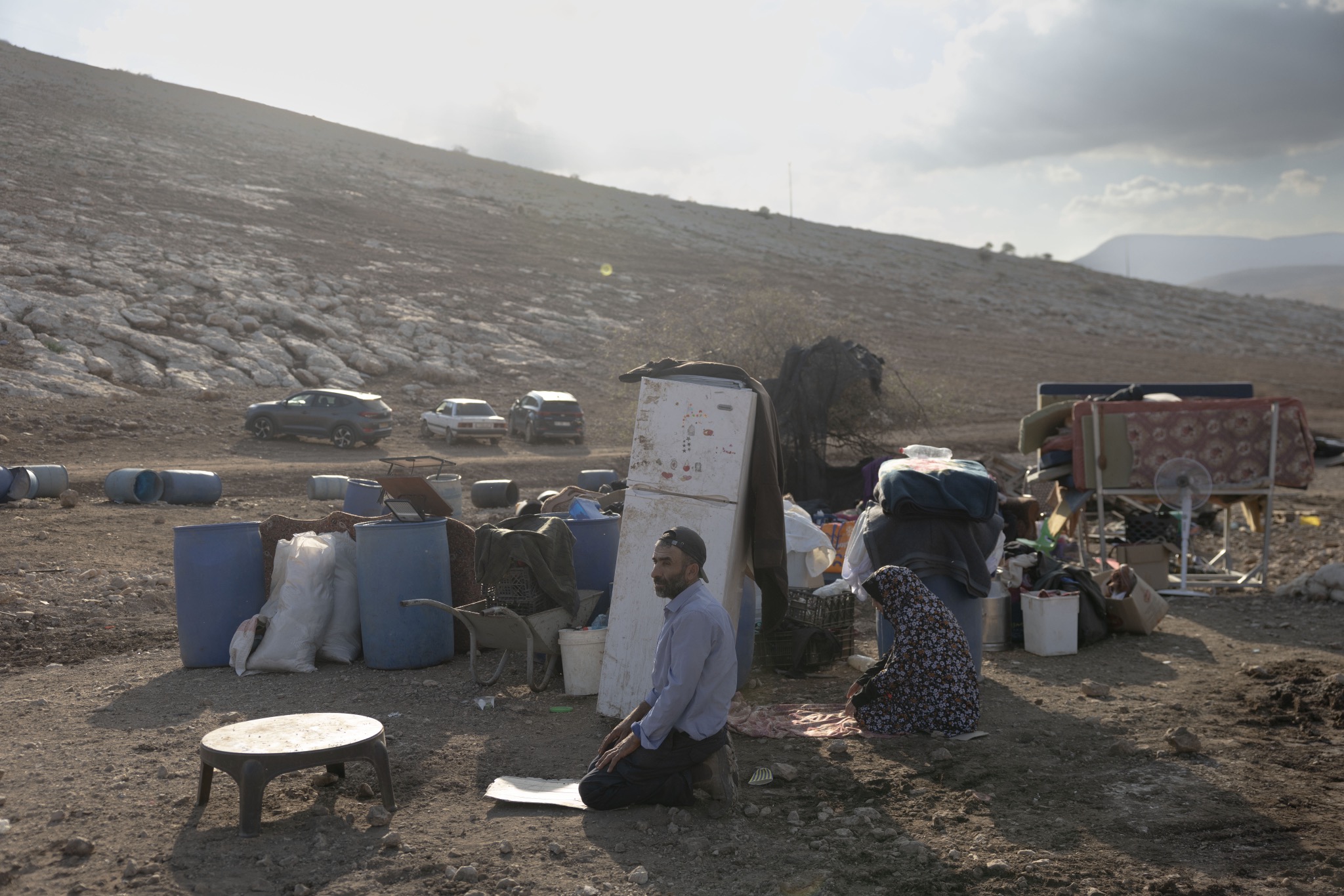
On Monday afternoon, Dar’ama fed his sheep that had scattered across the field, while his children sat in a makeshift living room he had set up beneath one of the two trees that had been spared. “They want to expel people from all of Palestine, not just the Jordan Valley,” he said. “Even those who went to Tubas [a Palestinian city west of Israel’s Jordan Valley separation barrier] are still being pursued by the army and the settlers.
“The settlers have told us more than once to leave. They have killed sheep, stolen things, brought their cattle onto our farmland, and blocked access to our grazing lands,” he added. “The power is in their hands, and we can’t do anything. But we will stay — this is our land.”
Most read on +972

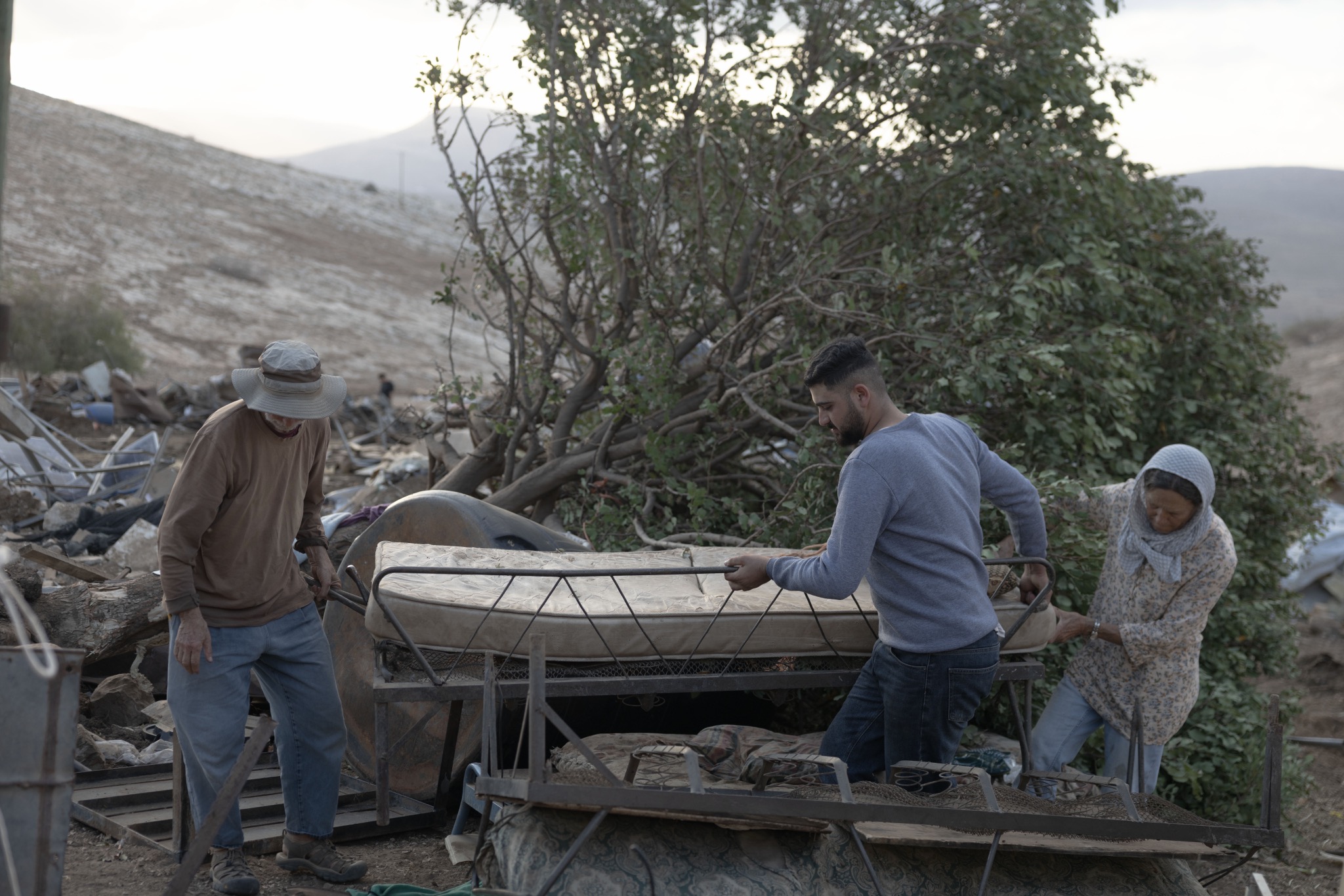
Shortly before sunset on Monday, Ayman Dar’ama and his family, with the help of activists, salvaged furniture from the rubble and tried to arrange a place to sleep under the open sky. Around them, chicks and lambs wandered in search of shelter. “My mother passed away, so this land is now my mother,” he said.
A version of this article was first published on Local Call. Read it here.