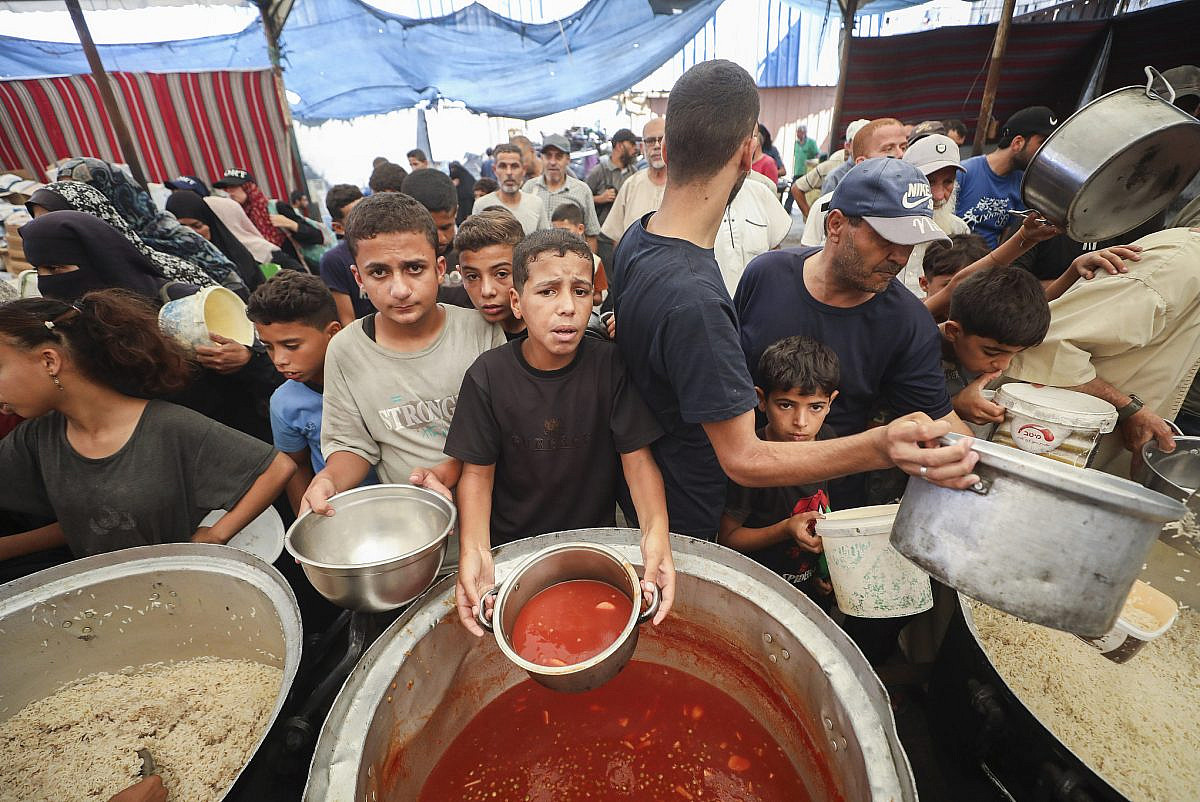
Every day, 60-year-old Rida Eliwa sends her orphaned grandchildren out in different directions to look for food. With 36 children to feed, she relies almost entirely on charitable distributions and leftovers from displaced neighbours. Often, all she can offer them is bread and tea.
“We don’t have money to buy the vegetables or white flour that remain in the market,” she told +972 Magazine.
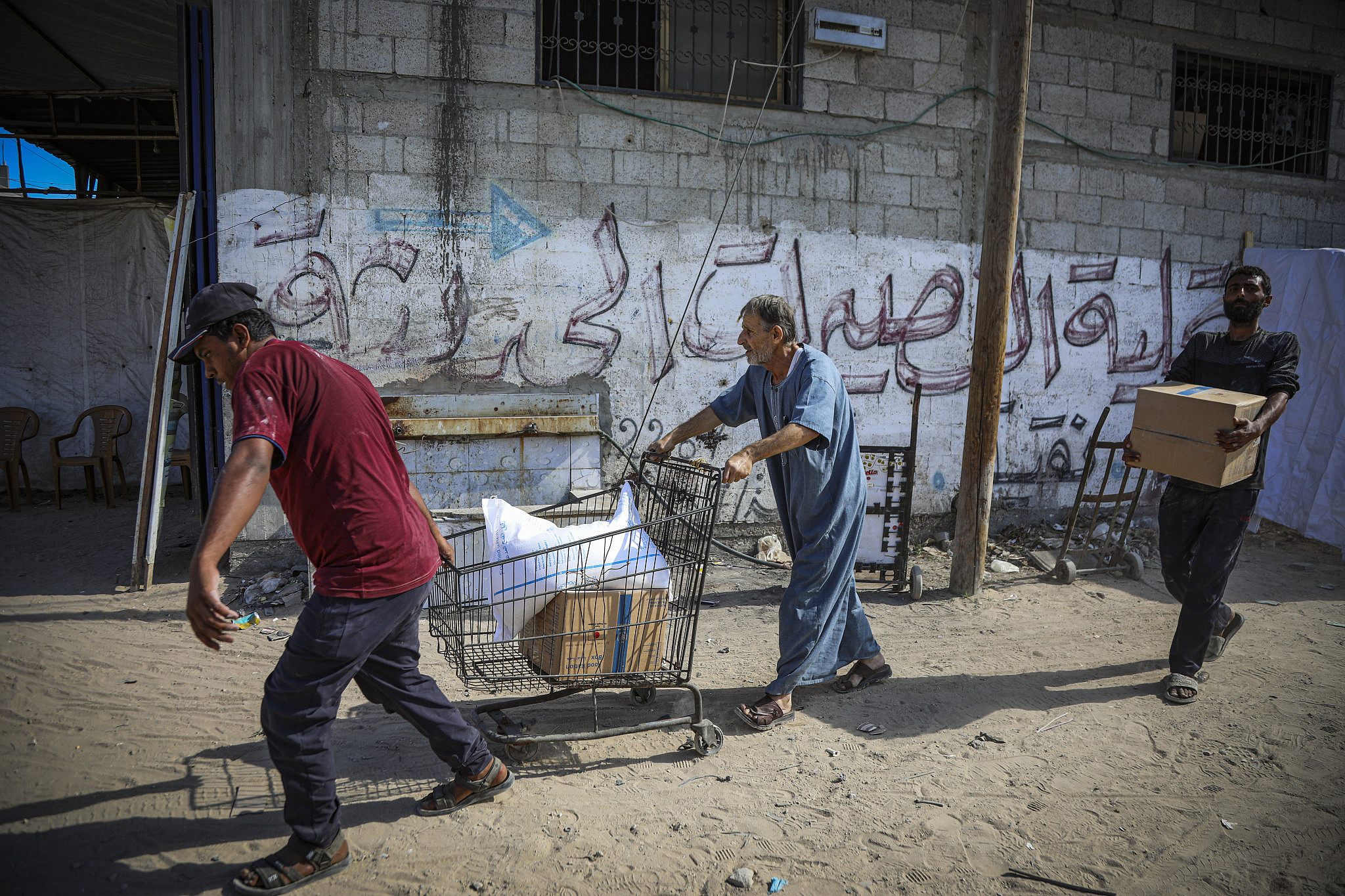
Israeli officials continue to claim that food is abundant in Gaza. But although a limited number of commercial and humanitarian aid trucks have resumed entering the Strip intermittently since the so-called “ceasefire” in October 2025, fresh produce and meat remain scarce and unaffordable for many displaced Palestinians.
According to the Palestinian Authority’s Crossings and Borders Authority, the number of commercial trucks entering Gaza in October fell by more than 50 percent compared to September, while the overall number of trucks entering the Strip fell by more than a quarter. And now, a funding shortfall within one of Gaza’s largest suppliers of food aid threatens to deepen the hunger crisis.
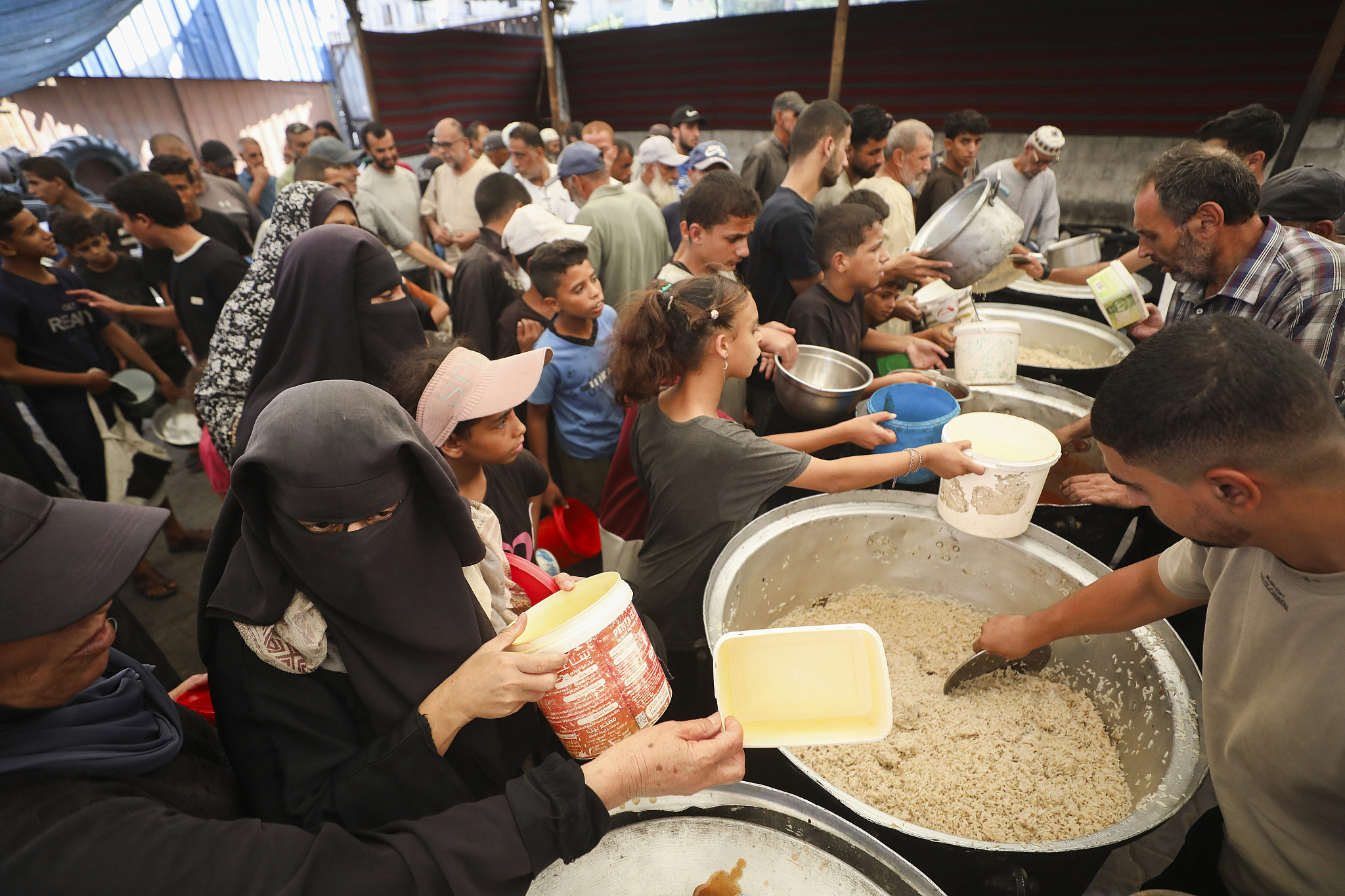
Last month, the UN’s World Food Programme (WFP) announced significant cuts to its assistance in the Strip: Having previously provided support for 1.6 million Palestinians, it is now only able to support 1.1 million. The news has raised fears of a return to famine as food provisions shrink and community kitchens scale back their operations.
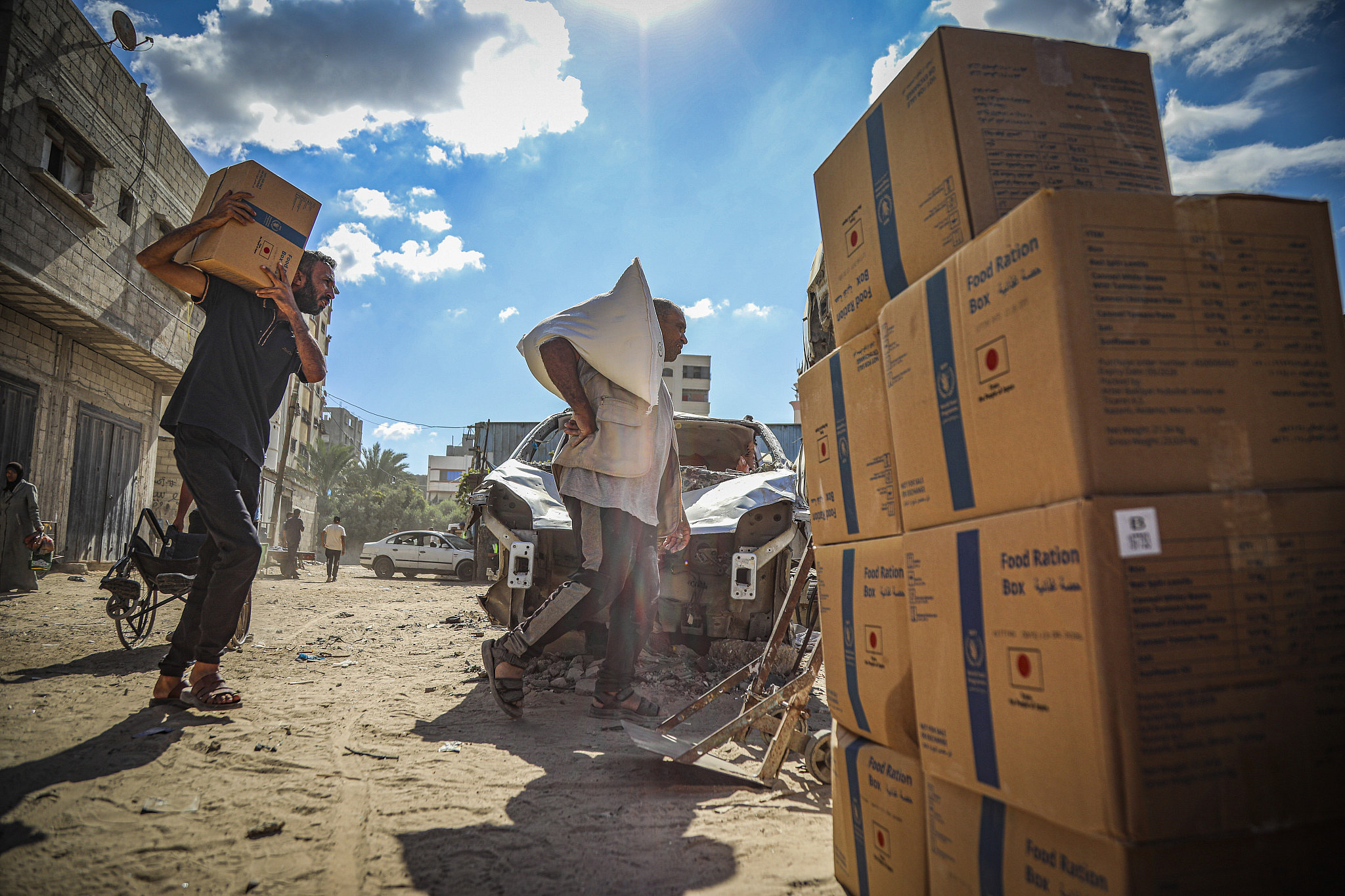
The cuts come as winter approaches, threatening to compound the hardships facing hundreds of thousands of Palestinians. According to the UN, almost 1 million residents are living in makeshift shelters at medium-to-high risk of flooding, as Israel continues to prevent reconstruction in the enclave.
Meanwhile, the daily production of cooked meals has fallen by 12 percent to approximately 614,000 amid funding constraints, while shortages of fuel, engine oil, and other essential supplies threaten health and water services. For Palestinians with chronic illnesses or food allergies, the scarcity of affordable food poses additional dangers, forcing some to choose between going hungry and eating food that could further jeopardize their health.
For Eliwa, the prospect of further aid cuts is especially frightening. Before October 2023, she lived with her extended family in Gaza City’s Al-Shuja’iya neighborhood. Since then, she has been displaced 24 times. Six of her children have been killed in Israeli attacks, five of them in a single strike on the family’s displacement tent in western Gaza City in September 2025.
“Many of my grandchildren were injured and I also sustained serious injuries to my kidney and head,” she said. “I left the hospital on my own because my husband and I were the only people available to care for the family’s 36 grandchildren.”
Eliwa and her family now live in a tent along the Mediterranean coast in western Gaza City, unable to return to their destroyed home, which lies beyond the “Yellow Line” in an area under Israeli military control.
“Before the recent Israeli restrictions and the WFP announcement, we were already struggling to feed the children,” she explained. I don’t know what will happen to us in the coming days.”
But it is her grandchildren’s hunger that leaves her feeling most helpless. “The children are crying. They are hungry and need to eat, but I have nothing to give them. I put a bowl of water on the fire and lie to them, saying that I am cooking, until they become distracted or fall asleep. I would rather a missile kill all of us than endure more pain.”
‘Their bodies cannot survive starvation again’
Eman Heriz, 42, has a wheat allergy that makes Gaza’s growing food shortages especially dangerous. Displaced from her home in Gaza City’s Al-Nafaq neighbourhood, which was destroyed during the Israeli ground incursion in early October 2025, she now lives with her family of four in a relative’s small house nearby.
Unlike celiac disease, an autoimmune disorder triggered by gluten, a wheat allergy is an allergic reaction to certain proteins found in wheat. Symptoms can range from abdominal pain and nausea to swelling and, in severe cases, life-threatening anaphylaxis. Managing the condition requires avoiding wheat-based foods, including many types of bread and pasta — staples that have become increasingly difficult for families in Gaza to replace.
When Heriz learned of the WFP’s planned aid cuts on social media, she immediately recalled the severe hunger she endured in March 2024, when she was forced to eat foods that made her ill.
“I had to eat whatever was available, like pasta, even if it contained gluten,” she explained. “This caused bloating and abdominal pain, as well as persistent dizziness. I fainted several times. Now, with vegetables scarce and extremely expensive, I have started experiencing the same pain again.
Her family now manages one late meal a day, usually lentils or rice without vegetables. At times, Heriz goes without food altogether rather than risk another painful reaction. “Sometimes I go through the day drinking only water,” she explained. “I feel hungry, but at least I avoid the pain in my stomach.”
The family’s resources were exhausted a long time ago. “We are a simple family. We cannot afford expensive food. My father was a builder, and he sold all his tools and materials to buy us food over the past three years.”
Heriz is particularly worried about her parents, both in their late 70s, whose health has already deteriorated under the strain of repeated food shortages. “Their bodies cannot survive starvation again,” she said. “My father fell into a coma last year because of grief and hunger. We cannot find enough food to feed him.”
Despite these conditions, Heriz continued working toward her PhD in accounting last year, often forcing herself to eat whatever was available to simply concentrate. “I was exhausted and hungry, but I needed to work,” she recalled of March 2025. “I had to eat whatever was available so I could concentrate and finish my work.
“I hope the Israeli forces allow the entry of vegetables, meat, fruit, and chicken, and that the WFP increases food assistance for displaced people in Gaza again and provides larger quantities of better-quality food,” she added.
Crying from the pain of hunger
For 43-year-old Reema Al-Draimli, who suffers from kidney failure and requires dialysis three times a week, access to nutritious food is essential to maintaining her strength.
Fearing another period of severe hunger, she and her husband recently pooled what little money they had left and went to the market to stock up on food. But it offered little of what they needed.
“The shelves were filled with biscuits, desserts, and energy drinks, while healthy food such as meat, vegetables, honey, and fruit was difficult to find,” she said.
Al-Draimli has already endured two periods of severe hunger during the war, when soaring prices put even basic staples beyond her family’s reach.
“During the first and second famine, I was crying from hunger,” she said. “I felt as if my body was eating itself. I experienced dizziness and stomach pain, and I lost 14 kilograms. We couldn’t buy white flour when it cost nearly $30 per kilogram.”
Most read on +972



Now she fears her already weakened body will not withstand another such ordeal. “I am always concerned about whether I could survive another period of starvation, since I have begun to lose my strength because of the lack of vitamins, healthy food, and clean water. I appeal to people around the world and international health organisations to pay more attention to kidney failure and cancer patients in Gaza before we are all dead.”
Al-Draimli’s husband, Said, said the constant worry over her health has made it difficult for him to concentrate on his work as a teacher. Much of his time is spent searching for food she can eat, often at the expense of his own ability to focus.
“Many bakeries closed last week,” he said. “When I go searching for an open bakery, I have to wait in long queues for hours to bring Reema bread before it runs out. I often reduce my own meals and cut back on my personal needs to make sure she has enough food to eat. No words can describe my helplessness when I see my beloved wife crying from pain because of hunger.”
In response to +972’s request for comment, COGAT, the Israeli army unit responsible for Palestinian civilian affairs, stated: “Claims of a food shortage in the Gaza Strip are disconnected from reality and serve the false narratives of a terrorist organization. During the ceasefire, over 2.4 million tons of food entered the Gaza Strip, more than twice the required humanitarian threshold.”
However, Gaza’s Government Media Office said on Monday that only 3,777 trucks entered the Strip in October out of the agreed 18,600. Since the ceasefire began, it added, only 77,657 of the agreed 232,800 trucks have entered the Strip.