

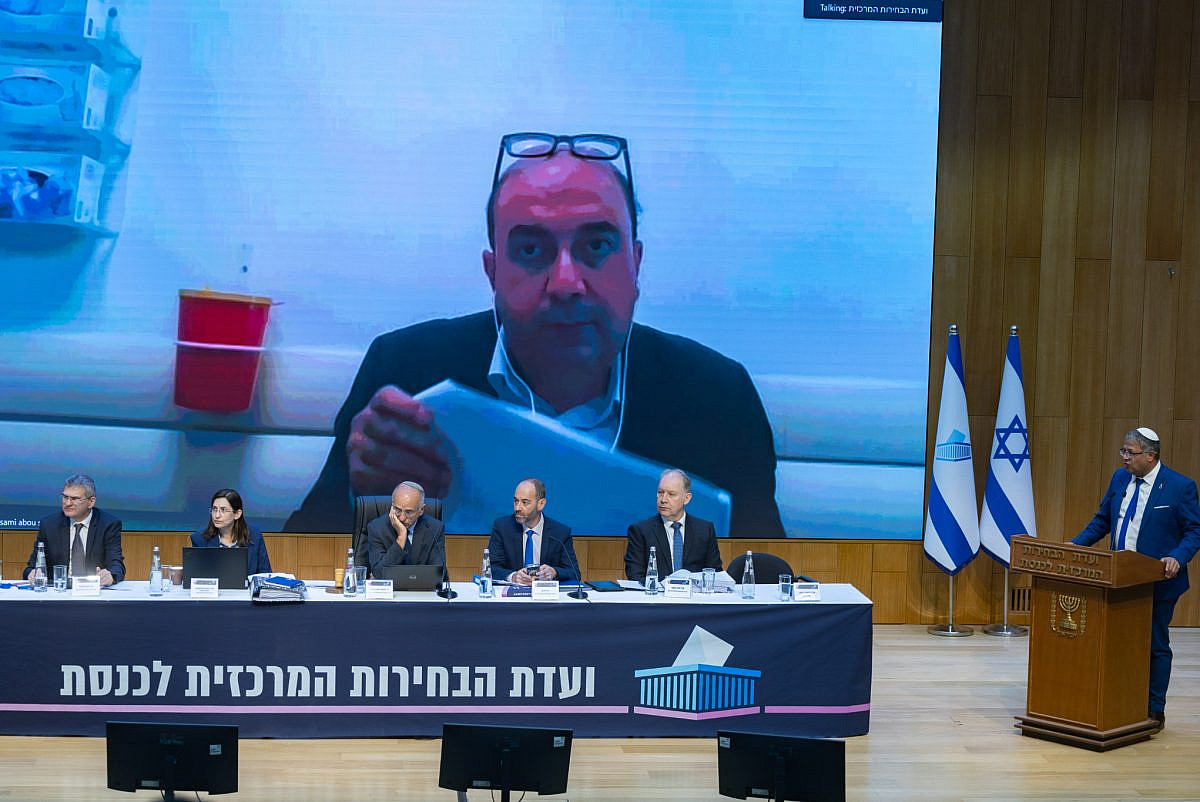
On September 23, Israel’s Central Elections Committee performed its ritual of banning Palestinian parties and candidates, voting to bar the Joint List, comprising Hadash, Balad, and Ta’al, as well as Mansour Abbas’ United Arab List (Ra’am). The committee also voted to disqualify two individual candidates: Hadash lawmaker Ofer Cassif and Balad leader Sami Abu Shehadeh, whose candidacy it rejected by a crushing margin of 31 to 4.
Since 2003, disqualification proceedings have become a fixture of nearly every election cycle. The committee is indeed an explicitly political body whose composition mirrors the balance of power in the Knesset, and after it votes to exclude Arab parties or candidates, the Supreme Court is then called upon to approve or overturn the decision.
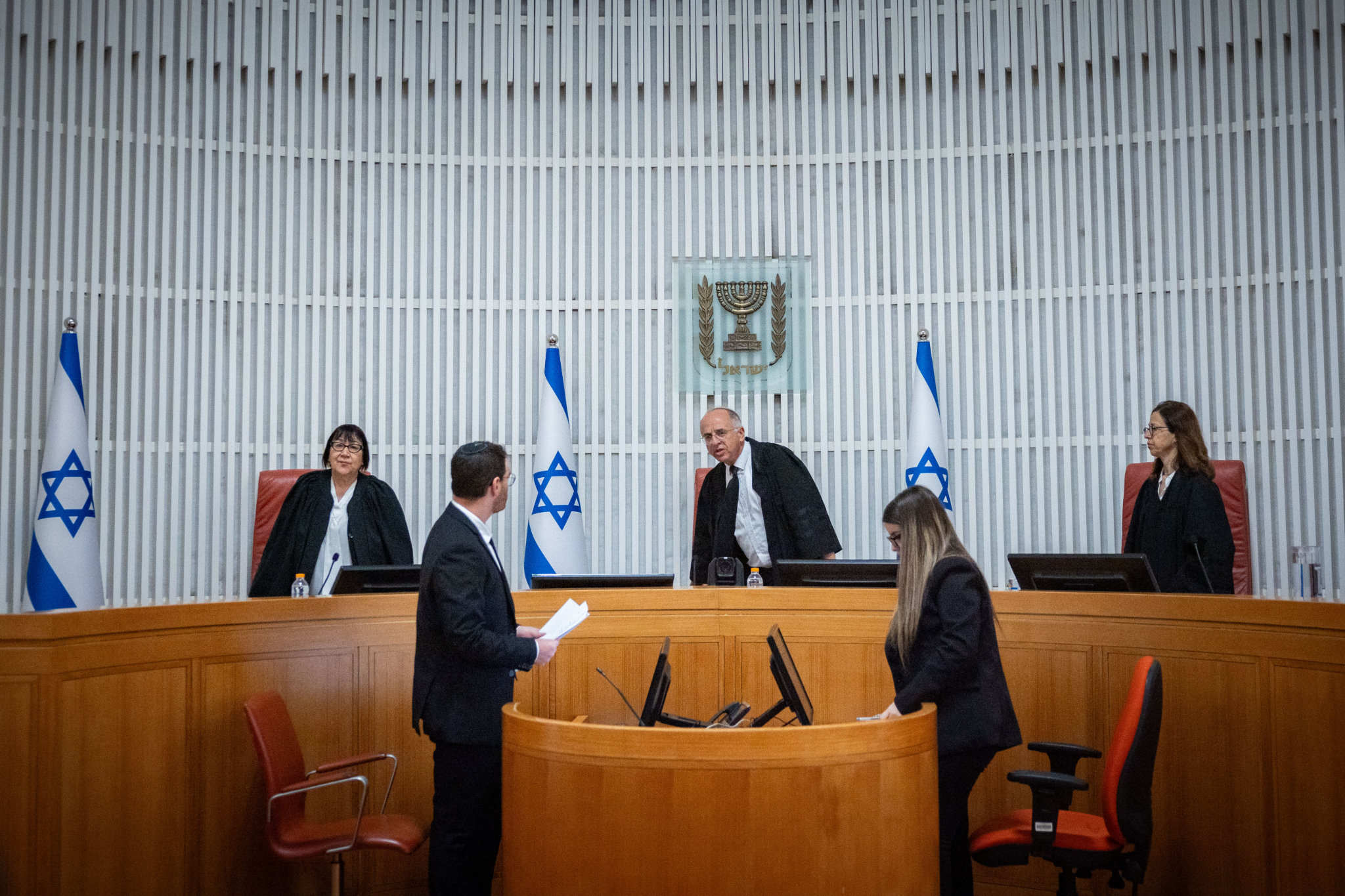
But the campaign against Abu Shehadeh in particular has broken with the familiar script, in ways that have raised fears that the Supreme Court — which is set to hear his disqualification petition on Thursday — might no longer serve as the backstop it once did.
The first indication came from Attorney General Gali Baharav-Miara. The Elections Committee had barred Abu Shehadeh on two of the three grounds set out in Israel’s Basic Law on the Knesset: negating Israel’s existence as a Jewish and democratic state, and supporting armed struggle by an enemy state or terrorist organization against Israel. (The third is incitement to racism).
Baharav-Miara’s position hardened over the course of the proceedings. Ahead of the Elections Committee hearing, she said there was a basis for the armed struggle allegation and urged the committee to “seriously consider” disqualifying Abu Shehadeh after hearing his response, but stopped short of explicitly endorsing a ban. Two days before the Supreme Court hearing, she went further: In a legal opinion submitted on Tuesday, she explicitly asked the court to uphold his ban on grounds of supporting armed struggle.
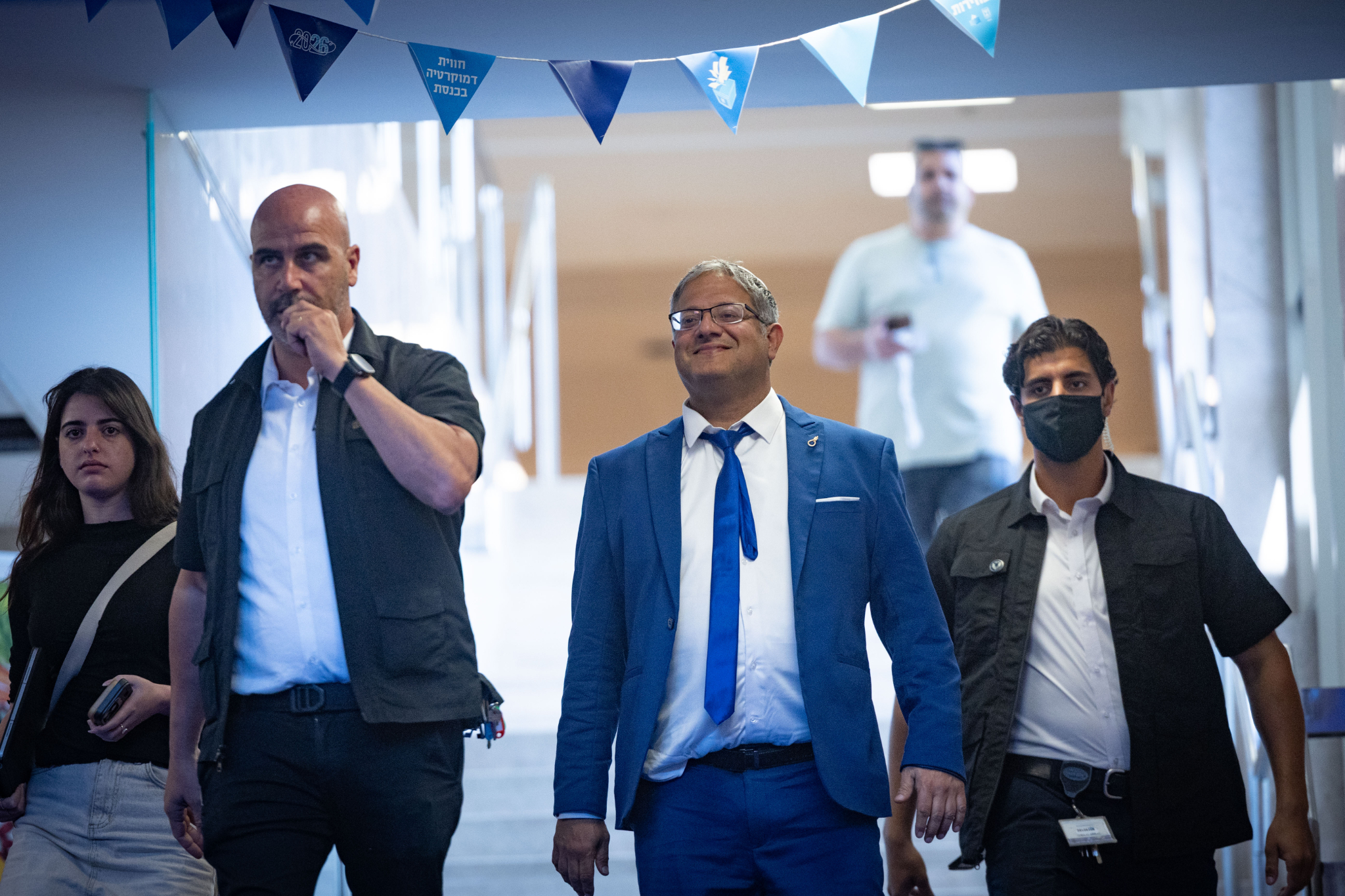
But both she and the committee provided no evidence for this charge other than what was cited in the disqualification bid, filed by Itamar Ben Gvir’s far-right Otzma Yehudit party: a single article Abu Shehadeh published on October 8, 2023.
In the article, Abu Shehadeh offered an initial reading of the unfolding events and their possible political consequences, calling it “a significant historical event in military, political, and strategic terms” whose “implications, consequences, and results will become apparent once the dust settles.” Part of this significance, he argued, was how the attacks revealed that “Israel and its intelligence services are human beings like us; they don’t know everything. Furthermore, it is possible to prevent them from infiltrating our countries, parties, and political movements … if small, besieged Gaza can do this, then others can do it more effectively and simply.”
For Baharav-Miara, the fact that Abu Shehadeh did not condemn the October 7 attack in the article, as well as his observation that “others can do” what Gaza did to prevent Israeli intelligence penetration, could constitute support for armed struggle. Abu Shehadeh rejected that interpretation, pointing to other statements in which he condemned the killing of civilians and expressed his opposition to political violence.
The significance of the attorney general’s position, attorney Sawsan Zaher argued, lies partly in how far it deviates from the court’s existing standard for disqualification. “Until today, the Supreme Court has maintained that one statement is not enough,” she told +972 Magazine. “There needs to be a substantial body of evidence –– several articles or statements — showing that support for armed struggle is the central objective of a candidate’s political activity. This is not present in Sami’s case.”
Yet Zaher said the attorney general’s position was widely understood as a signal that Abu Shehadeh’s disqualification could survive judicial review. “In practice, she gave the Supreme Court a green light, not only the Elections Committee,” Zaher explained.
Another unusual intervention came from Supreme Court Justice Noam Sohlberg, who chairs the Central Elections Committee. The judge personally voted to disqualify Abu Shehadeh, openly acknowledging that he was departing from the convention under which committee chairs abstain from disqualification votes in order to preserve their neutrality.
Perhaps most concerning has been the breadth of the political consensus. Support for excluding Abu Shehadeh stretches from Otzma Yehudit and the Israeli far-right across the governing coalition and well into the Zionist opposition — including the Democrats, led by Yair Golan, despite the party’s efforts to court Palestinian voters.
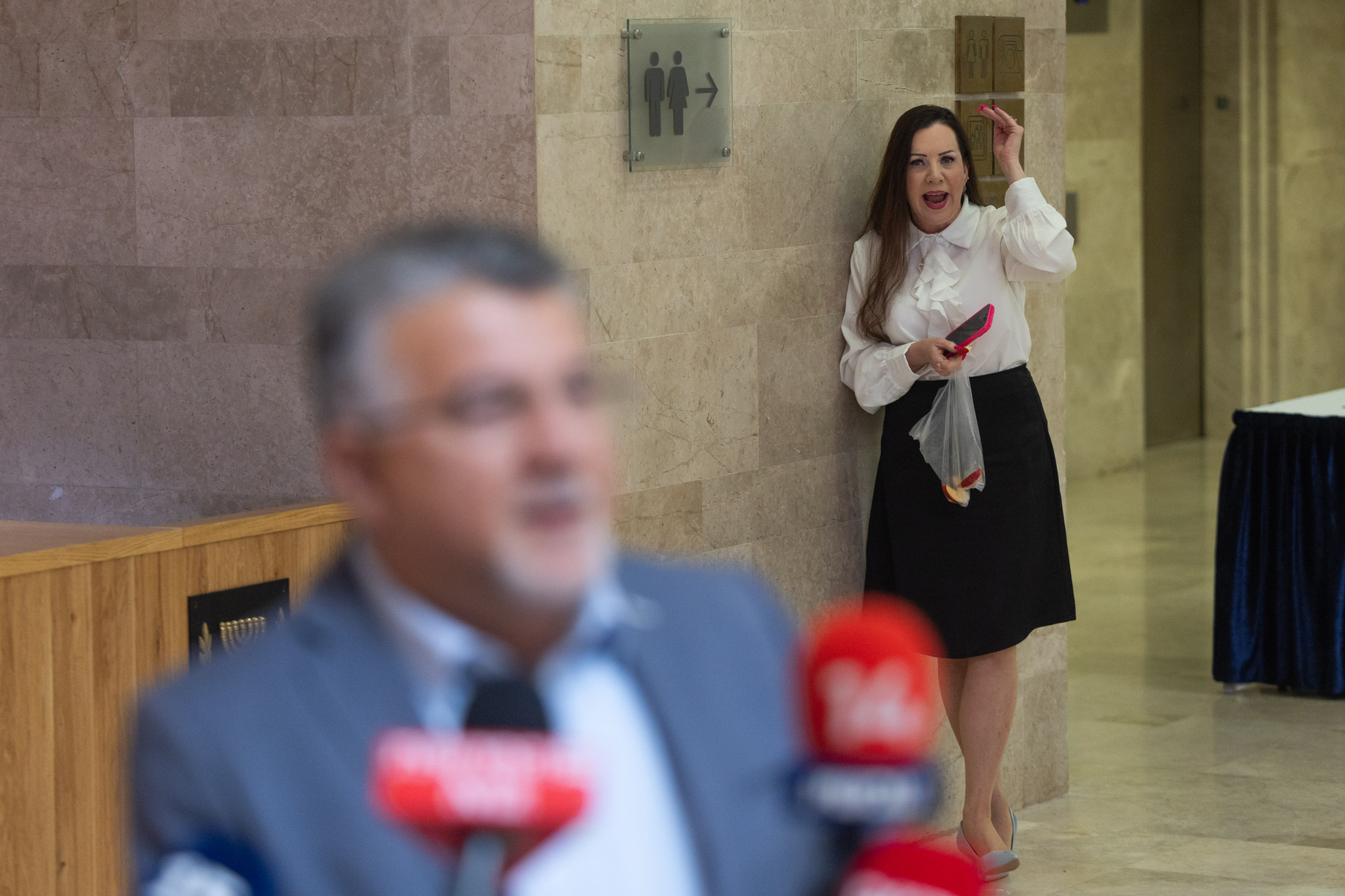
Writing about the disqualification decisions, Hadeel Abu Saleh — an attorney at the Haifa-based legal center Adalah — pointed to a glaring contradiction in the Elections Committee proceedings. Otzma Yehudit and Religious Zionism were also facing disqualification attempts before the committee, on the grounds of inciting racism and undermining democracy. Yet while Abu Shehadeh’s article was deemed sufficient to support his disqualification, she noted, the vast evidence presented against Otzma Yehudit and Religious Zionism was found insufficient to bar those parties.
“This is the heart of the discrimination claim: In one case, a single article subject to interpretation may suffice to deny the right to be elected; in the other case, a large body of evidence is insufficient,” she wrote, describing the disparity as “apartheid in the right to be elected.”
The withdrawal dilemma
Abu Shehadeh now confronts a dilemma. The Supreme Court could overturn his disqualification, but if it upholds it, it would give that exclusion the force of precedent — with deeper consequences for Palestinian political participation inside Israel.
As the far right celebrated the committee’s decision and Israeli media once again grilled Abu Shehadeh and Cassif over their political positions, that dilemma has prompted a heated debate among Palestinian intellectuals and political activists.
In a Facebook post, legal philosopher Raef Zreik called on Abu Shehadeh to withdraw his candidacy rather than allowing the Supreme Court to decide. His concern is not that Abu Shehadeh lacks a strong legal case under existing precedent, but precisely that the court may now be willing to break from it.
“I feel there is an appetite for disqualification among the Jewish Israeli public,” Zreik told +972. “If the Supreme Court upholds the ban, it would create a legal precedent.”
Zreik echoed Zaher’s observation that existing case law requires a consistent pattern of statements and actions demonstrating that support for armed struggle is a central part of a candidate’s political activity. But he nonetheless fears that “the current political and judicial climate could push the court to depart from these standards and disqualify him as a way of teaching Arab society a lesson.”
Nor is Zreik persuaded by the argument that an appeal would at least further expose the discriminatory nature of Israeli institutions. In his view, that reality is already well documented; demonstrating it once again is not worth the risk of creating a precedent that could later be used against Balad — which has repeatedly faced disqualification attempts — or other Palestinian parties. “Is the international community really waiting for an Arab party to be banned to understand the reality of Israel?” he asked.
Zaher shares Zreik’s concern about the changing judicial environment, particularly after October 7. “We have seen legal interpretations shift from purely legal concepts and standards toward considerations that also involve emotions and personal feelings,” she said. “This is not only about Sami, but about the judicial system as a whole.”
But she does not think Abu Shehadeh should withdraw. Given that he decided to run and defend his candidacy before the Elections Committee, Zaher argues, withdrawing now would show that the effort to exclude him had achieved its goal, without the Supreme Court ever having to endorse it.
Areen Hawari, a political activist and director of the Haifa-based research center Mada Al-Carmel, made a similar argument in a Facebook post, warning that withdrawal would amount to Palestinians accepting in advance the very political restrictions they are trying to resist. “The precedent we should fear is deciding not to challenge the court, and preemptively disqualifying ourselves before it even has to,” Hawari wrote. “The greater crime is that Israel would not even have to disqualify us — we would do it ourselves.”
Lawyer and human rights advocate Raghda Awad has interpreted the dilemma somewhat differently. In an article for Arab48 titled “Litigating in the Face of Certain Defeat,” Awad draws on her academic research to argue that even an unsuccessful legal challenge can produce political, organizational and social gains: forcing the state to answer Palestinian claims, for example, and preserving those claims in the judicial record.
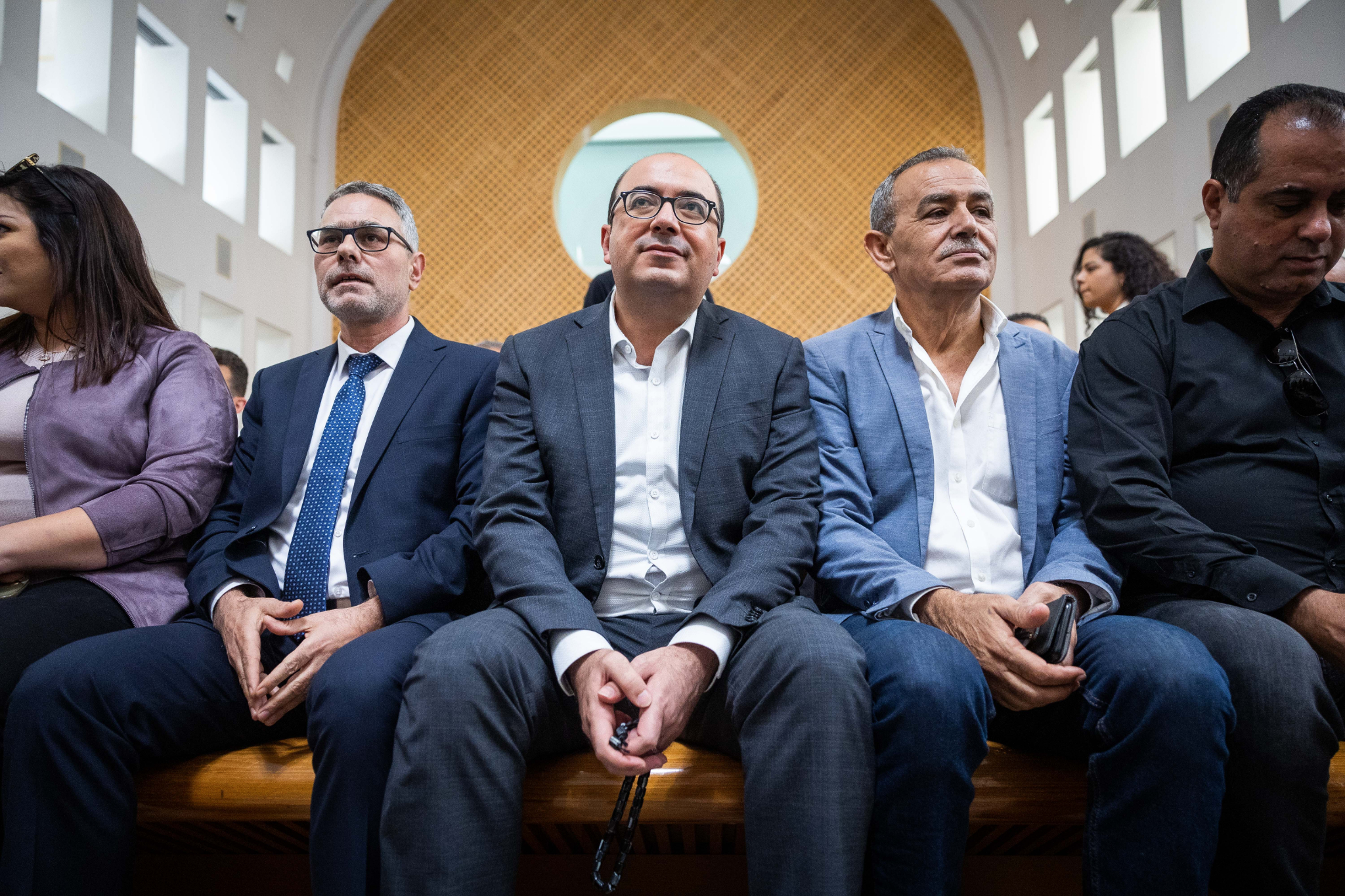
The question, in Awad’s formulation, is therefore not merely whether Abu Shehadeh can win at the Supreme Court, but what Palestinians hope to achieve by going there — and whether those gains are worth the potential cost of losing.
Where is the Israeli left?
The debate over Abu Shehadeh’s candidacy has once again exposed the formidable limitations of the “Jewish-Arab partnership” touted by parts of Israel’s Zionist opposition.
Among those supporting his disqualification were the Democrats, even as they opposed the blanket banning of Ra’am and the Joint List. In a statement published on September 23, the party insisted that they would defend Arab citizens’ right “to vote, be elected and take part in leading the state.
“But genuine democratic partnership also requires red lines,” the statement continued. “The things Sami Abu Shehadeh said just one day after October 7 are grave. Anyone who wants Jewish-Arab partnership does not speak this way. Period.”
The party went further, arguing that there should be “no exceptions for Abu Shehadeh and no exceptions for Ben Gvir — both should be disqualified.”
But Abu Saleh stressed that political disagreement, however profound, cannot itself meet the legal threshold for disqualification. “Due to the severe violation of the right to vote and to be elected, the law requires a clear, unequivocal and convincing evidentiary basis,” she wrote. “It is not enough to oppose a candidate’s positions, even when they are outrageous.”
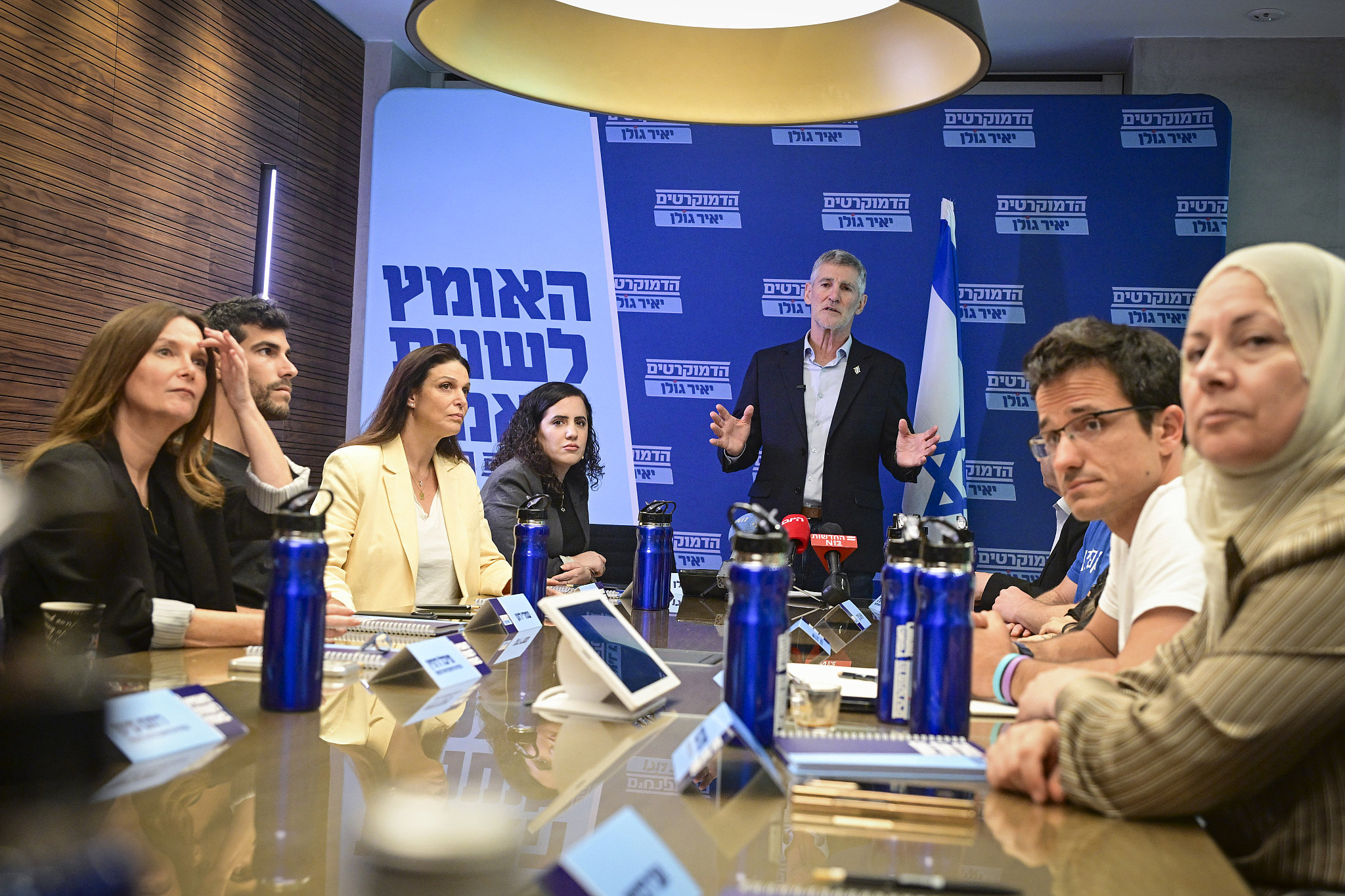
The comparison may prove detrimental for a party that has actively sought Palestinian votes. Yousef Makladeh, head of the polling firm Statnet, which specializes in Palestinian public opinion in Israel, said the Democrats’ support among Palestinian voters had fallen from around 75,000 votes to fewer than 20,000 since the party announced its support for Abu Shehadeh’s disqualification.
Discussing the backlash in a video, Makladeh explained: “It does not matter whether your politics lean left or right, aligning with [Likud MK Tally] Gotliv and Ben Gvir: When you put yourself in the very same box with them, don’t be surprised by the backlash.”
For Palestinian citizens being courted by the Democrats, that equivalence between Ben Gvir and Abu Shehadeh is unacceptable. Ben Gvir and his party are directly complicit in the genocide in Gaza and the dramatic increase in state-backed settler violence in the West Bank, while the national security minister has a long record of racist incitement against Palestinian citizens of Israel. Whatever one thinks of Abu Shehadeh’s Oct. 8 article, by placing him on the same political plane as Ben Gvir, the Democrats are casting a prominent Palestinian leader as beyond the bounds of legitimate democratic politics and reinforcing a far broader stigmatization of Palestinian political positions.
More importantly, the Democrats’ position raises a question about the kind of Jewish-Arab partnership the party is offering. If Palestinian citizens are welcome as voters and political partners only so long as their representatives remain within boundaries defined by Zionist parties, how equal can that partnership be?
“He is trying to become a version of the left that is acceptable to Israeli society — a society with a racist mindset that supports genocide. That is the public he is trying to win over,” Hawari said. “Even the Arab voters who supported him did so because they expected him to stand against Netanyahu. Once they realized he was following the same approach as Netanyahu, they withdrew their support.”
And this question of course extends beyond the Democrats. The Central Elections Committee decided to disqualify both major Arab-led lists. For Palestinian voters, the message was a familiar one: Their formal right to political participation remains vulnerable to a Jewish political majority deciding which forms of Palestinian representation are acceptable.
Most read on +972
Ra’am’s disqualification made that message even harder to ignore. Abbas spent years pursuing precisely the kind of pragmatic integration into Israeli parliamentary politics that Palestinian politicians are routinely told is required of them, evening joining the Bennett-Lapid coalition of 2021–2022. Yet Avigdor Lieberman’s Yisrael Beitenu, which served alongside it in the same coalition, also voted to disqualify Abbas’ party. The vote therefore also signals the constraints facing any future anti-Netanyahu coalition that might once again depend on Palestinian Arab lawmakers.
For Abu Saleh, the concern extends beyond Abu Shehadeh or any single disqualification decision. “If the right to be elected is subject to different tests in accordance with a candidate’s national identity,” she wrote, “political equality ceases to be a basic right and becomes a right that is granted selectively.” It will only become clear in the coming weeks whether repeated efforts to exclude Palestinian citizens and their representatives will deepen their alienation from Israeli electoral politics — or make participation feel more urgent than ever.