

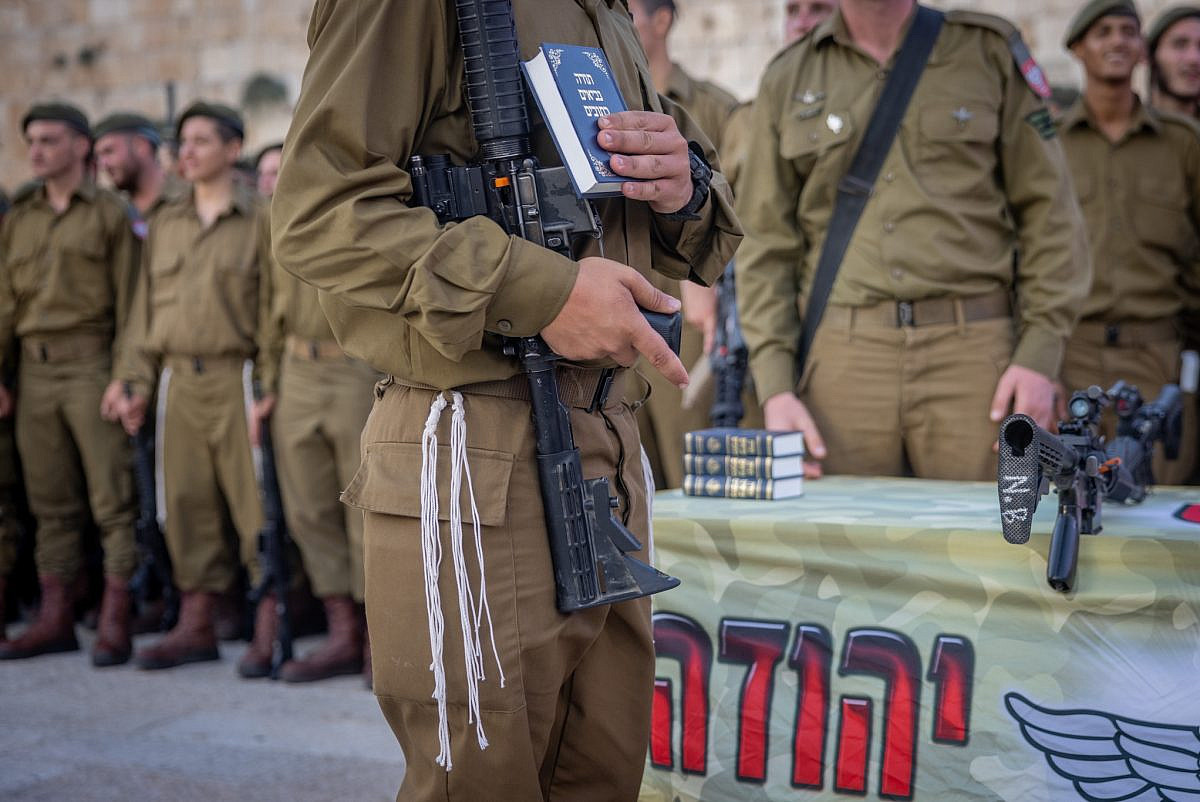
At the end of 2022, Yagil Levy, a professor of political sociology and public policy and head of the Institute for the Study of Civil-Military Relations at the Open University of Israel, identified a shift taking place within the Israeli military. “When it comes to the Palestinians, the Israeli military is in fact splintered into two armies,” he wrote in +972 Magazine. “Alongside the ‘official’ army, a ‘policing’ force has emerged in the Israeli-controlled West Bank” — one with deep social and ideological ties to the settlement movement and the hardline religious-Zionist right.
“The result is a clear army bias in favor of the settlers,” Levy continued. “It turns a blind eye to the establishment of unauthorized settlement outposts … it ignores vigilante violence against Palestinians and sometimes even partakes in it.”
Four years later, the “policing army” Levy identified has become deeply entrenched, helping to push settler violence and Palestinian displacement in the West Bank to record levels. Since the start of 2026, the UN Office for the Coordination of Humanitarian Affairs (OCHA) has recorded over 1600 settler attacks in 275 Palestinian communities — an average of 6.7 every day, the highest rate since it began keeping records. And since October 7, settlers have erected over 150 new outposts and joined forces with the army to expel at least 76 entire Palestinian communities.
The escalation has drawn substantial international scrutiny, peaking earlier this month when British Foreign Secretary Ed Miliband announced sweeping sanctions on products from Israeli settlements, citing the actions of Israeli “terrorists” and the “ethnic cleansing” of Palestinians in the West Bank.
In turn, rising global outrage has led to unusually forceful condemnations from within Israel’s political and security establishment, with senior figures going so far as to describe the phenomenon as “Jewish terrorism.” Maj. Gen. Avi Bluth, the head of the Israeli army’s Central Command and its most senior officer in the West Bank, has repeatedly issued stark warnings about settler violence and even made some efforts to curb it, arguing that it destabilizes Israeli rule in the West Bank and undermines the settlement project.

These condemnations are evidence of long-simmering tensions within the Israeli right, now brought to a boil. On one side stand the army’s senior, increasingly settler-led command and the institutional settler leadership, both of which regard highly visible, vigilante attacks on Palestinian communities as a threat to the more gradual process of Palestinian dispossession and de facto annexation. On the other side are radical settlers and the so-called “hilltop youth,” backed by far-right lawmakers who oppose almost any restriction on settlers’ freedom of action in the West Bank.
Levy sees this internal conflict not as a rupture between the military and the settler movement, but as a byproduct of their decades-long integration. Since Israel’s 2005 “disengagement” from Gaza, he argues, the army has learned to tolerate settler violence as a tool to advance annexation, while at the same time struggling to restrain it when it threatens military authority in the West Bank or attracts unwanted international scrutiny.
In an interview with +972, Levy explains how the policing army serves as a “gray arm” of the state — using violence to advance goals that Israel’s official institutions cannot openly pursue; why the military’s efforts to curb “dysfunctional” settler violence are intended not to end the systematic dispossession of Palestinian land but instead restore its control over the process; and how Israel’s post-October 7 pursuit of “permanent security” has aligned secular military doctrine with the expansionist vision of the religious-Zionist right.
The interview has been edited for length and clarity.
Can you explain the role and structure of this “policing army”?
The policing army has three main components: The settlers’ armed militias, which operate under the army’s auspices within the framework of Regional Defense units; the Kfir Brigade, which is permanently deployed in the West Bank and consists of four battalions (including the Netzah Yehuda battalion) and a reconnaissance unit, together with additional regular and reserve units that carry out operational deployments in the West Bank; and the Border Police companies, which combine police officers with conscript soldiers, and operate under the army’s authority.
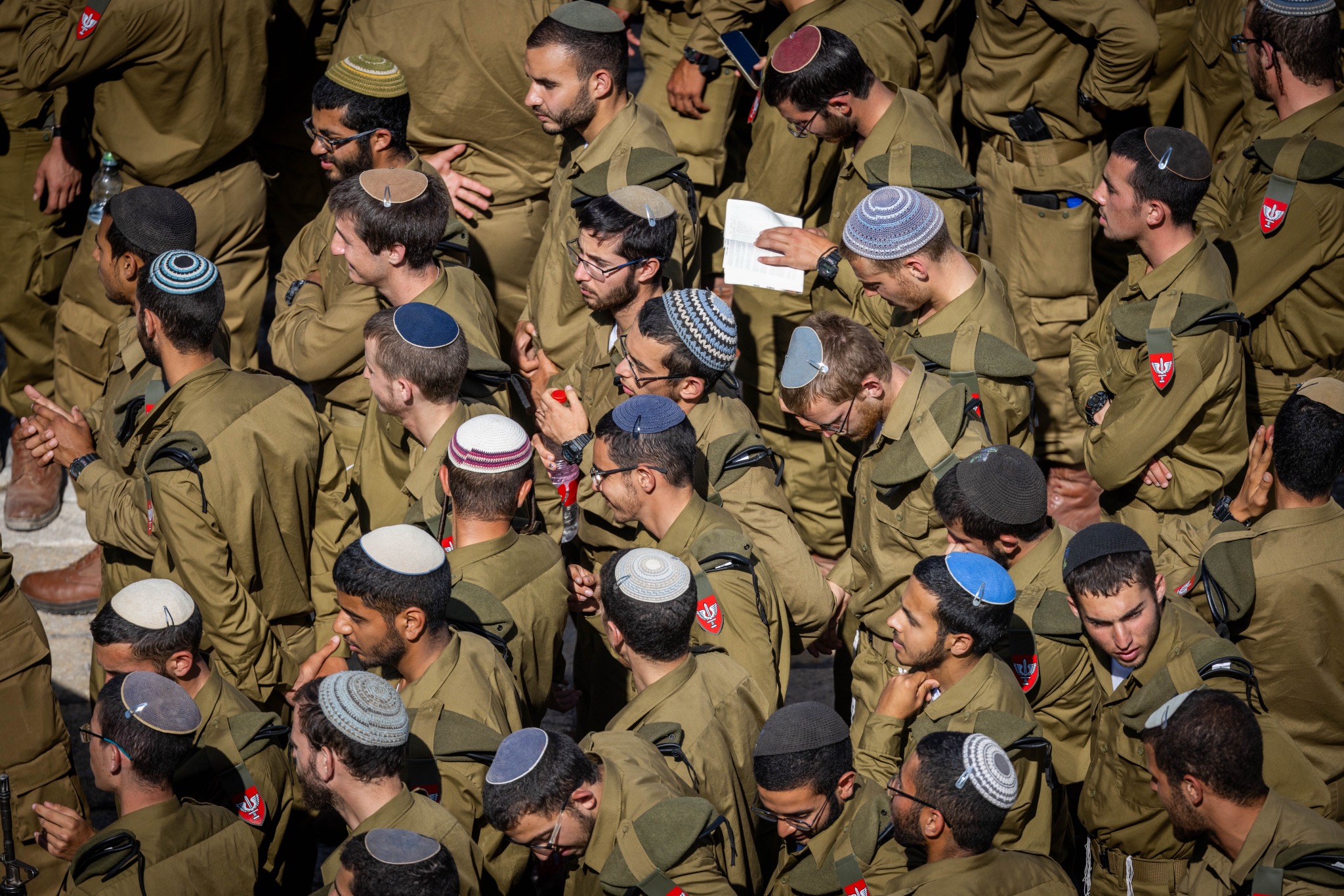
The role of the policing army is to defend the settlements in the West Bank, prevent terrorist activity from crossing the Green Line, and maintain law and order among Jewish [settlers] and Palestinians. Alongside these forces, the Civil Administration handles civilian matters, the police deal with ordinary criminal offenses, and the Shin Bet works to prevent terrorist attacks.
Formally, within the military hierarchy, the units that make up the policing army are subordinate to the head of the Central Command. In practice, however, the boundaries between the army and the settler communities within which it operates have blurred. This is due to the large number of settlers within certain units, as well as the deep social ties and ideological affiliation between settlers and soldiers.
As a result, control over the policing army is not hierarchical but matrix-like. Alongside their formal chain of command, soldiers receive instructions from settlement security coordinators — in other words, from settlers — and are influenced by directives from rabbis, particularly religious rulings prohibiting religious soldiers from participating in the evacuation of settlements and outposts.
Commanders operate with a fear of the settlers hanging over them, and often simply want to finish their tour of duty without incident. Soldiers are influenced by their social ties with settler communities, while settlers and religious soldiers serving in the units affect the functioning of the unit as a whole — for example, by “dragging their feet” when faced with lawbreaking by settlers.
The result is that the policing army enjoys partial autonomy from the General Staff [the supreme command of the Israeli military]. This has enabled it to develop a clear bias in favor of the settlers, expressed primarily in turning a blind eye to their violations of the law — whether illegal construction or attacking Palestinians — as has been regularly documented.
The policing army is not the product of a military or political failure. On the contrary: It is a brilliantly created “gray arm” that operates on behalf of the state in order to entrench its control over the West Bank and thwart the possibility of creating an effective Palestinian entity.
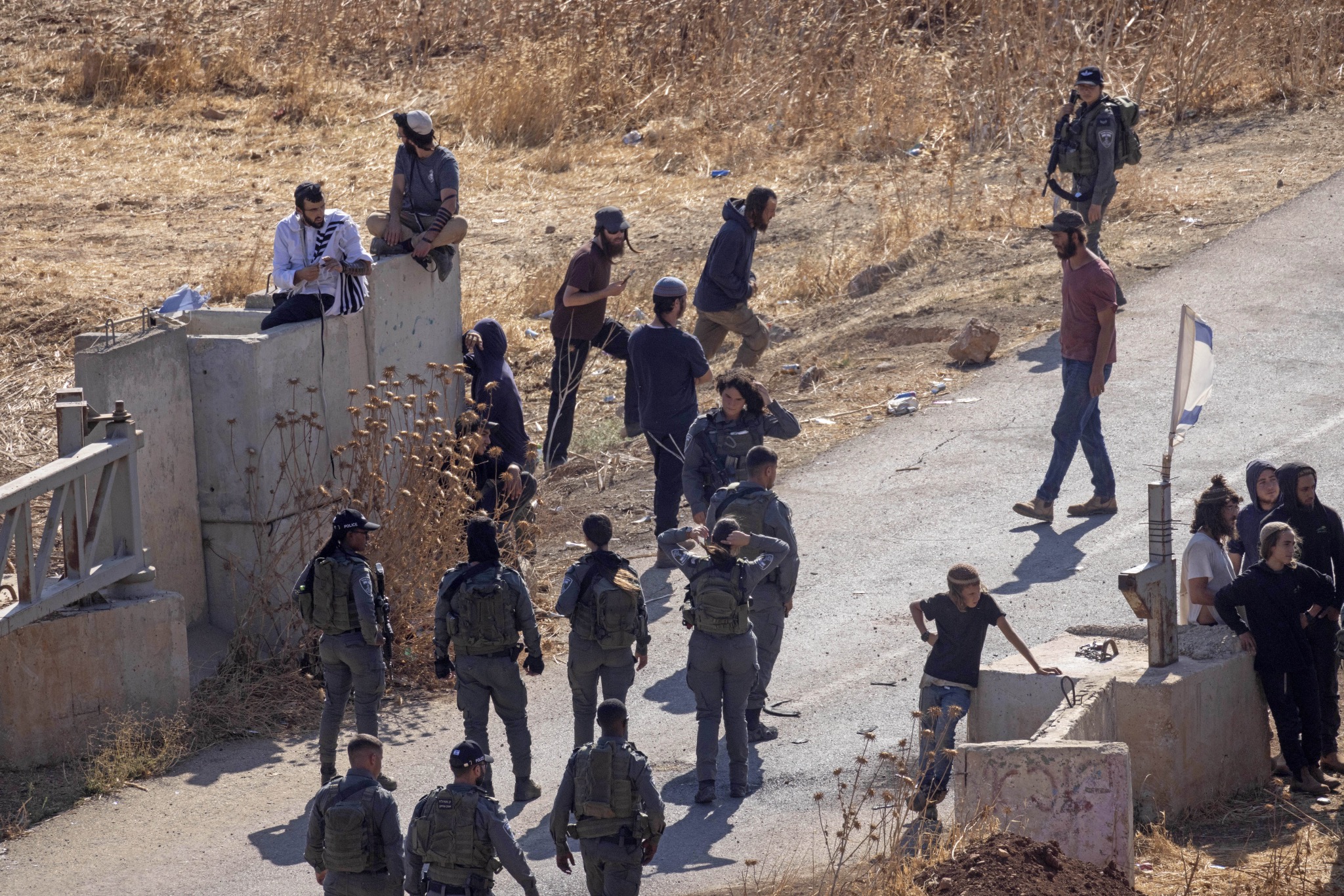
Officially, Israel is constrained by domestic and international law, so it cannot pursue this goal efficiently through its formal institutions, especially the army. It therefore needs unofficial frameworks such as the policing army.
Such an army naturally operates according to a dual system consisting of formal law alongside informal rules; declarative orders alongside conduct on the ground. Phenomena such as turning a blind eye to settler attacks on Palestinian communities — including foot-dragging, standing by, delays in prosecution, and so forth — are not military failures but part of the policing army’s operating logic. Once this is the conceptual framework, there is no longer any place to speak of the army’s “helplessness” in the face of the settlers, which for years was the prevailing line among human rights organizations.
What has been the relationship between the policing army and Netanyahu’s outgoing government?
The [current] right-wing government did not create anything fundamentally new — it merely refined what already existed. In that sense, the center-left assigns it excessive responsibility, allowing it to evade its own.
This structure was certainly refined after October 7, but it began to emerge around 20 years ago. Its central feature is the integration of the various forces operating in the West Bank. One can look, for example, at the 2005 Sasson report, [which found that the state actively diverted state funds and resources to build illegal outposts].
These efforts received a boost when Netanyahu returned to power in 2009. It was then that the diplomatic agenda was abandoned, and this integration became essential. From that point, the army was assigned the role of preserving the status quo and, above all, eroding it in one direction — toward at least partial annexation.

As chief of staff during the Elor Azaria affair in 2016, Gadi Eisenkot probably understood the process, but he did not recreate a separation between the settlers and the army. [His successor] Aviv Kochavi no longer even tried. The many appointments of settlers or graduates of the hardline religious-Zionist educational system to key positions in the policing army during his tenure testify to this.
October 7 contributed to this first and foremost by creating a clear agenda promoted by Bezalel Smotrich [who serves both as finance minister and a minister in the defense ministry] through his control over parts of the Civil Administration; the massive arming of settlers and their integration into Regional Defense units, enabling joint operations in which it becomes difficult to distinguish soldiers from settlers; a new culture in which settlers are no longer willing to compromise on security and therefore act independently while intensifying demands on the army; the creation of agricultural outposts managed from above by [Central Command chief] Avi Bluth; and the institutionalization of the method of expelling Palestinian communities.
Avi Bluth is an interesting figure in this story. In early August, Defense Minister Israel Katz announced live on the right-wing Channel 14 that Bluth would be removed from his post. This came after Bluth pushed to renew the administrative detention order issued against Tal Yinon Dardik, a settler who was accused of participating in a series of brutal physical and sexual assaults against Palestinians in the northern Jordan Valley. How would you understand this confrontation in light of what you described so far?
Bluth, who was appointed commander of the Judea and Samaria Division in 2021 [and of the Central Command in 2024], is the most prominent example of the wave of appointment of graduates of the hardline religious-Zionist educational system to key positions in the military. As such, there are expectations from the settler public and its leadership that he will not advance a “defeatist agenda,” meaning a moderate policy that takes Palestinians’ rights into account.
For the first time, he presented a sophisticated classification of the different forms of unlawful actions by settlers and warned about the danger posed by their violence. He did not speak in the worn-out terminology of a “Third Intifada.” Instead, he pointed to the emergence of “guard committees” — in other words, the concern that Palestinians will begin defending their communities themselves, producing confrontations with both the army and settlers. Symbolically, that would be an act of claiming sovereignty [on the part of Palestinians] even more so than attacking the army or carrying out attacks [on Israeli civilians].
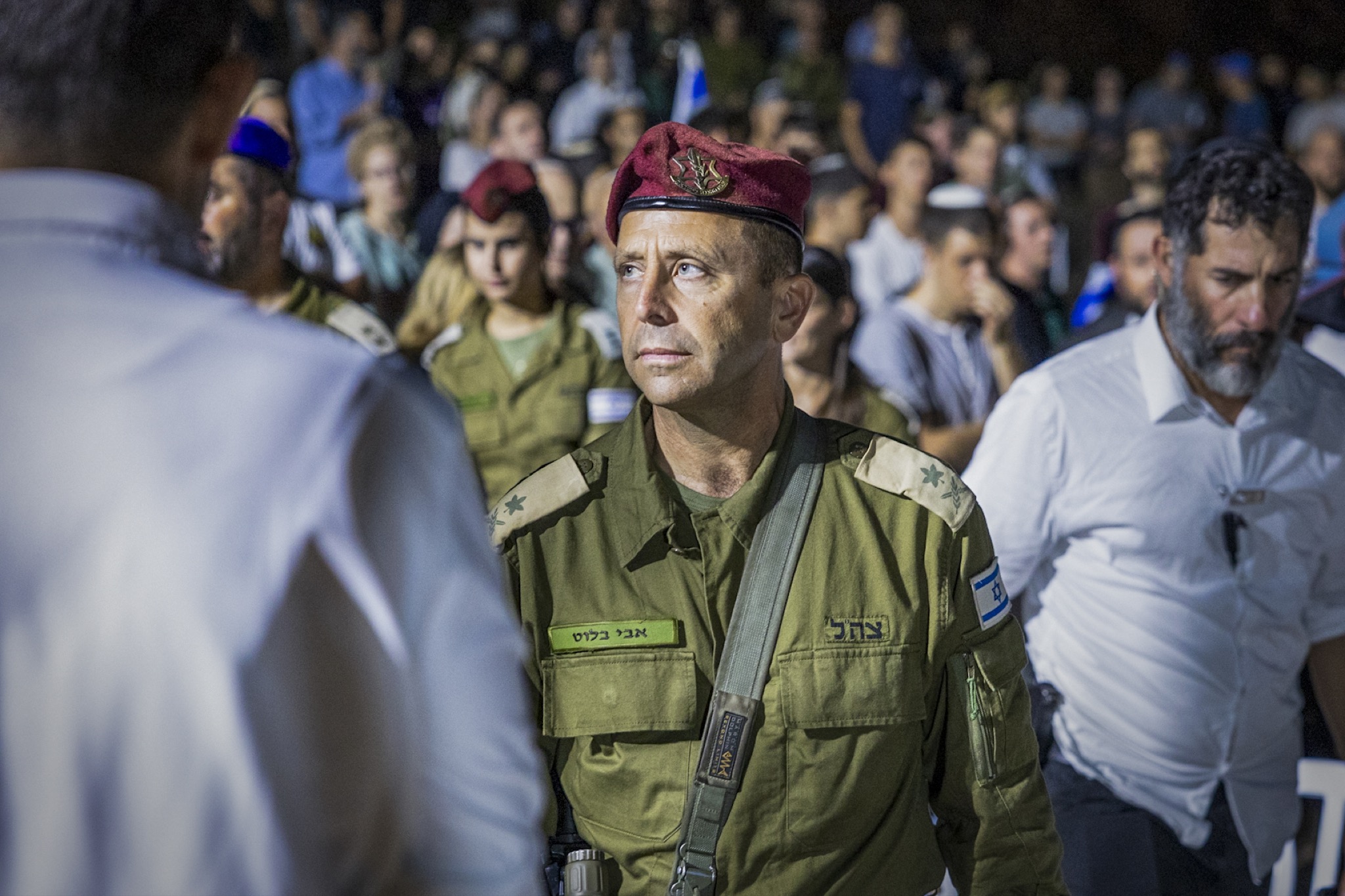
Bluth’s rhetoric was accompanied by action: expanded Border Police activity against settlers in Areas B and A; a reduction in the role of Regional Defense units; the establishment of a dedicated police command to fight Jewish terrorism; and, of course, the confrontation with the defense minister over the administrative detention of Tal Yinon Dardik. As far as one can tell from settler statements themselves, Border Police activity in evacuating illegal outposts has also increased.
But Bluth cannot undo overnight the settlers’ deep penetration into the ranks of the army. And it is particularly difficult for him to take risks when he does not receive political backing.
We saw this very clearly in the recent incident in which MK Zvi Sukkot destroyed a Palestinian martyrs memorial in Madama [a village near Nablus]. That case reflects how politicians are no longer limiting themselves to engaging with the military command through institutional channels, such as the Knesset Foreign Affairs and Defense Committee, as their role requires. Sukkot effectively assumed the role of the army and destroyed a memorial that he claimed encouraged terrorism after the military had declined to do so itself.
Even then, the soldiers who had accompanied Sukkot on what was formally designated a “tour” stood by. Such inaction is a common military response in these situations, illustrating the army’s paralysis in the face of the settlers. In this case, however, the military’s unusually harsh condemnation suggests that this inaction did not reflect tacit approval but rather fear of destabilizing the security order in the West Bank.
At the same time, Bluth is popular with the settler establishment, above all with the heads of local authorities in the West Bank, because he is the first Central Command chief to articulate a clear agenda of advancing annexation. His predecessors tried to preserve the status quo and, at most, acquiesced in the autonomy of the policing army as it advanced the takeover of the West Bank.
The centerpiece [of Bluth’s tenure] is the institutionalization of the establishment of outpost farms, which turns the project of taking over West Bank land into a state project in which the army openly cooperates with the Smotrich-controlled Civil Administration. Bluth has also institutionalized new forms of violence against Palestinians: his decision last August, for example, to adopt the logic of “price tag” retaliation by ordering the uprooting of 3,000 trees in the village of Al-Mughayyir, where a Palestinian who had attempted to harm settlers had fled.

A similar logic appears in [the growing numbers of] Palestinians whose economic hardship led them to try to cross into Israel without permits and were then shot in the knee. These “limping monuments,” as Bluth called them, serve as symbols of deterrence.
Above all, the institutionalization of violence is clearly reflected in an operational method of which Bluth himself has spoken proudly: creating permanent war in the West Bank, while simultaneously preventing it from escalating [beyond the military’s control].
Bluth has boasted that Israel kills “like we haven’t killed since 1967,” and his escalation of military operations in the West Bank, such as the systematic destruction and expulsion of the Jenin refugee camp, is an important component of importing methods from Gaza into the West Bank. In this way, violence is not merely institutionalized but intensified.
This is also achieved by generating constant friction — “touching” the Palestinians and “turning the villages into confrontations,” as he put it. The establishment of the outposts is an important mechanism in this sense, because simply by bringing settlers closer to Palestinian communities, it intensifies friction.
But where settler violence develops independently of the army, as dysfunctional violence, Bluth seeks to restrain it.
The expulsion of Palestinian communities is precisely where one can distinguish between functional and dysfunctional settler violence. The first is when settlers operate as a gray arm of the state: They expel a [small] community, and the army then refuses to allow it to return or protect it even when there is a High Court ruling. The army itself does not carry out the expulsion, because it [formally] cannot.
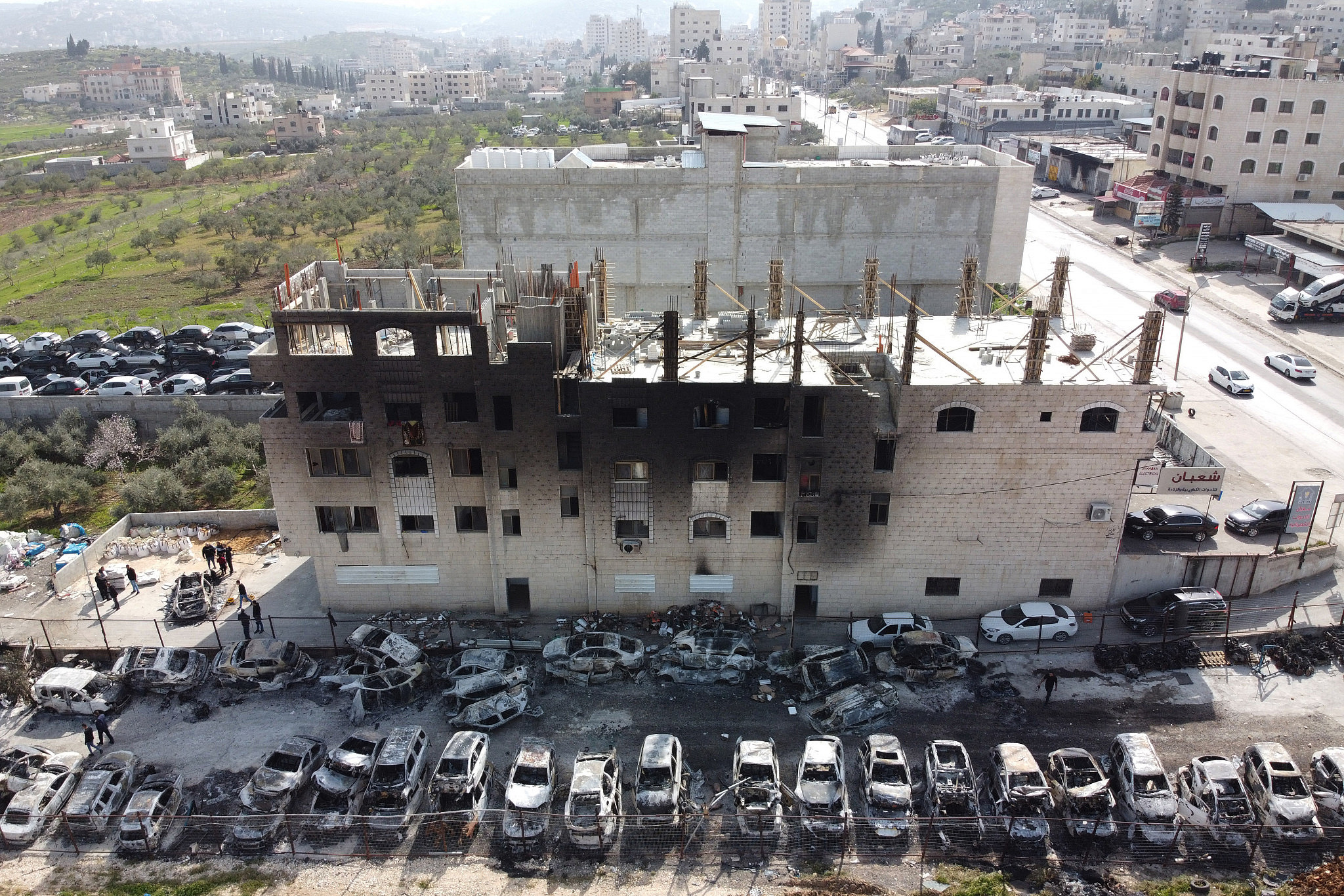
The violence becomes dysfunctional when it threatens order through a massive attack on a large community — as with the attack on Huwara soon after the establishment of the [current] government — and therefore receives condemnation from the security establishment.
This violence is not only unnecessary [in the eyes of the army] but harmful. It endangers order in the West Bank as well as the legitimacy of creeping annexation, which can only take place below the radar. The escalation of violence brings that process above the radar, and it is no coincidence that [U.S.] Ambassador Mike Huckabee, himself a supporter of annexation, intervened. This is how the Qusra affair can also be understood.
One therefore cannot ignore Bluth’s broader move. He is offering settlers a clear bargain: The army is committed to providing enhanced security and advancing the takeover of Area C in exchange for settler restraint when their actions interfere with the implementation of that agenda.
The settler leadership understands this and cooperates, just as it demonstrates support for Bluth. It cannot risk losing such an asset merely because of a momentary whim by Defense Minister Katz. The more radical public opposes it.
In a recent op-ed in Haaretz, you pointed to an article published in the journal of a respected Israeli military research institute that calls for Israel to act as “a regional power that actively and continuously shapes its environment, unconstrained by sovereign borders.”
This is presented as a strategic response to the geopolitical reality that emerged after October 7, and it is formulated in secular, rational, and academic language. But it is difficult to ignore how this doctrine dovetails with the fundamentalist vision of the hardline religious-Zionist right, which seeks to expand the territory under Israeli control on the basis of a religious-nationalist conception of “Greater Israel.”
How do you understand this alignment between the two visions?
I devote considerable effort to challenging the widespread argument within the Zionist center-left that the army has become “messianic,” and that Israeli policy in the main conflict arenas is being driven by a messianic agenda. Talk of resettling Gush Katif [a former settlement bloc in Gaza] or archaeological tours in Lebanon is enough to ignite secular anxiety about messianism. But this is very clearly a mechanism through which the Israeli majority seeks to absolve itself of responsibility for the government’s actions.
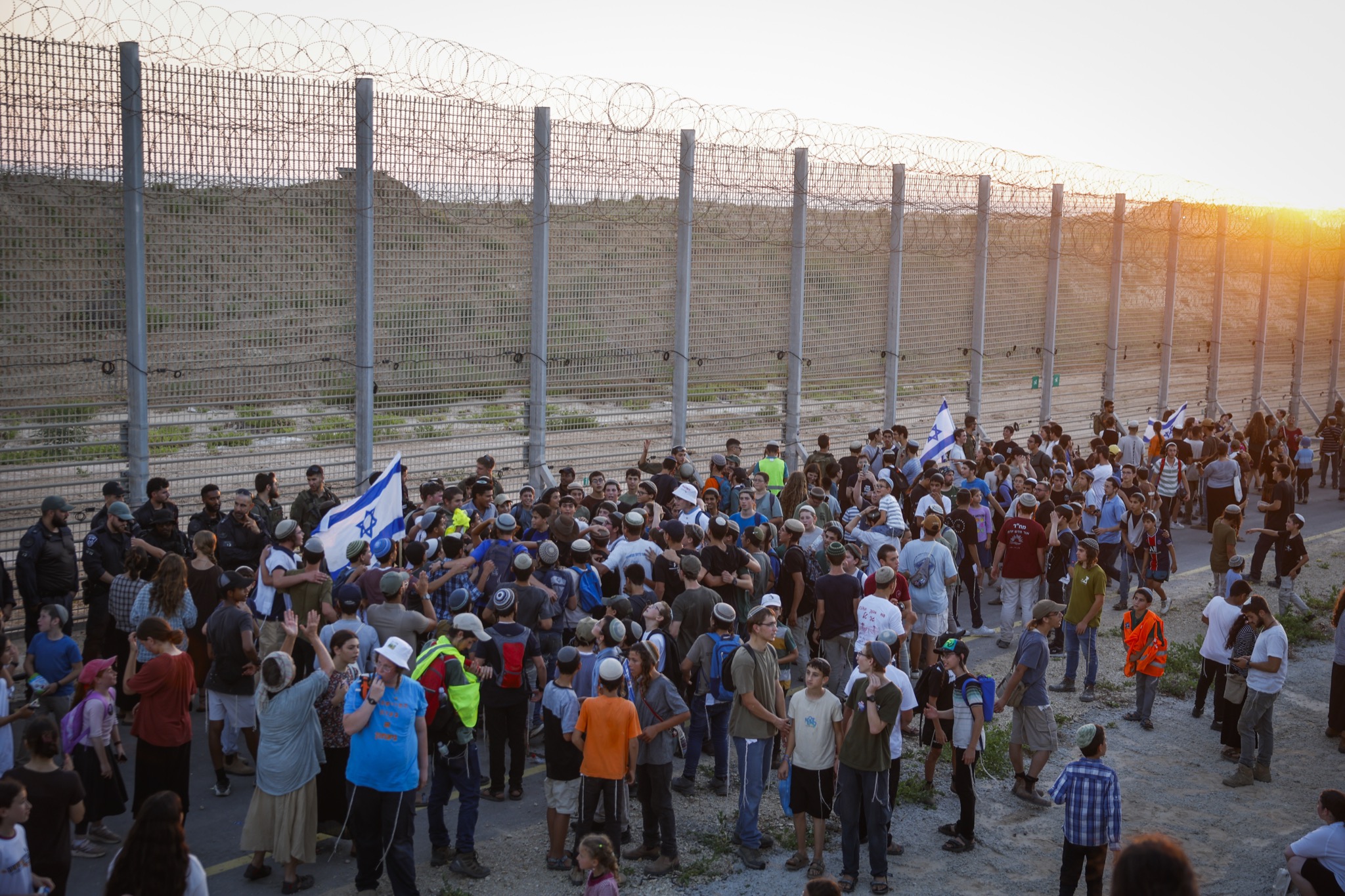
Since October 7, Israeli authorities have developed an approach aimed at what one might call, drawing on the work of historian Dirk Moses, “permanent security.” This is an approach that seeks immunity from future threats. It rejects risk, compromise, or even military restraint, and instead seeks a decisive outcome that eliminates a threat, both immediate and future.
It therefore treats the enemy as something that must be eliminated, if necessary at the cost of harming the enemy’s civilian population. Control, expulsion, and even extermination can become possible tools.
This is why Israeli officials spoke of “eliminating” Hamas’ capabilities as part of the war aims in Gaza, terminology Israel had not used before. In the past, Israel set goals aimed at weakening and deterring the enemy, but not eliminating it. This is also why no vision for “the day after” could emerge until Hamas was eliminated. It also required a war in which “manhunting” became a central axis, leading to the elimination of Hamas personnel at any cost.
The Israeli version of permanent security is also accompanied by high sensitivity to military casualties. The complementary element is therefore the adoption of a policy unwilling to impose substantial risk on soldiers, which led to highly permissive rules of engagement. Events such as the killing of the three Israeli hostages or the World Central Kitchen workers are the product of this combination: manhunting without accepting risks to soldiers.
The war aims were never seriously challenged in Israeli public discourse, even when it became clear that achieving them required a prolonged war and a heavy moral price. The center-left did not challenge them, both because it was itself swept up in the atmosphere of war and because, time and again, it preferred to identify the government’s behavior with the interests of the individuals leading it. It therefore focused on personalities rather than policy, without understanding that a profound conceptual shift had taken place.
The army, which is still led by a secular, rational, educated command, has played a role in developing this permanent security doctrine. Even before the war, during the Eisenkot and Kochavi years, one could already see a gradual abandonment of the idea that military action serves diplomatic goals, alongside a move away from the language of deterring the enemy toward defeating it in objective terms. There was no messianic thinking involved.
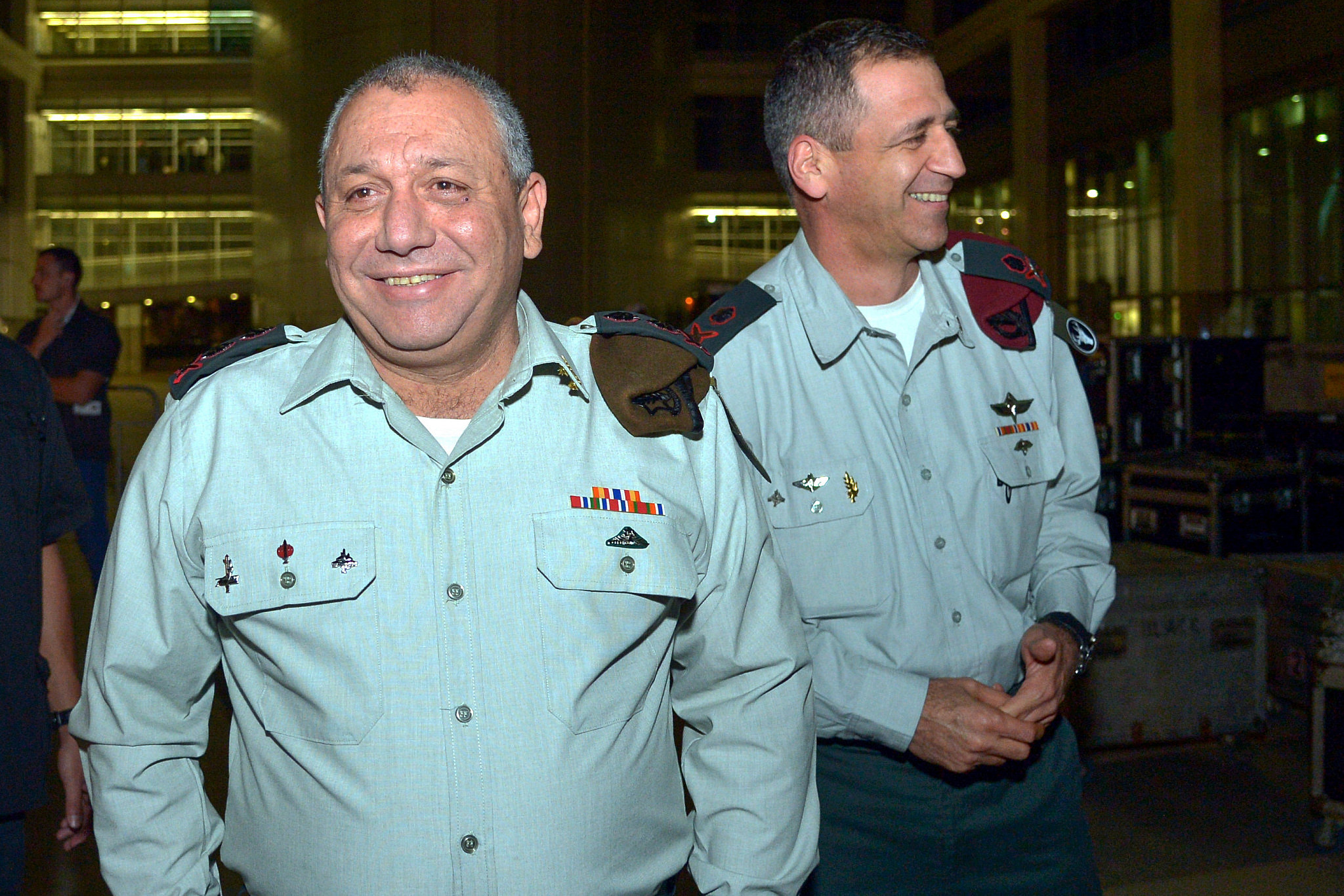
Moreover, the discourse promoted by Kochavi’s General Staff effectively freed the political echelon from the need to formulate a political horizon and promised it the option of neutralizing the enemy, provided that the army acquired the appropriate capabilities. This doctrine is one of the fundamental causes of the October 7 failure.
The permanent security doctrine is also reflected in the way the army seeks to “shape its environment,” to quote the article you referred to: expanding borders, for example in Syria; creating “buffer zones” cleared of an enemy population, as in Gaza and Lebanon; and demilitarizing territories that formally remain under an adversary’s control, as in Gaza and Syria.
When the army pushes for strikes in Syria out of concern that Turkey may deploy forces there, that too follows from this doctrine. It rejects short-term risk of any kind and, above all, treats the army’s freedom of action throughout the region as an asset that must not be relinquished.
This is a doctrine without a messianic dimension: Israel does not seek to neutralize Syria’s power because Syria forms part of some sacred [biblical Jewish] kingdom, but because of the security risk Syria is perceived to pose.
The messianic Zionists support this approach from within their religious worldview. But they have also formulated a security doctrine that stands on its own and is not based exclusively on religious foundations.
When Ofer Winter [a retired Israeli army brigadier general and founder and leader of the new right-wing party Amcha Yisrael] calls for the “emigration of Gazans,” he does so based on the belief that as long as there is a civilian population in Gaza, resistance to Israel will continue to emerge. He is not necessarily advocating mass Jewish settlement in Gaza [from a religious point of view].
Of course, support of messianism [within the military] is broad. Through its penetration of the ground forces, it wrapped the permanent security doctrine during the war in an agenda of revenge that seeks the destruction of the enemy which it identifies with Amalek. For soldiers, revenge also provides a tangible frame for something that rational strategic language struggles to make accessible.
Most read on +972
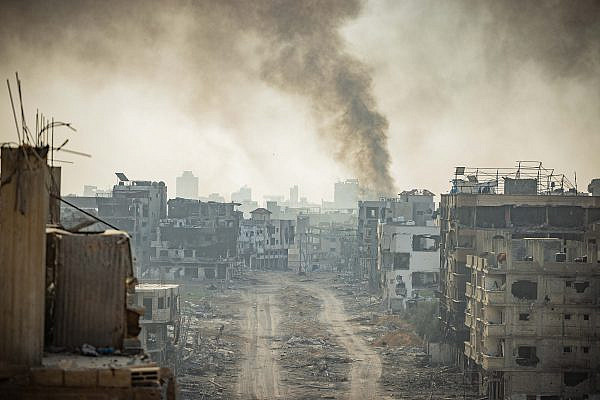

The hardline religious-Zionist doctrine also treats the sacrifice of life as a prerequisite for victory. It therefore rejected prioritizing the release of the hostages as a war objective when doing so meant abandoning the goal of defeating Hamas, thereby lending support for continued military action in pursuit of permanent security.
From a broader historical perspective, it is likely that the army is adapting itself to dominant right-wing currents that reject a return to the pre-October 7 “conception” and call for placing victory at the center. The army is therefore deterred from returning to the days when it presented the political leadership with the limits of military force.
The army is also not deaf to the right’s accusation that its policy of containment produced, according to the dominant narrative, the October 7 failure. This certainly encourages the emergence of entirely secular military doctrines that align themselves with the dominant political line, while dissenting views that would challenge the lack of restraint in the use of force will struggle to develop without encountering opposition.
I will end where I began. Understanding that it was not messianic circles that activated a messianic army is essential if the Zionist center-left is to take responsibility for its own support for the war. Without taking responsibility, there can be no conceptual reflection and, above all, no foundation for moral reckoning.