
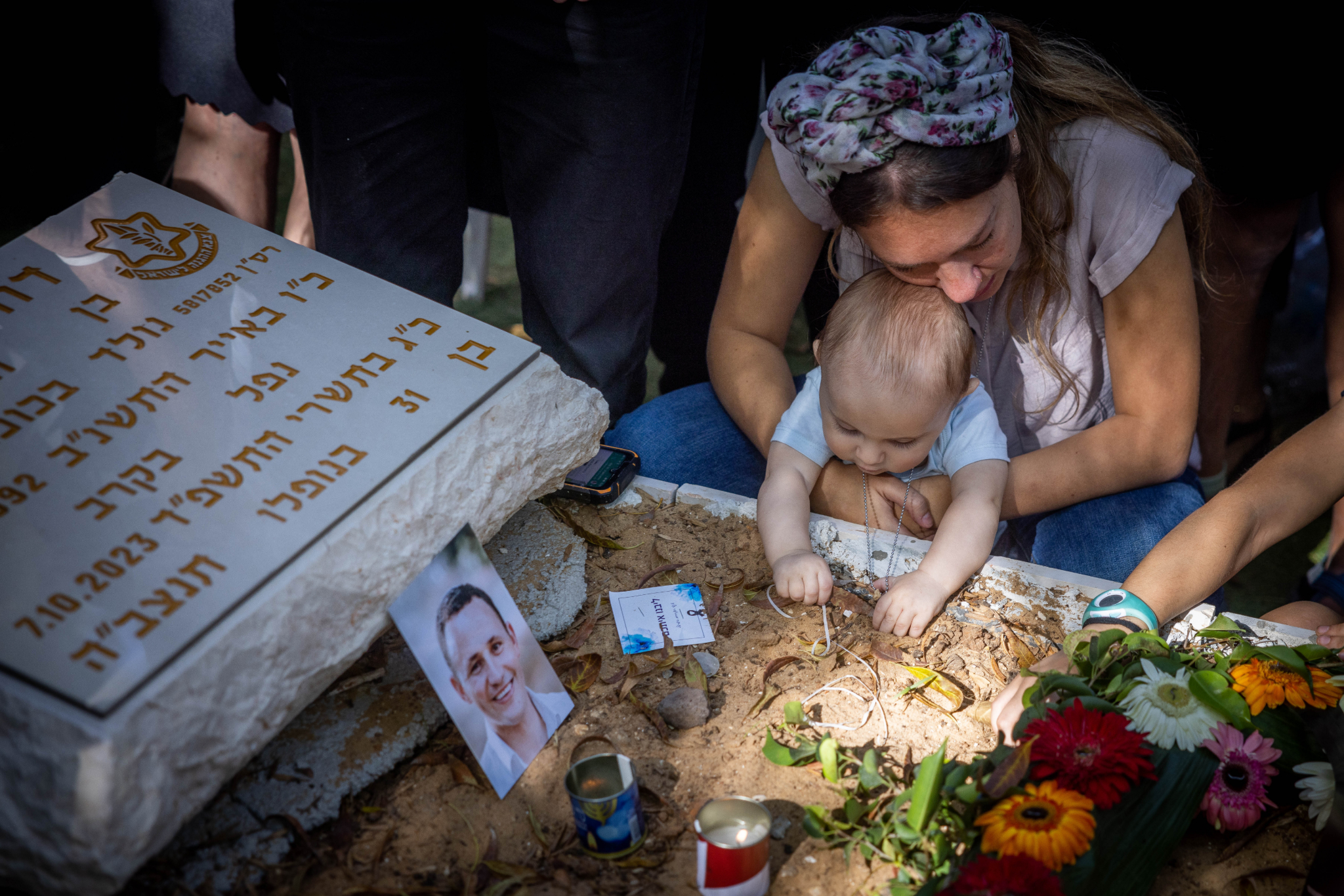
Earlier this year, Nitza Shmueli posted on Facebook to make an unusual request about her deceased son. “I, Barel’s mother, am looking for a woman who wants to conceive a child from Barel’s sperm, a woman who wants to gain a warm and loving family,” she wrote. “If you think you could be the intended woman, you are welcome to contact me privately.”
Barel, a 21-year-old sniper in an undercover unit of the Israeli Border Police, was shot by a Palestinian gunman on Aug. 21, 2021, during a protest at the perimeter fence east of Gaza City. The demonstration, which marked the 52nd anniversary of an arson attack on the Al-Aqsa Mosque in Jerusalem, aimed to pressure Israel to lift its siege on Gaza and drew hundreds of attendees.
In videos from the scene, a Palestinian man can be seen running up to the concrete wall where Barel and other snipers were positioned, taking out a gun that had been tucked in his waistband, and firing three shots through a hole at point-blank range. Barel was struck in the head and died nine days later, after multiple surgeries to try to save his life. Forty Palestinians were also wounded by Israeli forces that day, including 32-year-old Osama Khaled Ideij and 12-year-old Omar Hasan Abu Al-Nil, both of whom eventually succumbed to their wounds.
Following Barel’s death, his mother won court approval to extract and freeze his sperm at the Soroka Medical Center in Be’er Sheva. Postmortem sperm retrieval (PMSR) enables procreation for men when they’re no longer alive: An incision to the testicles to extract tissue of the deceased is made in the hours following death when the sperm is still viable. In a laboratory, the tissue is then examined under a microscope to find and freeze still-living sperm cells that can be used for in vitro fertilization (IVF).
Addressing a Knesset committee in 2022, Shmueli testified that 1,400 women had contacted her to express interest in having Barel’s child. But it took four years for her to receive permission to use Barel’s frozen sperm to create a child, after a family court in Tel Aviv approved her request last year.
This was not only the outcome of her years-long battle in court, but also a reflection of a medical and legal landscape transformed by the October 7 attacks and Israel’s subsequent genocidal war on Gaza.
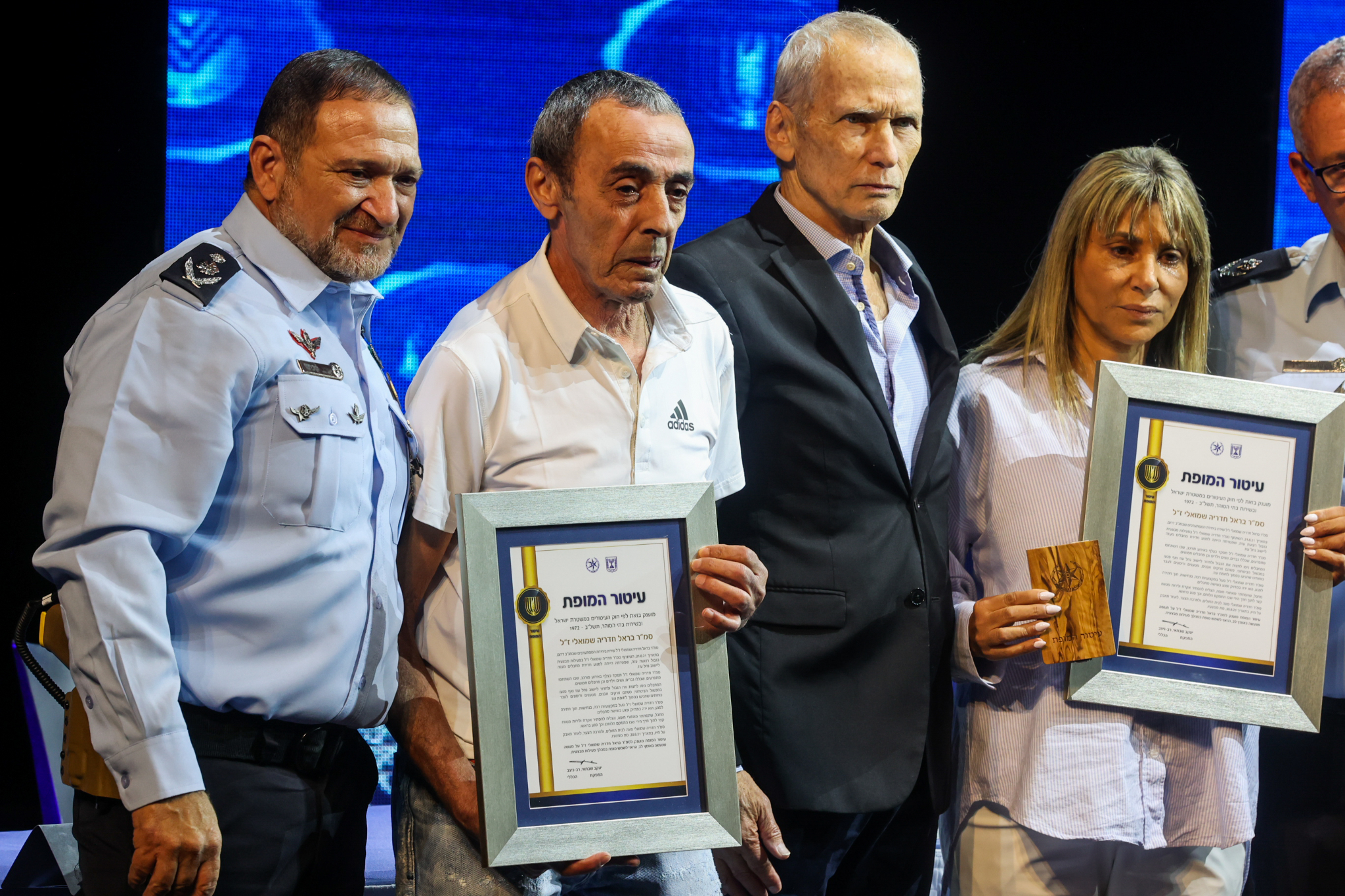
Before October 2023, PMSR was a rare and ethically contested practice in Israeli society, with a handful of requests per year. Over the past three years, however, extracting sperm from killed Israeli soldiers has become institutionalized and normalized as a growing national phenomenon.
In the days after the October 7 attacks, among the various emergency measures the Health Ministry and the Justice Ministry approved was a temporary regulation — still in place today — allowing parents of Israelis killed in the war to authorize sperm retrieval without the need for court approval.
To be performed successfully, PMSR must take place within 72 hours of death. So when the military comes to give families the news — what Israelis call the dreaded “knock on the door” — officers now proactively suggest the procedure. Then parents must decide and act immediately. Israeli sociologist Yael Hashiloni-Dolev, a professor at Ben-Gurion University, described the new operational logic to +972 Magazine as “Retrieve first, ask legal questions later.”
Now state funded and overseen by the Health Ministry, PMSR is performed at Israel’s four major hospitals, where the sperm is also frozen and stored. According to Dr. Eran Altman, director of the sperm bank at Rabin Medical Center, around 250 Israeli soldiers and security personnel had undergone posthumous sperm retrieval procedures by the beginning of this year — a quarter of all male soldiers killed since October 7.
Speaking to NPR in January, Altman explained how rapidly the system adapted. “The army became very efficient in bringing us the corpse,” he said. “When possible we get it after several hours from the time of death.”

Alongside the rapid expansion of PMSR, a new term entered Israeli public discourse: “hatzalat zera,” or “rescuing sperm.” As professor Zvi Triger, a legal scholar at the College of Management in Rishon LeZion, explained, “The phrase reflects a reframing in which a soldier’s sperm is treated as something that must be ‘saved,’ placing the substance within a moral register similar to human life or national assets.”
It is still unclear how many families will end up using the sperm they decided to freeze to conceive children, which requires court approval. A group of bereaved parents, including Nitza Shmueli, have for years campaigned in the Knesset for a bill to allow parents of killed soldiers who aren’t in an official partnership to utilize retrieved sperm for IVF, which has yet to pass.
But in the context of Israel’s obstetric violence against Palestinian women and infants in the region, PMSR as a state policy carries ideological weight: part of a state project to advance Jewish biological continuity by all means, even beyond death, alongside parallel genocidal efforts to erase Palestinian life.
PMSR also makes clear how the Israeli government instrumentalizes grief to sustain permanent conflict. As Hashiloni-Dolev explained, “In Israel, PMSR is framed somewhere on the continuum between compensation and revenge.
“In the Israeli media, the practice is normally portrayed positively, as ‘helping the bereaved families,’ or ‘giving the families of fallen soldiers hope,’” she continued. But at the same time, “in the Knesset discussions about PMSR regulations after October 7, allowing the procedure of using the sperm has been framed as ‘nekama’ [‘revenge’] or ‘tkuma’ [‘resurrection’].”
Daphna Hacker, a professor of law and gender studies at Tel Aviv University, sees a clear political interest in promoting PMSR. “This is yet another way to create a pressure valve and channel mourning into a private story, rather than a public outcry against sending one’s children to war.”
Pronatalism as state policy
The phenomenon of PMSR dates to the late 1970s, when a Los Angeles urologist performed the first successful procedure on a young man who died in a car accident. Israeli hospitals began carrying out retrievals on a case-by-case basis in the 1990s, usually at the requests of partners. With no formal legislation governing the practice, these petitions frequently went directly to family or district courts.
In 2003, the attorney general finally issued the first guidelines on PMSR, though they were not enshrined in law. The guidelines addressed only surviving female partners, allowing them to use a deceased partner’s sperm even without a written directive to perform PMSR, based on his “presumed wish” for her to conceive children from his sperm.
One of the earliest high-profile cases involving parents concerned Keivan Cohen, an Israeli soldier killed in Gaza in 2002. After his death, his mother waged a prolonged legal battle to use his sperm to conceive a grandchild, who was born 11 years later. The case became one of Israel’s first nationally recognized disputes over posthumous reproduction and helped lay the legal groundwork on which other bereaved families would later rely.
Today, Israel has one of the most permissive approaches to PMSR in the world. Countries including France, Morocco, Sweden, Germany, Switzerland, Slovenia, Denmark, and Hungary have banned the practice entirely, while others such as Belgium and the United States generally require written or implied consent from the deceased before a partner can seek to use the sperm, along with court approval.
Some countries that permit the practice also impose a waiting period before the sperm can be used for IVF. As Shai Lavi, director of the Van Leer Jerusalem Institute and co-director of the Minerva Center for the Interdisciplinary Study of the End of Life, explained, the rationale is that a recently bereaved partner may not be “in the best place to make such a consequential decision, after experiencing a significant loss.”
But what most distinguishes Israel is how directly PMSR has become interwoven with state policy. The government not only funds the procedure but has at times actively promoted it.
A month after October 7, the Foreign Ministry released an emotional animated video about Shaylee Atary, whose husband was killed defending their kibbutz during the attacks; by the time his sperm could be retrieved, it was too late. A form to request and explain the procedure is still available on the government’s website.
“This is a very pronatalist country: In Israeli society, it’s not okay to not have children,” Hacker told +972. “The survival of the nation is the dominant drive.”
The emergency policy adopted after October 7 went further still, expanding the right to request retrieval from surviving partners to the parents of the deceased. Parents now account for 77 percent of all requests. No other country grants parents such a role, and the policy even goes against Israeli legal precedent: In 2016, a court ruling held that parents had no legal standing in decisions over sperm retrieval.
The emergency measure has since been renewed month after month, although it remains unclear whether it will ultimately be cemented in regulation amid opposition from certain rabbinic authorities.
“Being a grandparent is very important in Israeli culture, which is very familial and tribal and glorifies Jewish continuity,” Hacker explained. “Because we on average live longer than before, you can now have the role of being a grandparent for 30 years. This experience is taken from these parents when their son dies — so it becomes a comfort for the parents that their dead son can father a child, and they don’t ask in public what this death was for and fight for the end of these cruel and unjust perpetual wars.”
But despite widespread emotional and political support for bereaved families among the Israeli public, permission to retrieve and freeze sperm is not the same as permission to use it. Israeli courts must still approve its use to conceive a child, often requiring a partner or parents to demonstrate that the deceased had wanted children. While the retrieval itself is state funded, families must pay privately for the legal proceedings that follow.
“Bereavement culture in Israel puts enormous pressure on the judges — they can’t speak against it,” Hacker noted. “It shouldn’t be left case by case to the family courts. There should be clear regulation like in other countries.”
The mothers of deceased soldiers are often at the forefront of these emotionally-charged legal battles for permission to conceive a grandchild — and of the media campaigns that accompany them. After her son Maor was killed in Khan Younis in December 2023, Sharon Eisenkot sought permission to use his sperm to conceive a grandchild with a woman she would select. Last July, she became the first Israeli parent of a soldier killed after October 7 to receive such approval, following a landmark family court ruling in Eilat.
“Then the mother looks for the perfect partner on social media; it becomes a national event,” Lavi explained. Eisenkot — the sister of former army chief Gadi Eisenkot, who is currently running to be Israel’s next prime minister — partnered with The Stork, an Israeli co-parenting and family-matching platform founded by former Knesset member Michal Biran, to find a prospective mother.
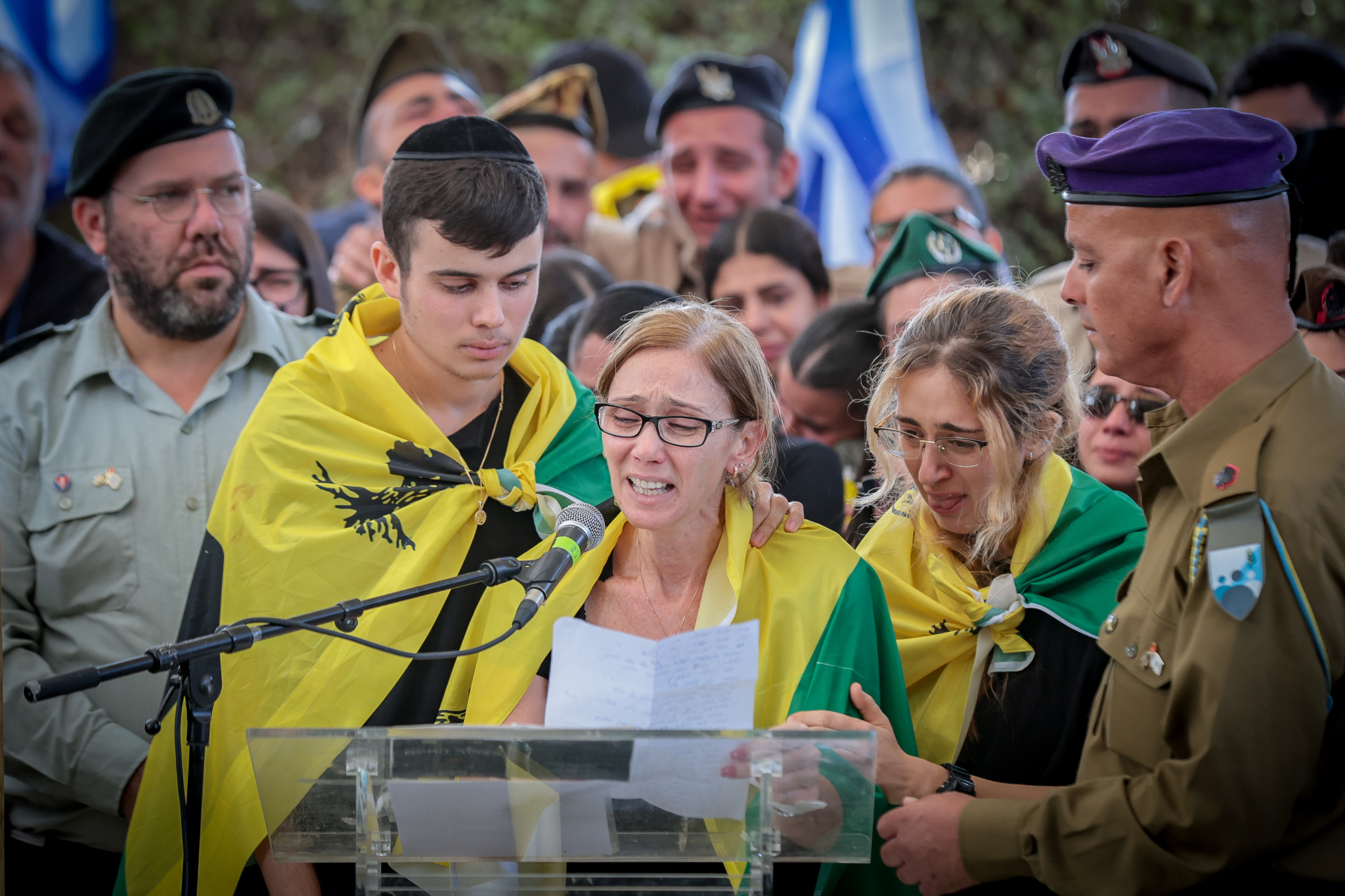
The posts shared on social media framed the future child as honoring Maor and his sacrifice. “Maor won’t be there to lift them onto his shoulders, take them to the beach, play soccer, or hear about their day,” one read. “But this child will have a mother. This isn’t a single parent family, as we know it. Here, there will be a living, vibrant memory of Maor, told by his friends and loved ones, and a loving family waiting for the child with immense longing.”
The volume of inquiries was so high that The Stork had to assign three phone operators just to answer and manage the flood of candidates interested in becoming the mother of Maor’s child.
‘Born to be soldiers’
Fertility is on the decline across the globe, but Jewish Israelis, with an average of 3.1 children per woman, have the highest fertility rate of OECD countries. Large ultra-Orthodox and religious-Zionist families account for much of that figure, but even liberal and secular Jewish Israelis average around 2.2 children — well above the OECD average of 1.4.
“What’s specific to Israel is the idea that fertility isn’t just between partners but also [an issue] of the society and, on an even larger scale, of the nation,” Hashiloni-Dolev noted. “In Israel, it is not the individual life that is sacred, but the continuity of the collective.”
That emphasis on collective continuity has long been sustained by demographic anxieties over preserving a Jewish majority alongside similarly high Palestinian birth rates — what Hashiloni-Dolev calls the “womb war.” For decades, Prime Minister Benjamin Netanyahu and other Israeli leaders have portrayed Palestinian fertility as a strategic threat to the Jewish character of the state, often invoking the millions of Jewish deaths during the Holocaust in that context.
On the flip side, high Jewish birth rates are celebrated as a political victory for Israel. At Israel’s official Independence Day ceremony this April, Knesset speaker Amir Ohana enumerated a list of “what winning looks like in Israel.” Among his examples: “177,000 babies born in the past year.”

Meanwhile, Israel’s investment in Jewish reproduction stands in striking contrast to the conditions it imposes on Palestinian women’s health and reproductive lives. This war on Palestinian fertility is most evident in Gaza, where Israel has bombarded maternity wards and fertility clinics, and where miscarriages have more than tripled in the first half of 2026. An ongoing siege on food and humanitarian aid, in addition to the unavailability of basic prenatal care and poor sanitary conditions, has also contributed to a declining birthrate in the enclave — down 3.2 percent so far this year.
But in the West Bank, too, Israeli restrictions on mobility, forced displacement, reduced access to fertility clinics, and hundreds of attacks on health facilities since October 2023 have disrupted reproductive care. Just a few weeks ago, a pregnant Palestinian woman delivered a stillborn baby and nearly died herself from the subsequent hemorrhaging after Israeli soldiers stopped the ambulance carrying her to a hospital in Nablus. At the checkpoint, soldiers ordered the driver to switch off the engine, cutting power to the ambulance’s medical equipment.
One pillar sustaining the Jewish Israeli birth rate is a remarkably generous system of subsidized fertility treatment. Israel performs more IVF procedures per capita than any other country and also prides itself in fertility tourism, which speaks to the economic infrastructure that has grown around assisted reproduction.
“Surrogacy is legal, egg freezing is partly subsidized, and two children are funded through IVF by the health system for every woman up to the age of 45 and any civil status,” Hacker noted. “This is the case in no other country in the world.”
At the same time, however, the public health system is chronically underfunded and neglected by the government, not to mention other restrictions on gynecological care. As Hacker explained, “There’s a lot of pressure on women to have children. We don’t have free abortion — women have to go through a religious committee to get an authorization.”
The irony of Israel’s extreme pronatalism, of course, is that there is little state interest in the ultimate welfare of Jewish children, who are conscripted and sent off to risk their lives as soon as they reach adulthood. “The Israeli way of seeing kids is as part of a collective and born to be soldiers,” Hashiloni-Dolev explained.

In this formulation, PMSR is a form of compensation, an answer to the risk built into militarized citizenship. As Hashiloni-Dolev put it: “We can’t promise [that you’ll stay] alive, but we can promise you continuity.”
Do the dead consent?
In almost all PMSR cases in Israel, sperm is retrieved based on an assumption that the deceased are invested in continuing their genetic lineage beyond death, but without their actual consent. As Lavi put it, “The legal presumption is now reversed: If the deceased didn’t explicitly say no, courts increasingly presume consent.”
Yet research by Hashiloni-Dolev and Triger has challenged the empirical basis of the “presumed will” doctrine. In their studies of male Israeli soldiers, they found that most wanted to be fathers, but not in their own absence. A large majority of young men were also appalled by the idea of their parents intervening in their reproduction after death, which some described as somewhat incestuous.
Additional research has similarly found that 63 percent of male Israeli soldiers oppose parental use of their sperm after death, while half oppose its use even by a partner.
Some PMSR advocates have pushed to resolve the question of consent by establishing a military sperm bank or asking soldiers to sign forms where they could opt out of PMSR if they die. But the army has resisted such proposals; according to Triger, military officials believed asking 18-year-old soldiers to “think about death” would damage morale.
Hashiloni-Dolev questions whether a form could constitute meaningful consent in the first place. “It’s the same logic as sending 18-year-olds to war,” she argued. “What do they know about wanting PMSR? The questions asked of them are meaningless; consent is an abstract idea here. The ones that say yes just don’t want their parents to be sad.”
Since the emergency measure was enacted after October 7, heated discussions have taken place in the Knesset about legislation that would formally regulate PMSR. Among the proposals under discussion is a system for soldiers to record their wishes in advance, which could also allow sperm to be used for IVF without the need for a court’s approval.
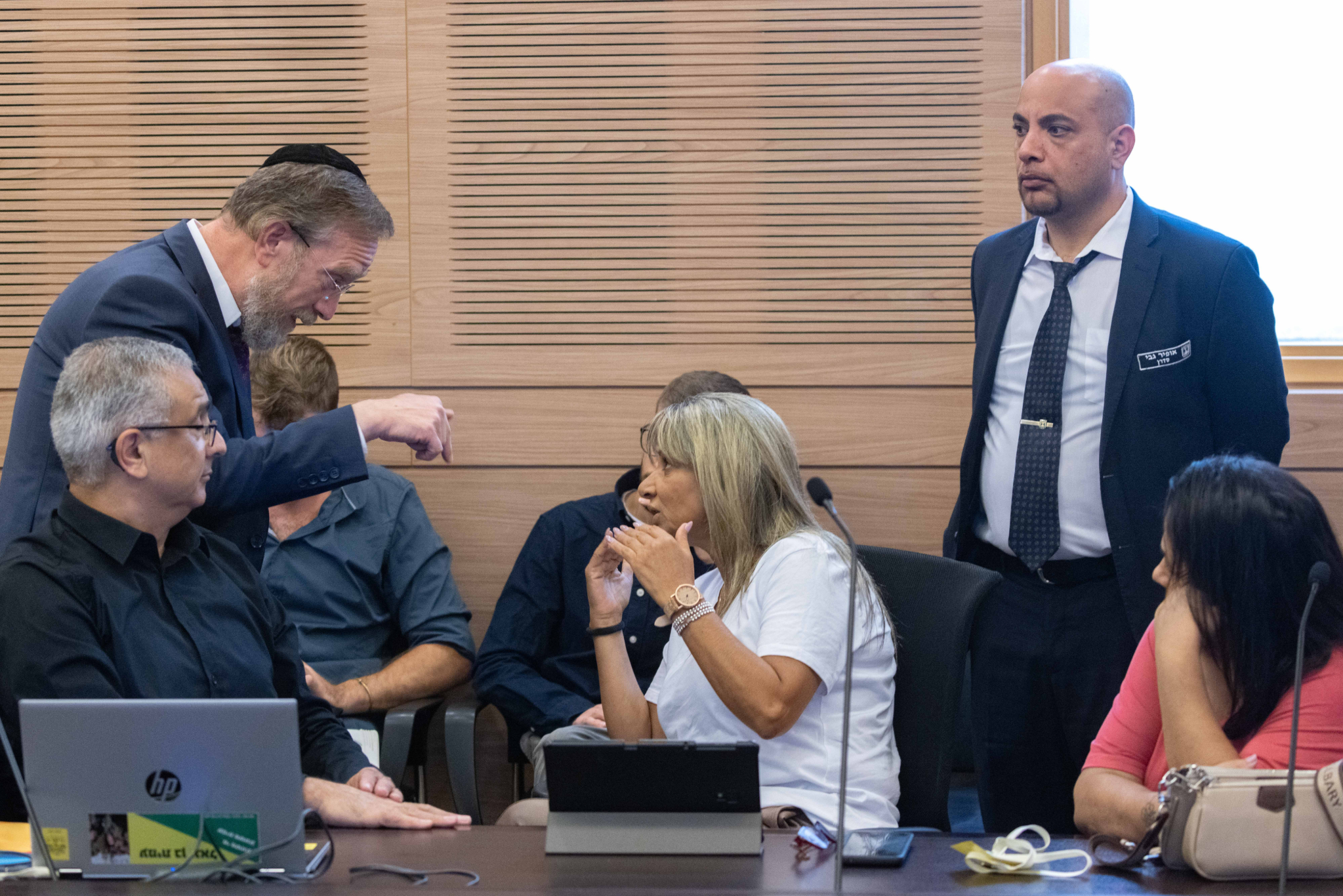
In the testimony of bereaved parents, the intensity surrounding the issue has been especially apparent. Speaking about her son during one series of hearings, Nitza Shmueli told lawmakers: “If I could steal the sperm and sit in jail for it, I would serve a life sentence without hesitation.”
Another mother said: “You all know that it is thanks to our loss and the blood of our children that you are able to live in this country.” A father lashed out at lawmakers who opposed the legislation, shouting: “Go into Gaza with a megaphone and tell the soldiers that if they die, they will not have continuity.”
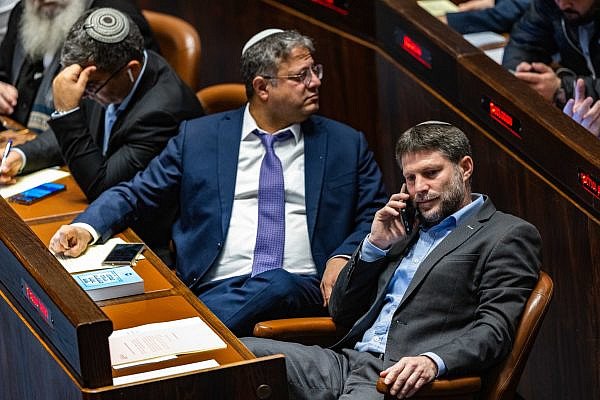
The legislation “didn’t pass in the Knesset because the religious parties stopped it,” Hashiloni-Dolev noted. “In Judaism there are laws against necrophilia; with PMSR you get some sort of satisfaction from a dead body and it has to do with the sex organs. Of course, they also don’t have children that die as soldiers. ”
Lavi sees the impasse as reflecting a deeper divergence among Israeli Jews over the finality of death. “In liberal and religious Zionism, overcoming death and grief becomes a mission, whereas in Haredi tradition there’s a tragic acceptance of the will of God,” he argued.
For Lavi, there is a deeper irony surrounding the entire debate. “The normalization of PMSR deconstructs the official narrative here, which has always been that Jews glorify life and Palestinians glorify death and martyrdom. This is an über-sanctification of the dead — it’s a wedlock with the dead.”
Hacker shares that concern. “We are becoming a morbid society with various celebrations of death, instead of celebrating life,” she lamented. “I’m worried about young widows and partners of killed soldiers being pressured by the families of the deceased to do IVF with their retrieved sperm, instead of starting a new life while they still can.”
When children become national symbols
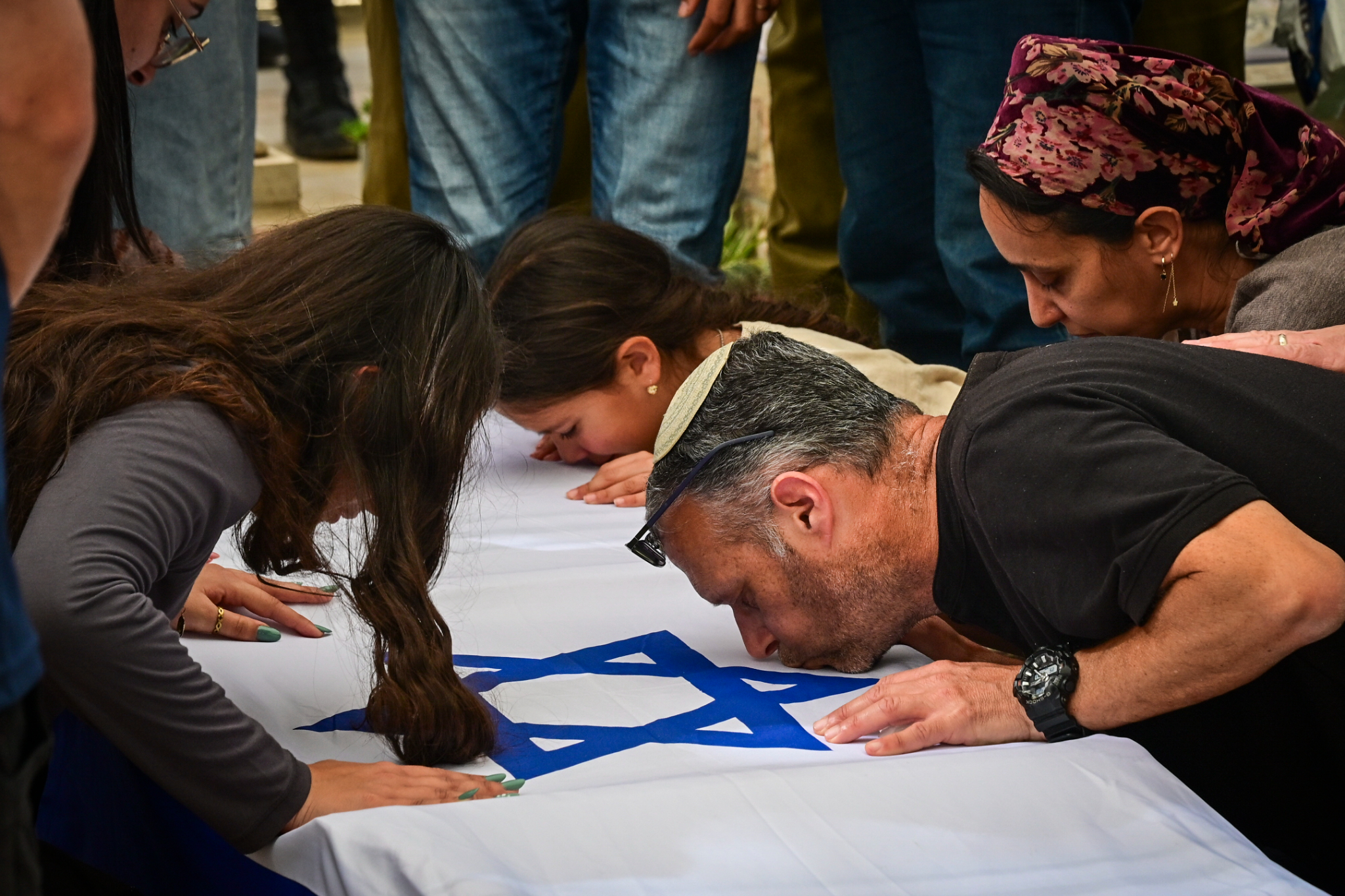
Last June, Dr. Hadas Levy became the first Israeli woman after October 7 to give birth to a child conceived via PMSR. “Until the baby was born, I was still grieving for Netanel,” she told the Times of Israel, referring to her fiance who was killed in Gaza in December 2023. “And now I can wake up in the morning and feel joy.”
As more families seek permission to use the sperm of soldiers killed since October 7, more Israeli children are likely to be conceived in this way. But what will happen to these half-orphans, conceived as part of a national reproductive project and born as symbols of “Jewish continuity”?
“Some groups [during Knesset debates] had concerns about the children being objectified and becoming a memorial,” Triger explained. He pointed to the psychoanalytic literature dating to the 1960s on the contested idea of the “replacement child” — a child conceived after the loss of another child, who may struggle to find an identity separate from the sibling they are understood to replace.
“So, the idea of a child being a memorial isn’t new,” Triger said. “But in these cases, it was private; in the case of PMSR you need technology and judicial approval, [and] it’s supported by the system.”
If there is little public discussion in Israel about the welfare of PMSR-conceived children, so too is the mother’s role in this project of national mourning often disregarded, seen as secondary to the continuity of the killed male soldier. Sperm retrieval centers male lineage, while women — widows, partners, surrogates, or women who never knew the soldier — assume the practical, physical, and emotional burden of sustaining it.
As Hacker argued, the conception of fatherhood that PMSR promotes is highly patriarchal. “Fatherhood is a volunteering role with the goal to continue one’s genetic lineage. Motherhood is an obligation. This undoes everything feminists advocated for decades and it harms the mothers, the children, and also the fathers.
“I don’t think that people should have a right to create life without being there and without being able to take care of their future children,” she added.
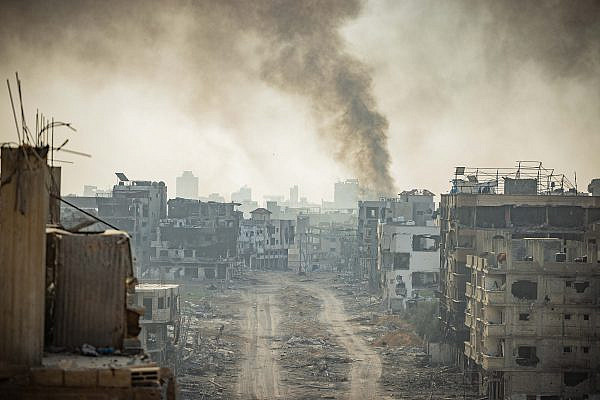
For now, Israeli society is moving faster to normalize PMSR than the legal and ethical frameworks can keep up with. And as long as the wider consensus on eternal war remains undisturbed, it is unlikely that there will be any serious moral reckoning about how posthumous sperm retrieval helps sustain such a militaristic status quo.
“Israeli society and the state have neglected to address the tragedy of war, how to treat grief, how to avoid death. It’s tragic we got to this point,” Triger reflected. “I’m not judging the families: I have never been in this position and hopefully never will” — a sentiment all the experts who spoke to +972 also emphasized. “My criticism goes toward the state. I think creating an illusion that death is not the end is a mechanism that justifies perpetual war.”