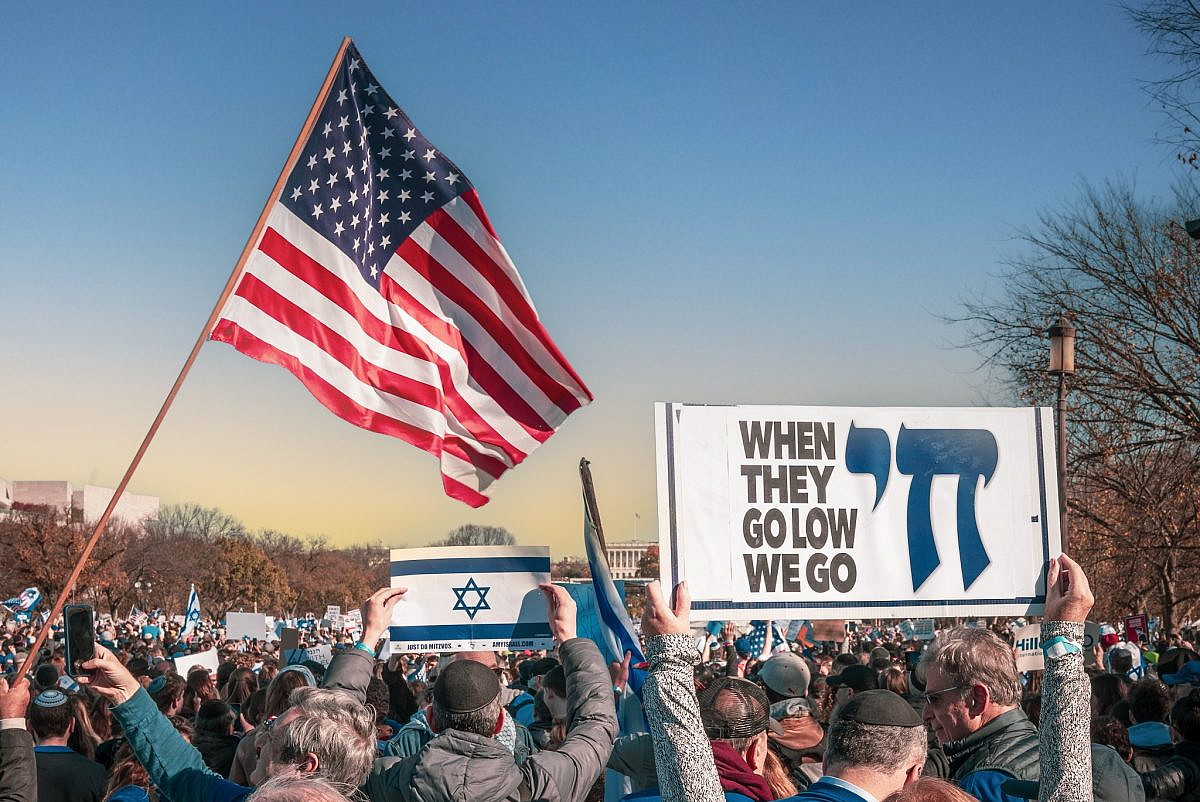
It was less than two months after Israel’s victory in the Six-Day War of 1967, and Jewish Americans were euphoric. But while many of his coreligionists took newfound pride in the military prowess of the Jewish state, American journalist I.F. Stone saw an emerging “moral schizophrenia.”
“In the outside world the welfare of Jewry depends on the maintenance of secular, non-racial, pluralistic societies,” Stone wrote. “In Israel, Jewry finds itself defending a society in which mixed marriages cannot be legalized, in which non-Jews have a lesser status than Jews, and in which the ideal is racial and exclusionist. Jews must fight elsewhere for their very security and existence — against principles and practices they find themselves defending in Israel.”
Born in Philadelphia to Jewish Ukrainian immigrants, Stone had established himself as a leading progressive investigative journalist when, in 1946, he accepted an invitation to embed with the Haganah — the underground Zionist paramilitary force in Palestine — as it smuggled in Jewish refugees past the British naval blockade. Those who attempted the perilous journey, Stone argued, “have been kicked around as Jews and now they want to live as Jews. Over and over I heard it said: ‘We want to build a Jewish country’ … Are their national aspirations any less worthy of respect than those of any other oppressed people?”
Two decades later, Stone’s nascent Zionist zeal had been largely extinguished. Those experiencing “prophetic fervor” after Israel’s conquest in June 1967, Stone predicted, would “soon begin to feel that the light they hoped to see out of Zion is only that of another narrow nationalism.” He believed this would inevitably lead to a “reexamination of Zionist ideology” among Jews in the diaspora, especially as the implications of Israel’s conquest — military rule over millions of Palestinians in the West Bank and Gaza — dawned on them.
He was wrong: Far from prompting any reexamination of Zionism, the Six-Day War cemented its place at the heart of Jewish American identity. And for the past 60 years, the moral contradiction that Stone observed has never been resolved; indeed, most didn’t even recognize it.
Alongside their Zionism, Jewish Americans have remained one of the most reliable Democratic Party voting blocs, committed to the idea of equal rights under the law and sympathetic to the plight of other racial, religious, and ethnic minority groups. This deep-seated belief in liberal democracy was not seen as inconsistent with supporting Israel’s right to exist as a “Jewish and democratic state,” even as the racist and exclusionary implications of the state’s ethnonationalist character went largely unexamined.
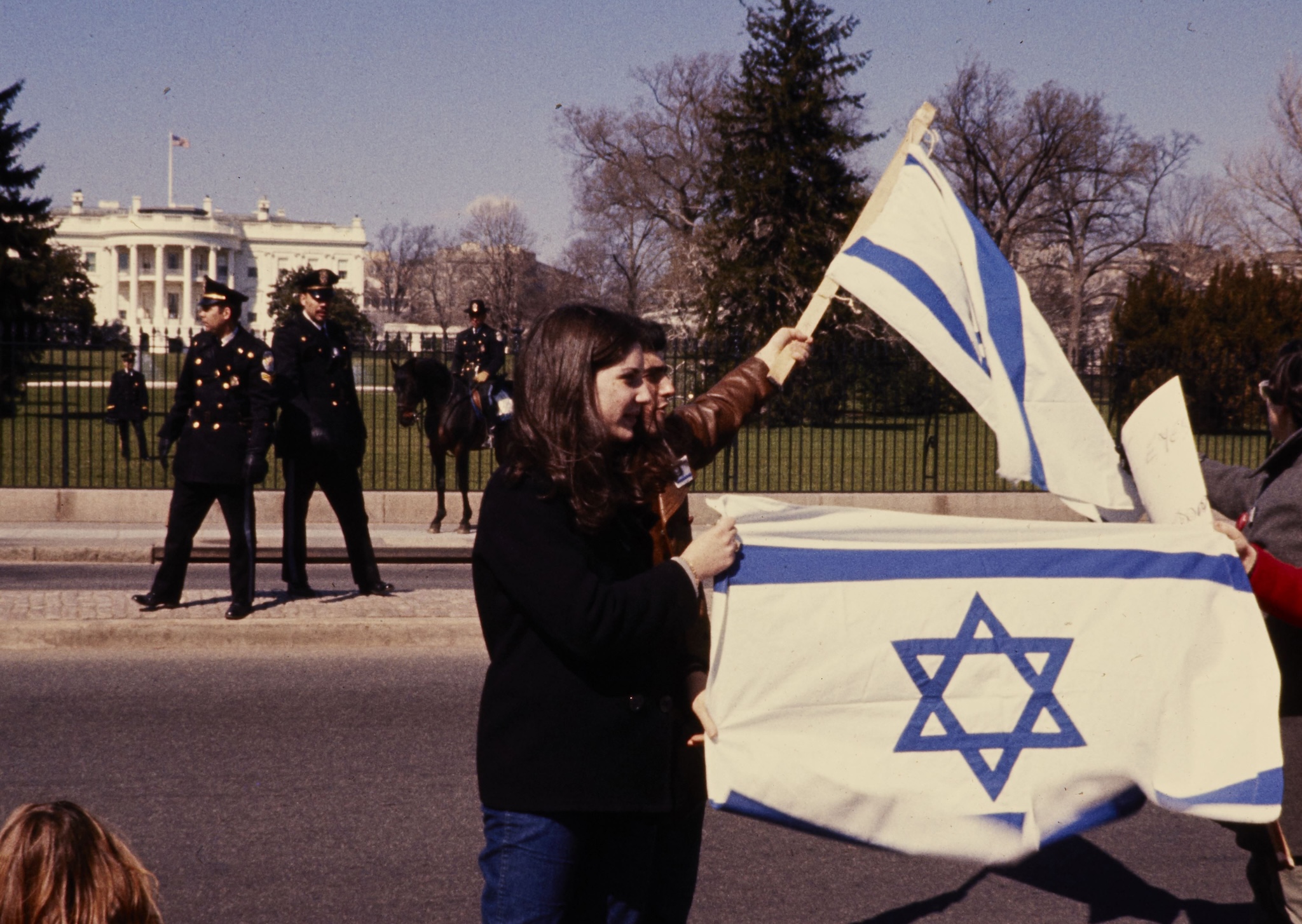
But it will be difficult to sustain this moral contradiction for much longer. More than three years into its genocide in Gaza, Israel has lost the support of the majority of Americans, and ending military aid has become a mainstream position in the Democratic Party. Meanwhile, the Israel lobby — exemplified by AIPAC’s massive campaign spending and shady election tactics to defeat pro-Palestinian candidates — no longer even pretends to be committed to democracy.
For the first time, many Jewish American voters are being forced to reckon with a choice they have long been able to avoid: between their commitment to liberal democracy and their support for Israel. The midterm elections put that choice to the test.
The end of an easy consensus
Part of the reason this “moral schizophrenia” has persisted for so long is that there has been little incentive to confront it. Among Jewish Americans, and Americans more broadly, support for Israel simply went unquestioned for decades. Precisely because of the lack of engagement with Palestinians and their history, there was no need to think too deeply about what a “Jewish state” meant in practice.
As the writer Benjamin Moser has put it, reflecting on his Jewish childhood in 1980s Houston, “Israel was like a hospital or a university or a park, and I think that most Jewish Americans looked at Israel with the same kind of benevolence with which they might view a dog shelter or a food bank: which is to say that they were happy it existed, willing to help, grateful for a brief tour, but not overly interested in its inner workings.”
But this abstract attachment would eventually collide with the racist reality of Zionism. I.F. Stone believed that Jews outside Israel would be particularly horrified by the parallels between their own histories and Palestinians’ second-class citizenship inside Israel: That “Israel is the country of the Jews and only of the Jews,” and Palestinians “must admit the fact that [they] live in a Jewish country.”
Today, Israel’s genocide in Gaza has led many Jewish Americans to question and ultimately abandon their Zionism. But others still cling to the idea of an Israel that has lost its way, vociferously critical of Prime Minister Benjamin Netanyahu while holding out hope that the Jewish state can one day be redeemed.
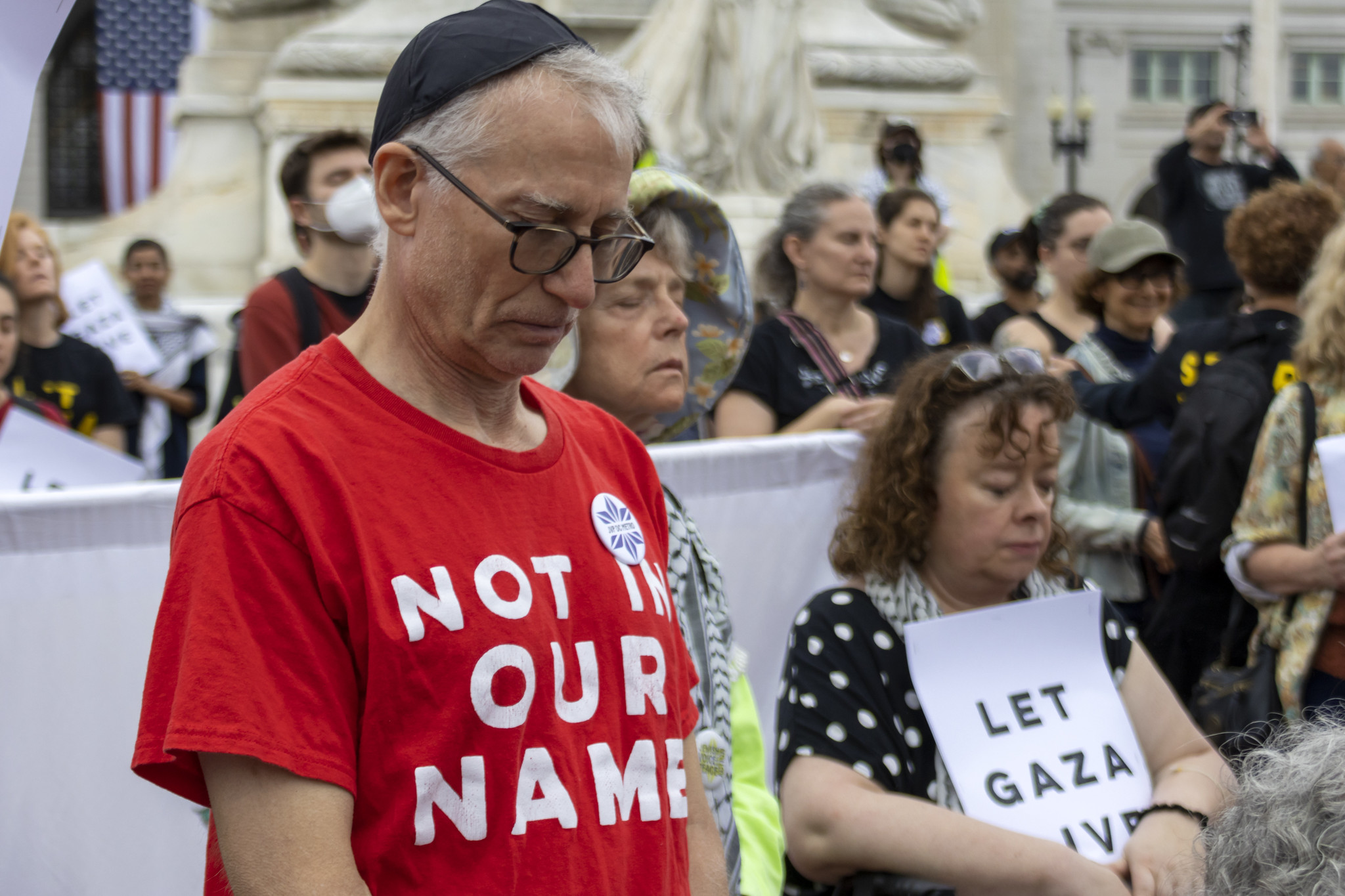
Even declining support for Zionism among Jewish Americans isn’t necessarily the radical reckoning with Israel that one might assume. In February, a survey conducted by the Jewish Federations of North America found that only 37 percent of Jewish Americans identify as Zionist, yet 88 percent believe that Israel has the “right to exist as a Jewish and democratic state.” What this discrepancy suggests is confusion and lack of agreement over the term itself — or as one Jewish leader in Milwaukee admitted, a reflection of the fact that Zionism is a “tarnished brand” — rather than a willingness to grapple with Jewish ethnonationalism.
This also points to a growing tension in the relationship of Jewish Americans to the Democratic Party. If affirming Israel’s “right to exist” as a Jewish and democratic state was long the sine qua non of participation in American politics, that is no longer true. From Zohran Mamdani’s resounding victory in New York City’s 2025 mayoral election, to pro-Palestine candidates winning this year’s Democratic primaries in Colorado, New York, and Michigan, the pro-Israel consensus in the Democracy Party has finally broken down.
By the time the midterm Congressional campaigns kicked off over the summer, nearly half of Democrats in the U.S. House of Representatives had voted to end military aid to Israel, a “seismic shift” in the party’s voting record. The U.S.-Israeli war on Iran continued with no end in sight, placing the American economy in a stranglehold, and criticism of Israel was increasingly understood as an electoral strength while any association with AIPAC became a liability.
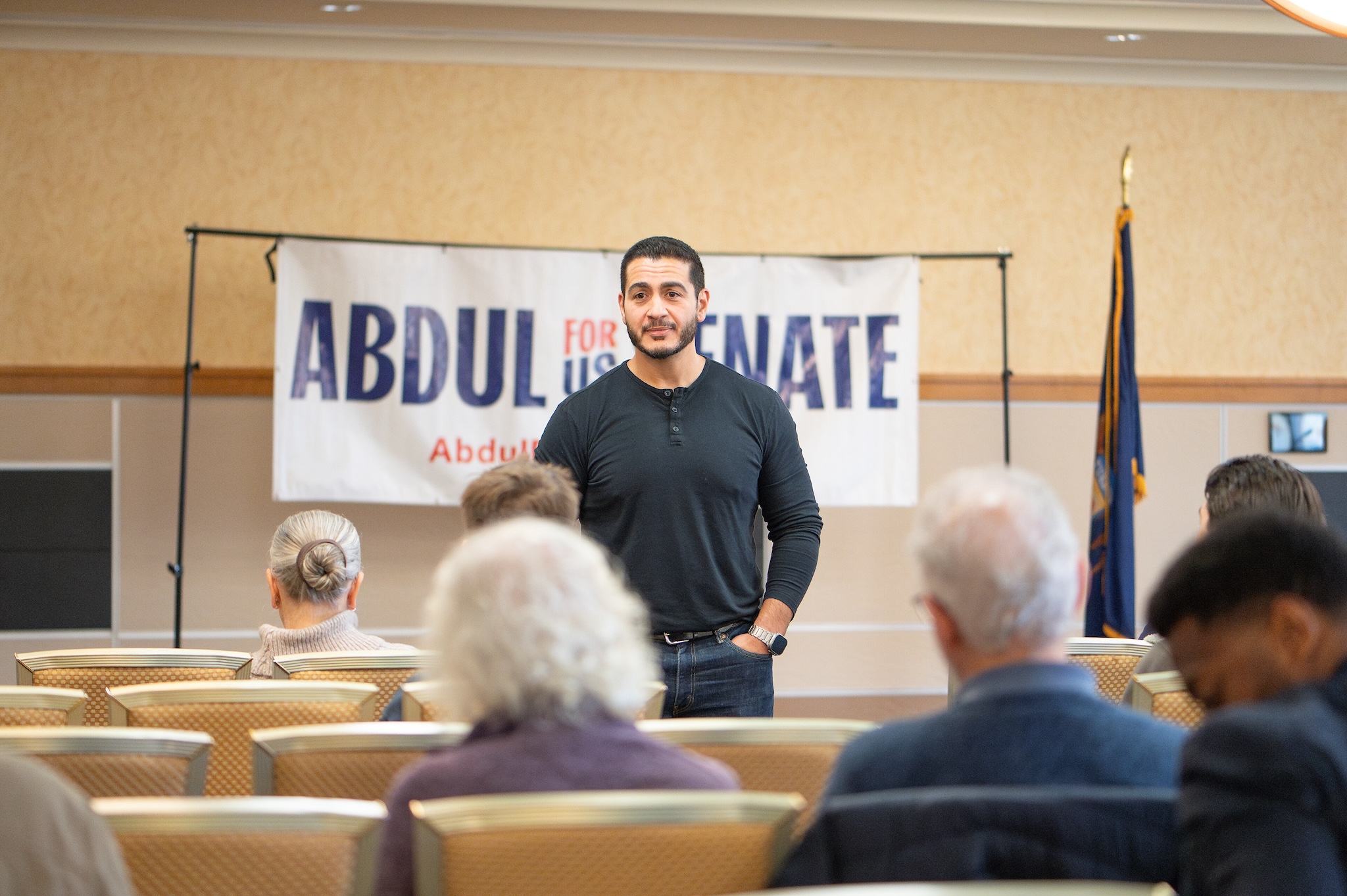
As November approached, pundits warned Democrats that they were losing the Jewish vote, jeopardizing not only their chance of victory in the midterms but also their long-term electoral prospects. Nowhere was this fear of a Jewish exodus from the Democratic Party more pronounced than in Michigan, where Abdul El-Sayed ran a campaign that refused to compromise on support for Palestinian rights and opposition to Israel’s genocide.
At the core of the public dispute between Jewish leaders in Michigan and El-Sayed was the question of Israel’s Jewish character. When asked about Israel’s right to exist, El-Sayed drew attention to the moral contradiction that question posed, suggesting that a Jewish ethnostate would not be “consistent with any form of liberal values that we say we believe in here in the United States.”
In September, a group of rabbis and other Jewish figureheads launched a petition drive, pledging to withhold their support for El-Sayed unless he committed to their five nonnegotiable demands — one of which was affirming “Jewish sovereignty in Israel.” By the next month, Nonnegotiable Michigan had expanded into a national endeavor, with rabbis from across the country joining to rebuke El-Sayed for forcing them “to choose between our progressive values and our Jewish peoplehood.”
Nonnegotiable is a campaign led by Jewish Michiganders urging leaders of the Democratic Party to treat bigotry and violence against our community as the national emergency it is — not with platitudes, but with urgency and moral clarity.
We invite Dr. El-Sayed and all candidates… pic.twitter.com/FVBcxY267m
— Nonnegotiable Michigan (@NonnegotiableMI) October 21, 2026
Meanwhile, Republican candidate Mike Rogers, an opponent of abortion and LGBTQ rights who denied the results of the 2020 election, was stoking Jewish fears of antisemitism at the end of a consistently Islamophobic campaign.
The closing message to Jews in Michigan, from their own community leaders and the GOP alike, was also a warning to all American Jews: You can vote Democratic, or vote based on your own interests and concerns as Jews, but you cannot do both.
No mass defection
It quickly became clear that concerns about a mass Jewish defection from the Democratic Party were completely overblown.
National exit polls and surveys of Jewish voters in the midterms found that support for Democratic candidates remained strong, estimated at between 68 and 72 percent of Jewish voters; depending on the poll, this represented no change or a 10-point dip from previous recent elections. While one survey suggested a third of Jewish Democrats see the party as too critical of Israel, it also found that a similar percentage cast a vote for Israel critics despite their objections.
Among Jewish voters in Michigan, El-Sayed ran behind other statewide Democratic candidates and underperformed compared to Democrats in prior races. But one poll found that he still won a majority of the Jewish vote (52 percent to Rogers’ 44), and 74 percent of registered Jewish Democrats, and that among those who voted for him, 60 percent also agreed with his stance on Israel.
In other words, El-Sayed’s pro-Palestine platform — and his willingness to question Israel’s ethnonationalist character, which he has continued to do since the election — was not a major electoral liability, even among Jewish voters. In Michigan and across the country, as one reporter put it, “disagreements over Israel have not fundamentally changed how American Jews vote.”
And if the midterms presented Jewish Americans with a choice between liberal democracy and support for Israel, most appeared to prioritize the former. Multiple post-election surveys found that protecting the future of American democracy remained their top concern, ranked above other issues including the cost of living, antisemitism, and support for Israel.
In fact, while democracy remains a consensus position among Jewish Americans, the surveys also suggest that the community has grown much more divided over Israel. A J Street poll of Jewish Americans this month found a nearly even split on whether the United States should continue to provide military aid to Israel, although a majority agreed that any U.S. support should not be unconditional. The generational divide is particularly pronounced, with nearly half of Jews under 34 sympathizing more with Palestinians than Israelis — and, according to another poll from earlier this year, favoring a binational state in Israel-Palestine over an exclusively Jewish one.
Jewish Americans appear less split, though, about how Israel makes their own lives in the United States more dangerous. Eighty percent surveyed in the J Street poll agreed that Israeli actions in the West Bank and Gaza contribute to antisemitism, and almost as many supported sanctions against violent settlers. A majority also believed that AIPAC’s efforts to crush criticism of Israel by spending millions to defeat pro-Palestinian candidates also increase antisemitism, and disapprove of Jewish organizations “exploiting concerns over antisemitism in order to defend unpopular Israeli policies.”
It is little surprise that Jewish Americans find themselves out of step with these institutions that have long claimed to represent them. For if the midterm elections suggested that Jewish voters value liberal democracy over fealty to Israel, the Jewish establishment has shown it believes exactly the opposite.
Just days after the election, American Jewish leaders gathered in Washington at the Jewish Federations of North America’s General Assembly. There, the predominant message was to “double down on traditional support for U.S. military and political aid to Israel,” and to cast those who raise doubts about this relationship as “antisemitic, ignorant, or perhaps under the spell of Qatar and the Muslim Brotherhood.” Perhaps they didn’t realize that the majority of their community — and the majority of Americans — now falls into precisely this category.
The reckoning begins
Although Jewish voters have largely stuck with Democratic candidates nationwide, the defections cannot entirely be ignored. This was an historic election for the Democratic Party, which increased its share of the vote across every major demographic group, so the fact that the Jewish Democratic vote either stayed flat or declined slightly could represent a more significant downturn than the numbers alone suggest.

This election cycle has also shattered the fear barrier against criticizing Israel, and the victories of El-Sayed and other unabashedly pro-Palestinian candidates will surely inspire others to run on similar platforms in 2028 and beyond. In future elections, it may no longer be possible for Jewish Americans to vote as “pro-Israel Democrats,” a concept that will increasingly be seen as a contradiction in terms. And given the concurrent shifts in the Republican Party, it could be difficult to vote “pro-Israel” at all.
Another upshot of the Michigan election was that the Jewish vote ultimately didn’t affect the results. As Jewish Currents reported, El-Sayed won “by more than 300,000 votes, which is more than twice the Jewish population of the state.” Again, the scale of Democratic momentum in these midterms is also part of the picture: In different circumstances, depressed Jewish voter turnout may have been significant enough to swing this race, and could affect future ones as well.
But the midterms have once again affirmed that running pro-Palestinian candidates is good politics. The number of voters that such candidates draw — including younger progressive Jews, who turned out in droves to support Zohran Mamdani — could very well outweigh any loss of support from single-issue Israel voters. Conversely, if there is any lesson to be learned from the 2024 presidential election, it is that refusing to listen to Americans horrified by Israel’s genocide has clear electoral consequences.
For many Jewish voters in Michigan who cast a ballot for El-Sayed despite their deep disagreements with him over Israel, the election was a source of “deep anguish.” That anguish is the symptom of the moral schizophrenia Stone identified — Jewish parents, for example, torn over whether to vote to protect the rights of their own transgender children or to protect Israel.
Yet that anguish might also open up space to recognize and confront this decades-old contradiction. Being forced to choose between liberal democracy and Jewish nationalism may be exactly what is necessary to see that they were never compatible to begin with.
Most read on +972


In Michigan, Jewish voters were told that protecting their community and securing their interests took precedence over the democratic values they hold dear — and by and large they rejected that equation. Perhaps that means they will now be more likely to hold Israel to the same standard.
And at the very least, it becomes more difficult to ignore the way Israel subverts democracy to enshrine Jewish rights as supreme. Its own election has made that clearer than ever, with the opposition parties refusing to exercise their democratic majority and form a government because it requires partnership with the Palestinian-led parties.
“Here lies the roots of a growing divergence between Jew and Israeli,” Stone wrote, “the former with a sense of mission as a witness in the human wilderness, the latter concerned only with his own tribe’s welfare.” Sixty years later, if the midterms are any indication, Jewish Americans are opting for democracy over narrow tribal interests — and that divergence is now wider than ever before.