In partnership with

Ahmad, a veteran mechanic in Ramallah, wipes black grease from his hands with a tattered rag as he surveys a disassembled car engine in his workshop. In recent weeks, he tells +972 Magazine, he has seen a sharp rise in vehicles damaged by contaminated or adulterated fuel, which corrodes fuel pumps, clogs injectors, and ruins spark plugs.
For motorists already squeezed by rising living costs and an unemployment crisis, the repairs are another expense many can ill afford. But as official fuel supplies in the West Bank have dwindled this summer, many of Ahmad’s customers have had no choice but to purchase low-grade alternatives diluted with cheap additives and sold through informal channels.
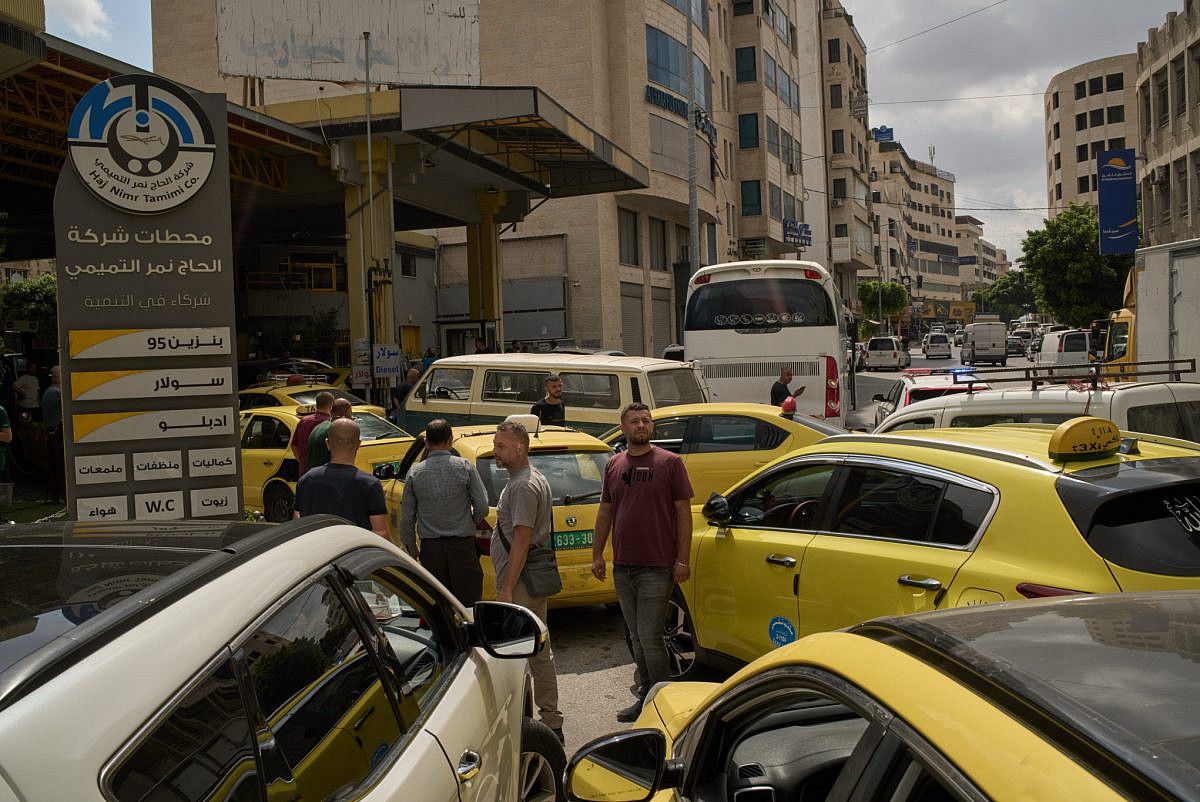
Outside Ahmad’s workshop, cars stretch along the road in Al-Bireh, Ramallah’s adjoining city, waiting at one of the area’s main gas stations. Drivers refresh WhatsApp and social media groups that have become ad-hoc tracking networks for stations that still have fuel. Attendants wave motorists away as pumps run dry.
For many Palestinians, however, the question is not simply whether fuel is available, but if they are able to reach it.
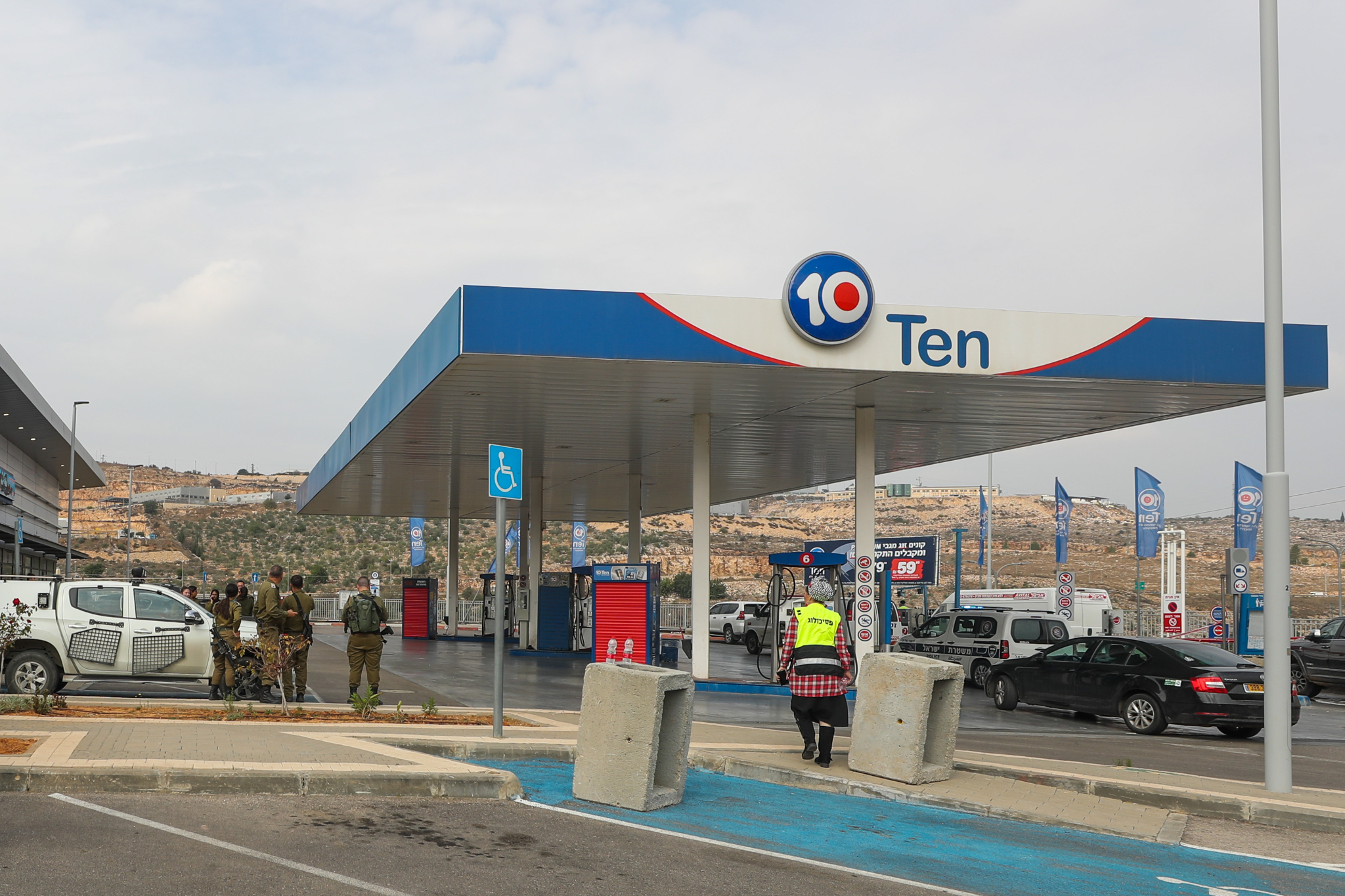
In late July, Palestinian laborers in the Barkan Industrial Zone in the northern West Bank received verbal warnings and WhatsApp messages from security officials in the neighboring settlement of Ariel, instructing them not to refuel at gas stations inside and near the entrance of the settlement. Workers were reportedly told that they could face arrest, interrogation, or the loss of their work permits if they disobeyed.
The restrictions are one manifestation of the fuel crisis plaguing the West Bank. Under the framework established by the 1994 Paris Protocol, the economic agreement signed between Israel and the Palestinian Liberation Organization (PLO) as part of the Oslo process, the West Bank remains heavily dependent on fuel entering through Israeli-controlled channels.
At the same time, Israel’s withholding of Palestinian clearance revenues — taxes and customs duties Israel collects on the Palestinian Authority’s behalf and transfers to Ramallah — has pushed the PA into an acute fiscal crisis. In an effort to recover lost revenue, the cash-strapped PA has intensified its campaign against fuel smuggling and tax leakage.
With little meaningful strategic reserve, even relatively short disruptions can quickly become shortages. Together, these pressures have turned an everyday commodity into a scarce resource, illuminating the extent of the West Bank’s broader political and economic dependency on Israel.
Those vulnerabilities, triggered by a sharp deterioration in the local security environment, became even more visible after a deadly incident in the village of Tel, near Nablus, on July 24. What began as an attack on Palestinian homes by over 20 settlers from Havat Gilad escalated into an armed confrontation involving Israeli soldiers, which left four Palestinians, one settler, and one soldier dead. The Israeli military then imposed a sweeping dragnet of road closures, checkpoints, and movement bans.
Under these heightened measures, settlements like Ariel closed their gates to Palestinian laborers, effectively cutting off their access to gas stations that they had used as an alternative source of fuel. The incident juxtaposed Palestinians’ lack of basic freedom of movement and access to energy with the unfettered fuel supplies enjoyed by neighboring Israeli settlers.
From crisis to crackdown
Behind the fuel shortage lies a much larger fiscal crisis. A senior Palestinian official, speaking on condition of anonymity, told +972 that the PA has been pushed into unprecedented “fiscal paralysis” by Israel’s withholding of clearance revenues, which ordinarily account for about two-thirds of the PA’s budget. Locally generated taxes now amount to only NIS 9-12 million ($3-4 million) a day, while the government’s monthly operating costs stand at roughly NIS 1.3 billion ($430 million). The shortfall has forced the PA to pay only a portion of public sector salaries while accumulating obligations elsewhere.
Financial support from Arab and Islamic countries has been sharply reduced since late last year, according to the senior official, and sustained external assistance largely comes from the European Union and the World Bank. As a result, the government has increasingly turned inward, searching for revenue being lost through tax evasion, theft, and informal markets.
Fuel is only the latest target of that campaign: The PA first intensified efforts to curb losses in the water and electricity sectors. Because the PA is charged for water purchased through Israeli suppliers even when some of it is lost before reaching paying consumers, officials argue that the theft was costing the treasury substantial sums.
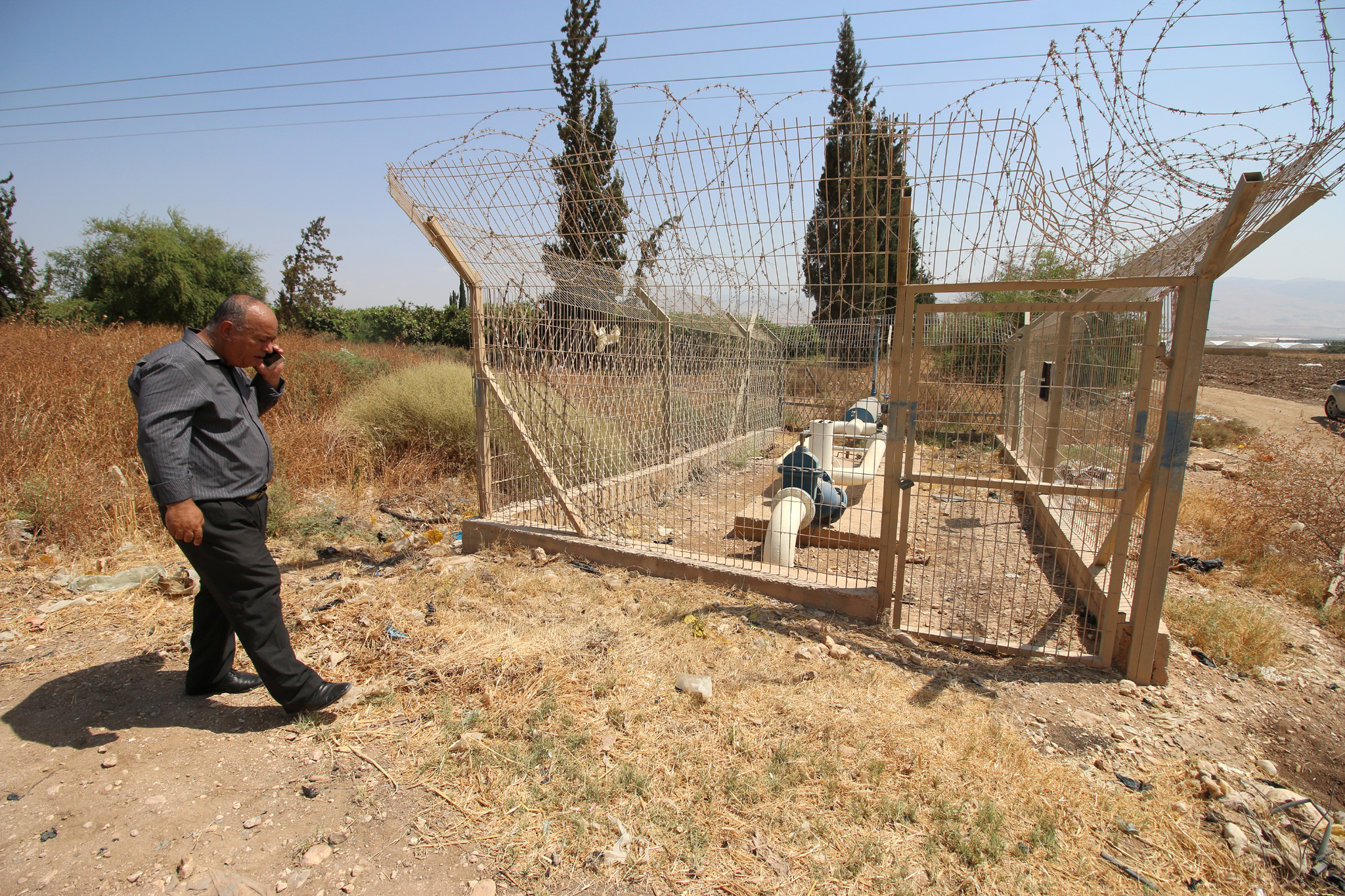
Authorities have targeted illegal connections and organized theft along major water networks, including the Deir Sha’ar pipeline in Hebron and networks in Jenin, where the Palestinian Water Authority has said more than 12,000 cubic meters of water were being stolen each day.
After moving against these networks, the government turned to fuel smuggling. Finance Ministry officials estimate that fuel entering through informal channels accounts for between a quarter and a third of Palestinian market consumption — roughly 30 million liters a month, valued at more than NIS 130 million ($43 million).
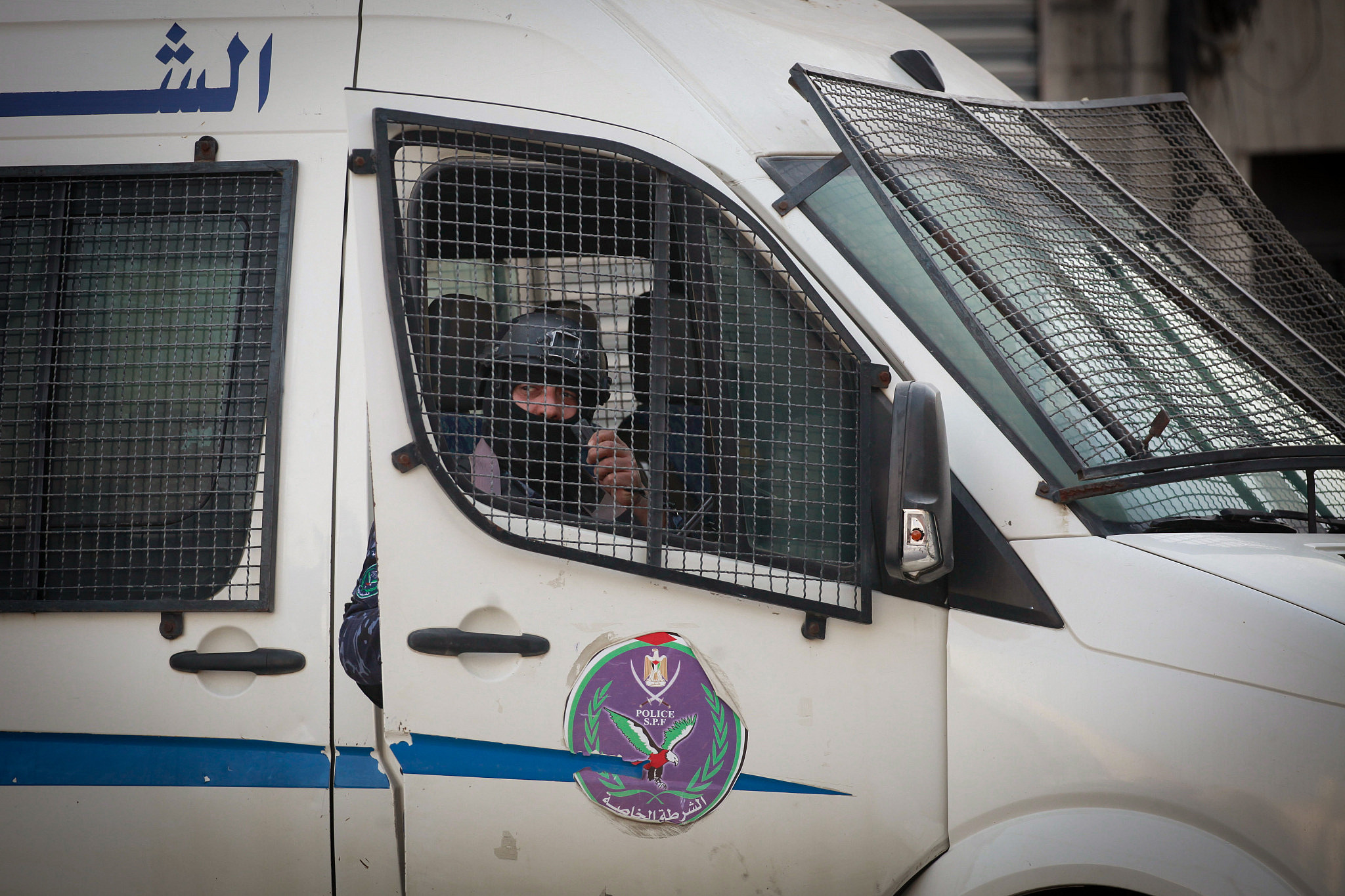
That campaign moved dramatically into public view in July when the Palestinian Public Prosecutor announced an investigation into Al-Huda Petroleum Company and issued an arrest warrant for its owner, prominent businessman Tareq Al-Natsheh, over allegations of market manipulation and tax evasion.
Al-Natsheh, who established the company in 1998, built one of the West Bank’s largest fuel distribution businesses, with 28 gas stations and significant interests in fuel storage facilities. His group also held longstanding contracts to supply PA security forces and government ministries.
According to local media accounts, joint security forces and customs officers raided Al-Huda facilities, seized fuel inventories, and obtained access to the company’s financial records. The operation coincided with a further tightening of supplies in a market where Al-Huda controls a substantial share of distribution. Several informed Palestinian sources, however, questioned the timing of the case, arguing that the tax investigation may also be entangled with political rivalries inside the Palestinian leadership in the run-up to the November legislative elections.
The allegations have raised a broader question: How could a company that supplied government ministries and security forces for more than two decades accumulate violations on such a scale without intervention from the Finance Ministry, the Petroleum Authority, or customs officials — at least until the PA was facing one of its most severe financial crises?
A structural supply-demand gap
Some within the Palestinian government, however, reject the very premise of a fuel shortage. Majdi Hasan — who serves as deputy minister of finance and planning, general commissioner of revenues, and chairman of the General Petroleum Authority — told +972 that official Petroleum Authority records show that more than 3 million liters continue to enter the Palestinian market each day. He argued that rumors circulating on social media have fueled panic buying, with motorists filling tanks and containers beyond their normal needs and thereby creating shortages at individual stations.
Hasan also defended recent proposals to establish a state-owned Palestinian Petroleum Company, describing it as a long-planned reform rather than an emergency attempt to seize control of the market. Under the plan, he said, the Petroleum Authority would regain regulatory and oversight powers while the new company would handle the commercial functions of purchasing, transporting, and distributing fuel, separating roles that are currently concentrated within the same system.
For economist Ahmad Baker, however, panic buying is a symptom of the shortages, not the central cause. He told +972 that the PA’s crackdown on smuggling may recover some lost tax revenue but does little to address what he sees as the underlying problem: a structural gap between Palestinian fuel demand, estimated at 4 million liters daily, and the 2.5-3 million liters entering the West Bank through Israeli-controlled channels.
Baker traces this dependency directly to the 1994 Paris Protocol, which placed the Palestinian economy within a common customs framework dominated by Israel and left the West Bank heavily dependent on Israeli-controlled trade and import channels.
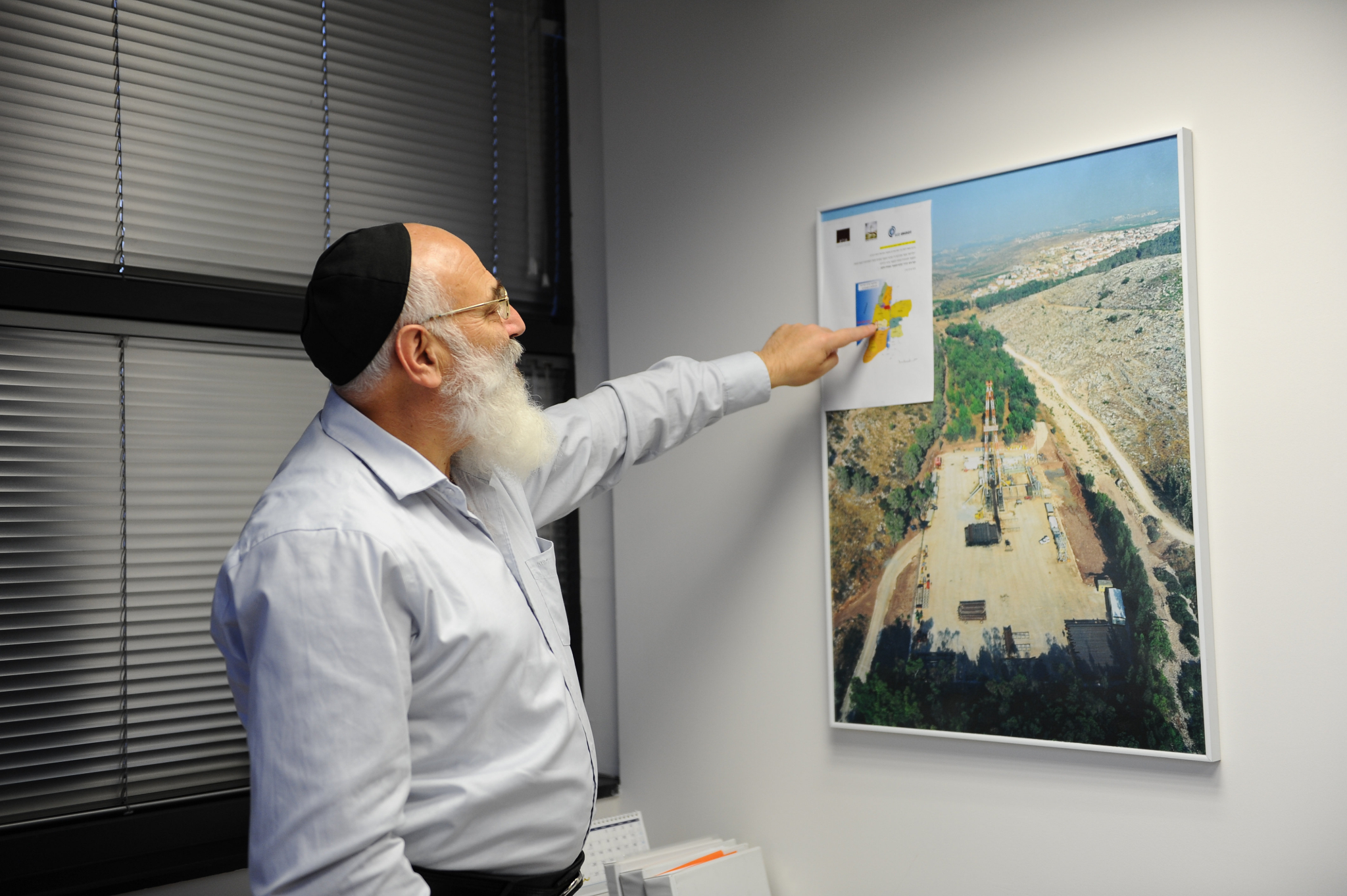
In the energy sector, Baker said, the arrangement has prevented the PA from developing an independent supply system and left it unable to freely procure fuel through neighboring countries such as Jordan or Egypt. Even access to Palestine’s own natural wealth is limited — namely the Meged oil and gas field, which is estimated to contain 1.5 billion barrels of oil and 182 billion cubic feet of natural gas, 60 percent of which lies beneath the West Bank but has been exploited exclusively by Israel for decades.
That dependence becomes still more pronounced during periods of heightened Israeli military demand. Israel’s Defense Ministry has, during emergency periods, redirected a significant share of the fuel tankers normally used to supply the Palestinian territories toward military needs. Estimates of the number of affected tankers vary, but the effect is the same: A supply system with little excess capacity becomes even more vulnerable when transport resources are diverted elsewhere.
The West Bank also has virtually no strategic fuel reserve. The market depends largely on fuel already stored at individual gas stations, and some reports suggest that the existing supply would only be sufficient for three days of ordinary consumption if regular deliveries are interrupted. As a result, even a relatively short disruption — whether caused by military closures, transport restrictions, banking problems, or a dispute with distributors — can quickly produce empty pumps and long queues.
Too much cash
The fuel crisis is being compounded by another, less visible problem. The growing accumulation of physical Israeli shekels inside the Palestinian banking system has created a “liquidity trap,” engineered by Israeli restrictions.
Because much of the Palestinian economy, including fuel transactions at Palestinian gas stations, remains cash-based, large quantities of shekels flow into local banks. Palestinian financial institutions must ultimately transfer their excess cash to Israeli banks to clear it from the system and maintain their ability to make electronic payments in Israel. But Israeli banks, guided by political directives, have increasingly restricted the quantities they will accept. Palestinian officials say the resulting surplus has now exceeded NIS 18 billion ($6 billion).
The problem has direct consequences for the fuel sector. According to sources in the Finance Ministry, if Palestinian banks cannot convert cash into digital credit, it constrains their ability to settle electronic payments to Israeli fuel suppliers. Some gas stations, the officials said, have responded by limiting or refusing cash payments altogether and asking customers to pay electronically instead.
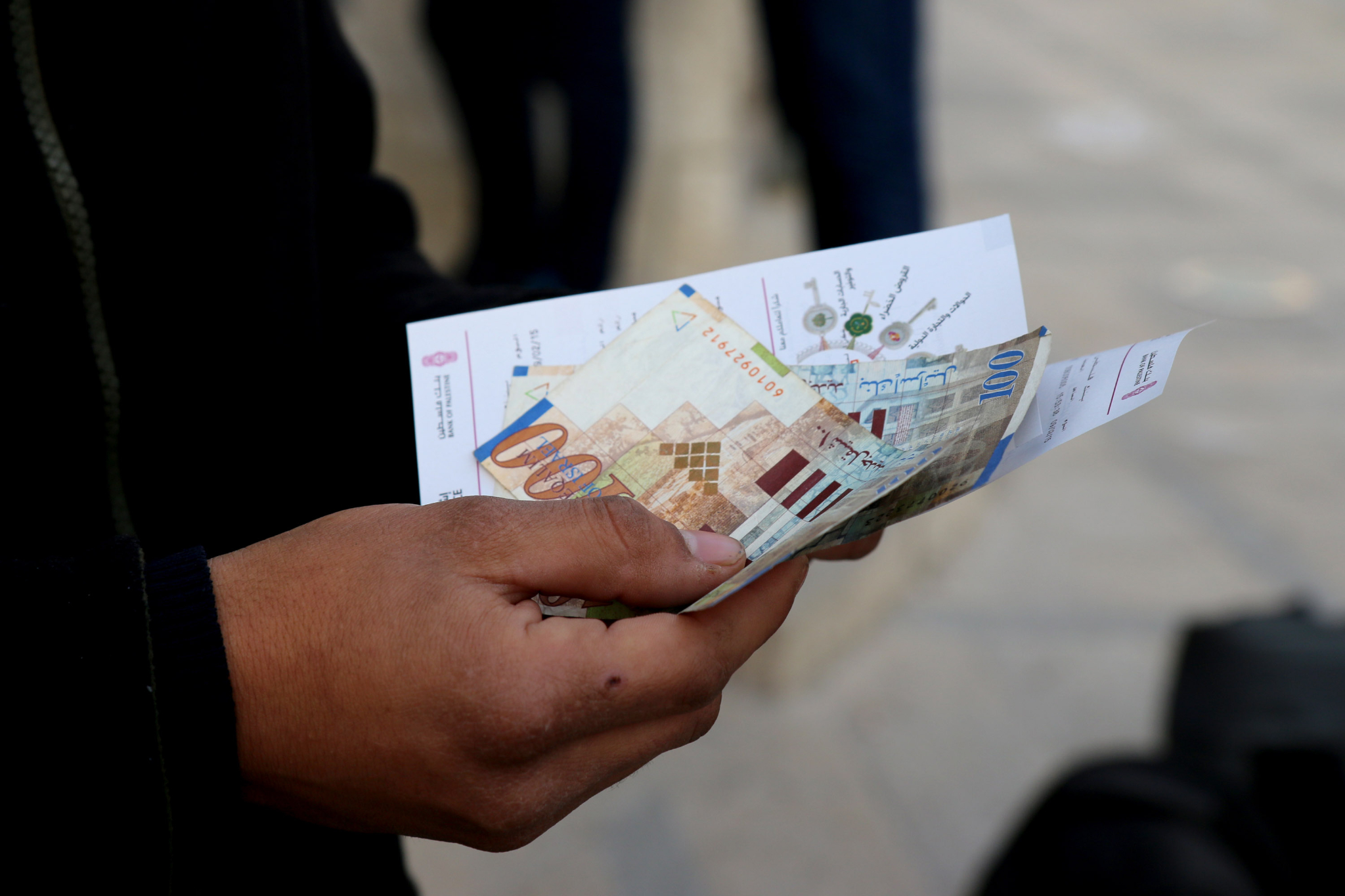
For Palestinians who receive their wages in cash or have limited access to formal banking, including the vast majority of day laborers and low-income families, the shift creates another barrier to obtaining fuel: Even where supplies remain available, the form of payment dictates who is able to buy them.
The problem of accumulating debt to Israeli fuel suppliers has also plagued the PA itself. According to Finance Ministry records and bilateral financial reports from 2024, the PA was forced to divert NIS 767 million ($254 million) of Palestinian funds held in Norway under a U.S.-brokered arrangement to settle outstanding obligations to Israeli fuel companies and secure continued deliveries.
The transaction illustrated the multiple points at which Palestinian fiscal and energy dependence intersect: Israel can deduct Palestinian debts from clearance revenues it collects on the PA’s behalf, while Palestinian fuel suppliers remain dependent on Israeli-controlled channels to replenish the market. For a government already struggling to meet salaries and basic operating costs, paying fuel debts therefore becomes inseparable from the larger fight over withheld Palestinian revenues.
But given its limited ability to recover these funds, the PA is turning inward — seeking to recover money through increasingly aggressive campaigns against smuggling, tax evasion, and resource theft. Those efforts may recoup revenue, but they also place the costs of the PA’s financial crisis more directly onto a population already living with reduced salaries and rising prices.
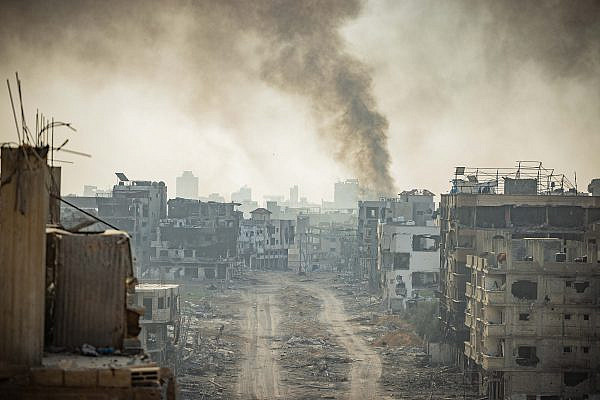
Deliveries may increase (as they appear to be in recent days) and the gas station queues may temporarily disappear. A crackdown may close one smuggling route, and a new shipment may refill empty tanks. But the conditions that made the shortage possible — dependence on Israeli-controlled supply channels, the PA’s fiscal collapse, banking restrictions, an illicit fuel market, and the absence of meaningful strategic reserves — remain.
All of this suggests that the daily mechanical problems that Ahmed sees at his garage, as well as the long hours that drivers spend in lines at gas stations in Ramallah, cannot be solved just by combating smuggling networks or by forcing a shift to digital payments. Any meaningful relief requires fundamental changes, including dismantling the unified customs envelope established by the 1994 Paris Economic Protocol, granting Palestinians full energy sovereignty to develop their own domestic resources, and pushing for international pressure to end Israel’s withholding of PA clearance revenues.
Without these structural transformations, Palestinians will remain trapped in an endless queue. From behind the windshield of a car threatened by contaminated fuel, they wait for a pump that might yield a few diluted liters. And as they look to the nearby hills, they watch Israeli bulldozers quietly carve away what remains of their village lands to expand the settlement of Ariel, where the fuel flows without interruption.
A version of this article was first published on Local Call. Read it here.