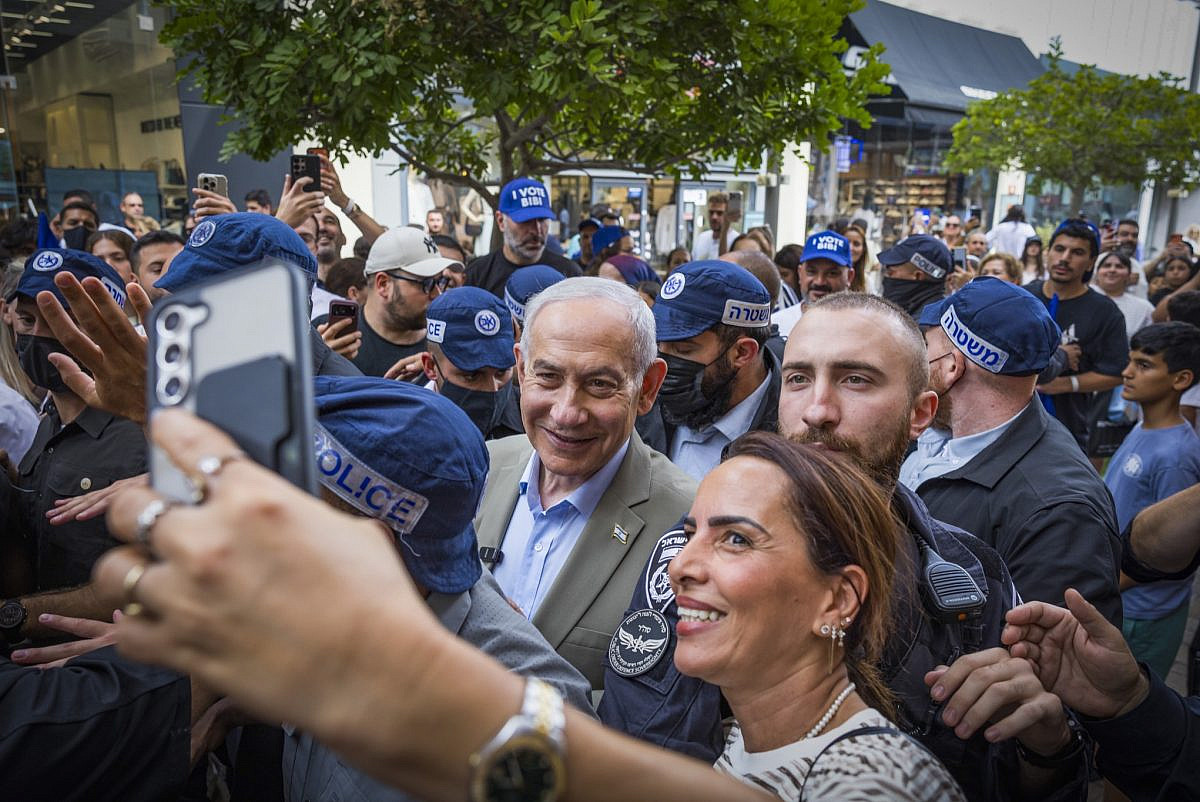
Four days before last week’s Israeli election, Benjamin Netanyahu appeared to commit political suicide.
“If you think American aid will continue, get used to the idea that it won’t. America has changed, and it’s only a matter of time,” the prime minister said in an interview on Channel 10. “There could be banking sanctions. You need to prepare for an alternative financial system based on cryptocurrencies. I’ve asked for a plan to be drawn up for that.”
This remarkable statement was met with near wall-to-wall condemnation and even ridicule in the Israeli media. “Netanyahu went off the rails,” “Economists left stunned,” and “Netanyahu escaping to a crypto fantasy land,” read the headlines, including in normally pro-Netanyahu outlets.
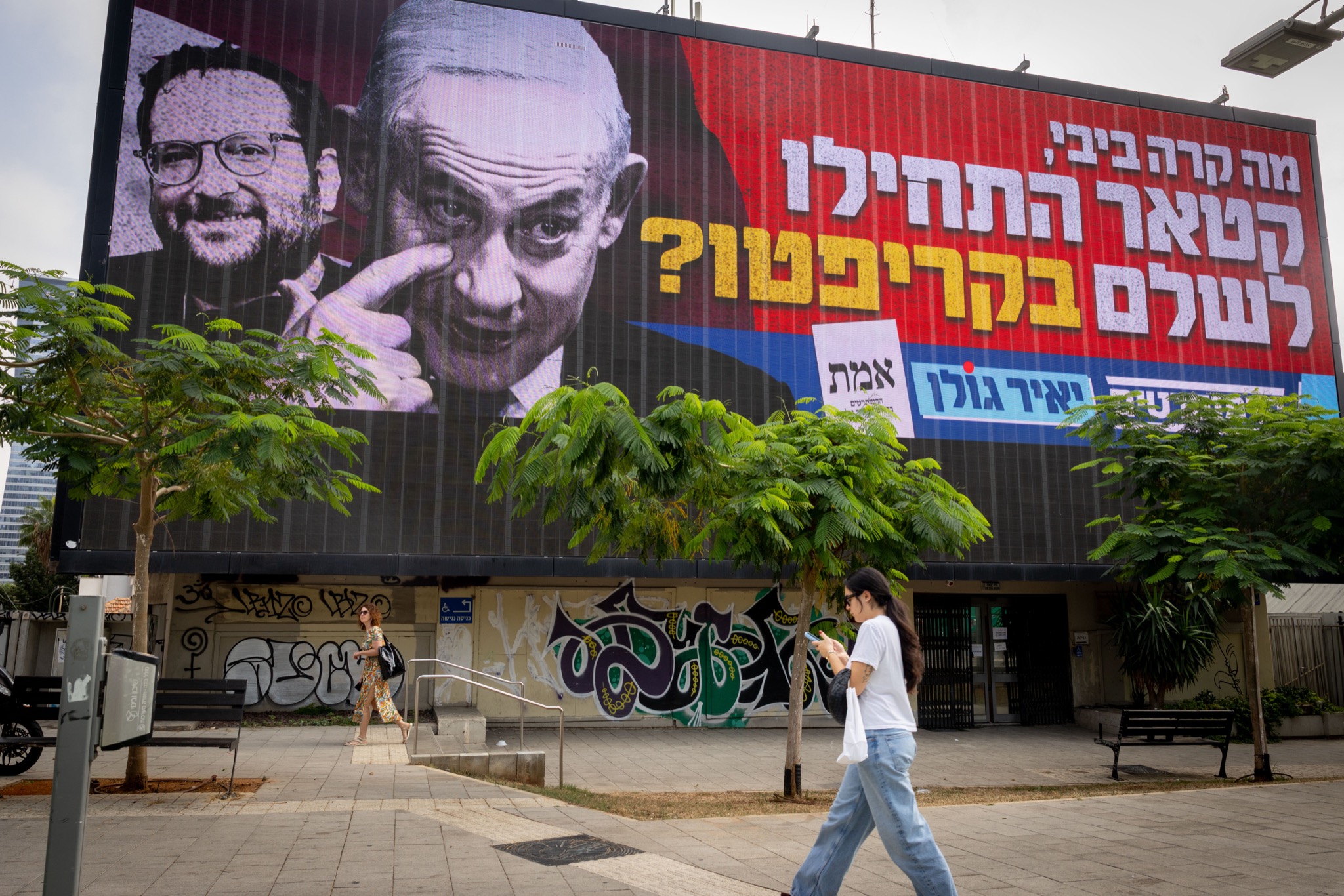
Opposition campaigners were quick to seize the opportunity. Within a day, the Democrats had plastered intersections with billboards asking, “What happened Bibi, Qatar started paying you in crypto?”
To calm the economic waters, Bank of Israel Governor Amir Yaron had to issue a clarification that cryptocurrency was “not a way to circumvent sanctions,” and that Israel should “preserve its economic relationships with our main trading partners and focus on preventing sanctions and their negative impact on the economy.”
Shortly afterward, the Prime Minister’s Office evaded questions about the plan Netanyahu claimed was already being drawn up — suggesting, incredibly, that this might all have been a campaign stunt.
But how could threatening to plunge Israel into the economic isolation experienced by countries like North Korea, Venezuela, Russia, or Iran (the irony!) possibly be a winning election strategy? Was the 77-year-old finally losing his political instincts?
And this was no isolated incident. Netanyahu seemed to spend the final week before the election doing everything possible to lose it.
He sent Israeli fighter jets toward the Iranian border, in what appeared to be an attempt to reignite a regional conflict and galvanize his base (or perhaps create grounds for postponing the election if things were not looking good). He was caught on video promising an influential role in the next government to a rabbi suspected of preying on underage girls, in exchange for having his party drop out of the race. And he stubbornly refused to fire an adviser who had been caught accepting money to polish the image of foreign governments, including Qatar.
Nobody else could commit so many gaffes in the space of a few days and still do well at the polls. But Netanyahu proved once again that when election season comes around, he really is King Bibi: a man who understands the inner workings of his voters’ souls despite living in a vastly different universe from most of them.

He recognizes that a considerable part of the Israeli public is ready to live in an economic Sparta; ready to endure endless war; ready to live in a banana republic; ready to plunge waist-deep into the icy waters of perpetual victimhood, political self-indulgence, and international isolation.
After all, if the past four years had not convinced people to abandon Likud, what could? The worst security failure in Israel’s history, three years and counting of war, thousands of Israelis killed, soaring living costs, a growing brain drain, the erosion of democratic institutions, and Israel’s descent into unprecedented international isolation — all under Netanyahu’s watch. And yet, after all that, Likud still emerged with 27 seats, just five fewer than in the previous election and six more than his rival Gadi Eisenkot’s Yashar.
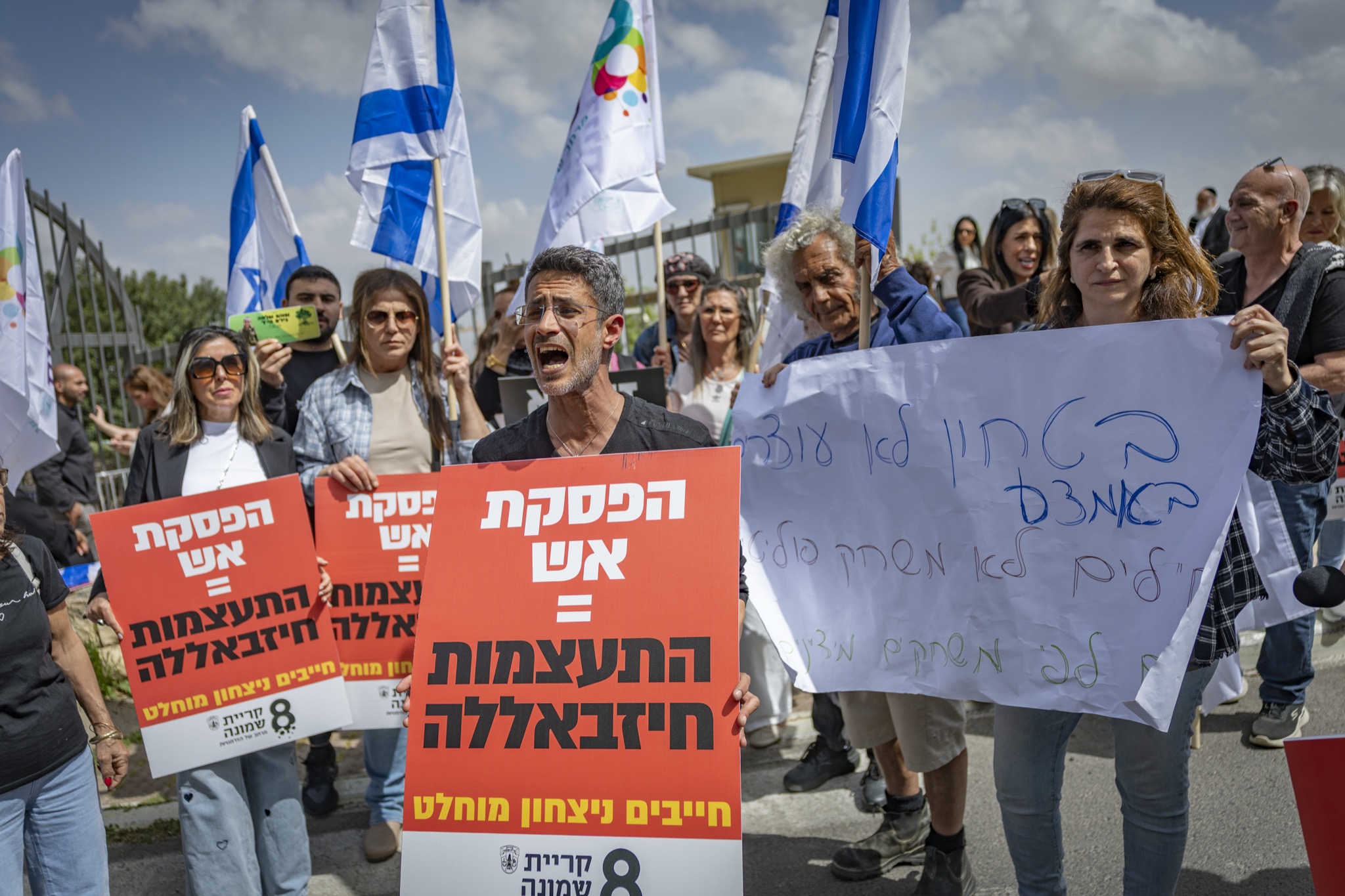
Perhaps most remarkably, Netanyahu’s support barely budged in some of the places most devastated by the war. In Kiryat Shmona, a city near the Lebanon border whose residents faced prolonged displacement and whose recovery his government has disregarded, roughly half of voters still backed Likud. Even its mayor, Avichai Stern, despite decrying the city’s neglect during the war, ended up expressing support for Netanyahu.
“I’ve always said I’m a Likudnik,” he told Haaretz in a post-election interview. “I said that criticism should come from within the party, and that you fight for your political home. I have no other political home.”
Bibi plays to win
Perhaps we shouldn’t have been surprised. As my partner once astutely observed, Netanyahu is the “only real politician in Israel.” What she meant, I think, is that he is the only politician willing to do absolutely whatever it takes to win — even if it means abandoning his own principles, breaking his promises, or doing precisely what he has spent years accusing his rivals of doing.
During the Bennett-Lapid government’s short time in power, Netanyahu’s Likud adopted what became known as the “no stomach aches” strategy. The name came from a leaked recording of a closed Likud meeting, in which MK Miri Regev instructed opposition lawmakers to put aside their ideological commitments and vote against the government at every opportunity, even when doing so meant opposing legislation they would otherwise wholeheartedly support.
What followed was a masterclass in political ruthlessness. Over the next seven months, the Netanyahu-led opposition voted against legislation central to the Israeli right’s anti-Palestinian political project: a law restricting Palestinian family reunification, and another extending the emergency regulations that make Israeli criminal and civil law apply to settlers in the occupied West Bank. It even voted against expanding benefits for Israeli soldiers. The failure to renew the emergency regulations ultimately helped bring down the so-called “change government” and paved the way for Netanyahu’s return to power.
In other words, Netanyahu proved that if defeating his rivals required it, he had no problem appearing like a leftist, or even “going with the Arabs” — accusations he commonly levels against his political opponents.
And what political price did he pay for such blatant flip-flopping? In the subsequent election in late 2022, his bloc comfortably won 64 seats, forming a stable far-right government that survived a full four-year term. It withstood the largest anti-government protest movement the country had ever seen, and then presided over the worst security failure in Israel’s history without being toppled.
Netanyahu, then, understands something his opponents seem unable to grasp: political principles are all well and good, but they aren’t of much use if adhering to them comes at the cost of power. And he knows exactly when to set them aside.
During that election campaign, Netanyahu also drew on a lesson from his years in the United States: “It’s the economy, stupid!” In the run-up to election day, he filmed TikToks from supermarkets — probably the first time he had seen the inside of one in decades — promising to lower grocery prices. Of course, those promises were never fulfilled. Over the government’s term, prices surged by some 20 percent. But that’s not the point. Netanyahu knew exactly when and how to make the cost of living a central campaign issue.
And this time around, he again knew when to speak to voters’ wallets. The crypto remark that caused such an uproar was only one part of a nearly 30-minute interview on Channel 10, a business-focused outlet owned by Yitzchak Mirilashvili (who also owns the pro-Netanyahu Channel 14). In the interview, Netanyahu promised to lower the cost of living by opening the market to imports, breaking up monopolies, reducing regulation, and addressing housing prices.
Again, there is no reason to believe he intends to deliver on these promises. But he knows what to say, and when to say it.
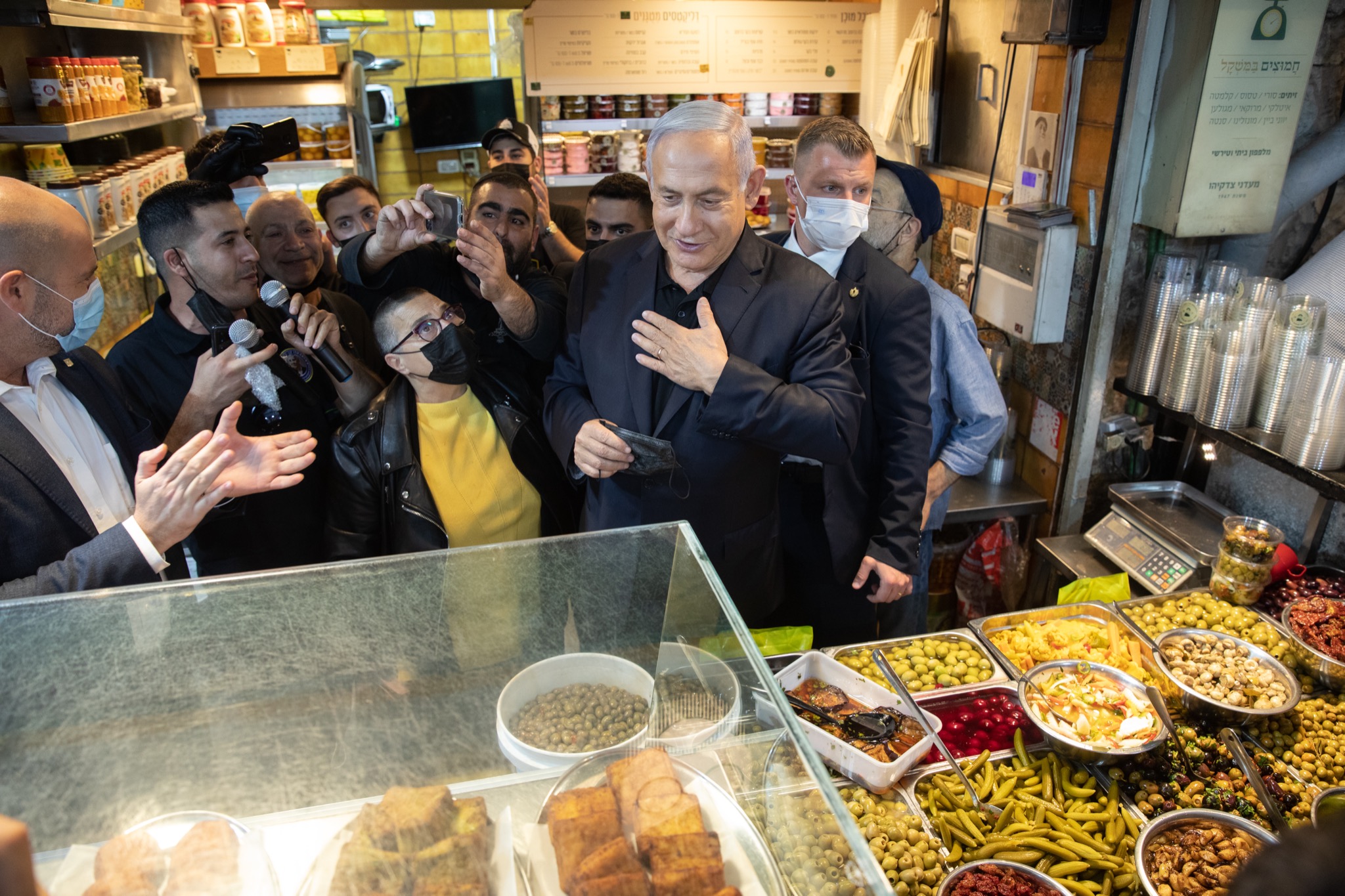
His opponents dropped the ball on this front, too. Much of Gadi Eisenkot’s campaign, which ran under the unapologetically empty slogan “This time, Eisenkot,” consisted of reminding voters how terrible Netanyahu was and how honest Eisenkot himself was. Even his party’s name, Yashar (“straight” in Hebrew), was a nod to his supposed integrity. Straight where, though? Beyond his personal virtue, Eisenkot offered little by way of an alternative.
Somewhere between these talking points, he hired Shaul Meridor, former chief of the Finance Ministry’s budget division, to draft an economic plan to break food market monopolies, remove import barriers, and reduce bureaucracy. Naftali Bennett, for his part, also spoke repeatedly about breaking up monopolies to reduce the cost of living, which may have boosted his numbers toward the end of the campaign. But it was all too little, too late.
The result was a familiar one: Netanyahu emerged from another election with his political standing largely intact. But this time, there is one crucial difference: he lost.
How to lose an election you won
Despite all of the above, Netanyahu’s bloc has fallen well short of a majority, while the parties opposed to him have collectively won enough seats to form a government and start undoing some of the damage his government has wrought over the past four years. They should have won by much more, but they got enough. So what’s the problem?
Part of the answer is reflected in how Israel’s mainstream media divides the electoral map. Unlike in other countries, the dividing line almost never falls between a coalition and an opposition bloc, or even between pro-Netanyahu and anti-Netanyahu parties. Instead, Israelis are presented with three camps: the “Netanyahu bloc,” the “change bloc,” and the “Arab parties.”

To an Israeli ear, this sounds perfectly ordinary. To anyone else, it sounds racist — because it is. Imagine if French media divided election results into three categories: the government, the opposition, and the Jews.
This division reflects a profound truth about Israeli political imagination: Palestinian citizens may vote, form parties, and send representatives to the Knesset, but they are forever treated as a separate political entity. Their representatives are never considered legitimate partners in the Jewish parties’ contest for power.
One could argue that this merely reflects political reality. After all, most Jewish opposition parties refuse to sit in government with Palestinian-led parties, while some Palestinian parties have historically rejected participation in Zionist governments.
But that argument confuses cause and effect. By treating Palestinian parties as a separate bloc by default, rather than according to their political positions, the media helps normalize their exclusion. Refusal to sit in government with them then becomes a fact of nature rather than a political choice for which Jewish party leaders should be held accountable.
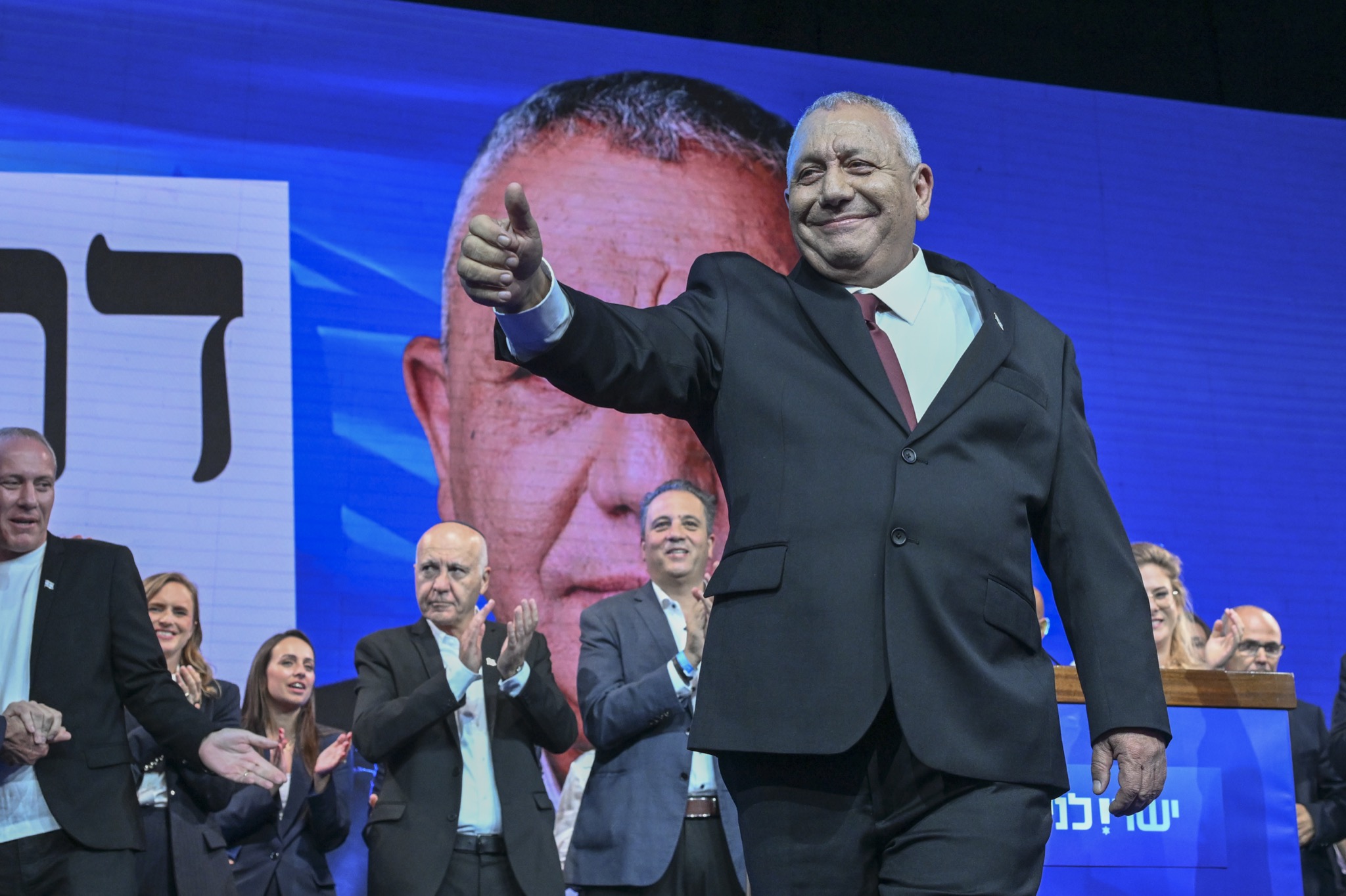
As the exit polls were published on election night, Eisenkot foolishly celebrated a “Zionist majority” (code for a majority without Arabs or Haredim), only for the actual results to paint an increasingly bleak picture for his side. Within hours, it became clear that the so-called “change bloc” had won only 48 seats, leaving no plausible path to power without either relying on Palestinian parties or reaching some form of arrangement with Netanyahu’s camp.
It was a stunning own goal. In his instinctive eagerness to assure Jewish voters that he would not depend on Palestinian support, Eisenkot effectively ruled out relying on the very votes he would need to fulfill his number one campaign promise of removing Netanyahu.
For years, Netanyahu has shown that he is willing to abandon just about any political principle if doing so will help him gain or retain power. He has voted against right-wing legislation, made alliances of convenience, and contradicted his own campaign messages without losing the loyalty of his base. His opponents, meanwhile, seem to be too scared to cross even one of their self-imposed racist red lines to achieve the goal they claim matters more than anything else.
Over the past four years, opposition leaders have warned that Netanyahu was dragging Israel toward authoritarianism, dismantling its institutions, plunging it into international isolation, and even threatening its very existence. They told voters this would be the most important election of their lifetimes. Now they have an opportunity to act on those warnings.
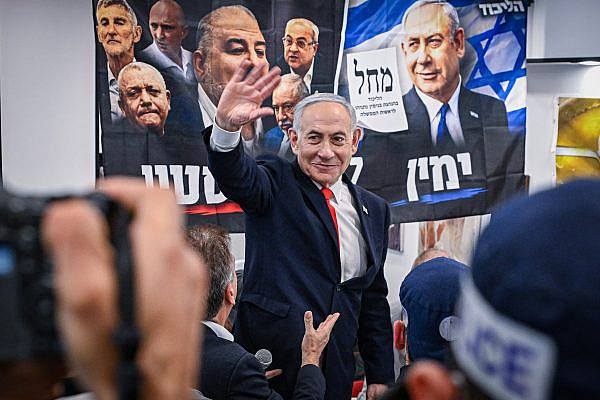

Palestinian citizens turned out in record numbers and rallied behind parties that have made clear their willingness to help end Netanyahu’s rule. In doing so, they have handed the Jewish opposition, on a silver platter, a chance to remove the man it has spent years describing as an existential threat. All that remains is to take the outstretched hand.
Whether that takes the form of a coalition, providing a “safety net” for a minority government, or some other arrangement, is a political question to be negotiated. But refusing even to consider it is a choice, not an inevitability.
If Eisenkot and his allies truly believe everything they have said about the danger Netanyahu poses to Israel, that choice should not be difficult. Netanyahu himself would have no such qualms.