

My phone lit up with videos. I watched as my brother and our friends frantically dismantled beds, took down photographs, and hauled furniture out of our family’s guesthouse in the village of At-Tuwani, in the Masafer Yatta region of the occupied West Bank. They worked all night, racing against the clock: Israeli soldiers could arrive at any moment and begin the demolition without warning.
It was late September and I was in Europe on a speaking tour, raising awareness about my community’s struggle to stay on our land. Back home, it was happening in real time: The Jerusalem District Court had rejected our appeal and ordered the demolition of our guesthouse — a symbol of our resistance against Israel’s efforts to force us off our land. It was unbearable to watch those clips, seeing years of work being stripped away before my eyes.
Our last resort after this was to go to the Israeli Supreme Court. Despite the high cost of legal fees, we decided to do everything in our power to protect the guesthouse and submitted another appeal in mid-October. The process is still winding on, but we have been warned that it will likely end with the demolition of the guesthouse.
The reason cited is that the building sits on top of an archaeological site, the alleged parameters of which extend over nearly half of the land within At-Tuwani where Palestinians can legally build. So if this demolition proceeds, half of our village may be next. It is only the latest iteration of Israel’s long-standing use of archaeology as a tool of Palestinian displacement.
I helped my father build the guesthouse next to our home, finishing construction four years ago. Since then, it has housed hundreds of activists, journalists, and politicians who have come to At-Tuwani to organize, build community, and support the steadfastness of Palestinian residents.
The building also served as the central meeting place of Youth of Sumud, an organization I co-founded in 2017 for young Palestinians to express our rights and rootedness on this land. Young activists from across the region would convene in the meeting rooms of the guesthouse to plan our actions — reclaiming caves in the depopulated village of Sarura, accompanying shepherds grazing their flocks, protecting children walking to school, and exposing settler violence. Those traveling far would spend nights in the guest beds.

“I remember this place full of people,” one activist recalled to me. “It was amazing, spending every day with different people, everyone connected to each other by the importance of staying here in Masafer Yatta.”
“This place is like a second home to us,” another friend told me. “Destroying it would take away a symbol of the resistance.”
No isolated crime
Nestled in the rugged hills of Masafer Yatta, my village of At-Tuwani has long epitomized the daily struggle of Palestinians under Israeli occupation. I became an activist at the age of 13; in truth, it was impossible not to.
My father, Hafez Huraini, has led anti-occupation resistance efforts throughout the South Hebron Hills for more than 25 years, which meant I grew up with Israeli soldiers regularly raiding our home at night to arrest him, as well as a constant stream of international activists coming in and out.
I learned early that if we Palestinians do not fight for our rights, we will only be further stripped of them. And working with other Palestinian youth in my village provided some hope that the future could be different.

In 2009, after a visit from former U.K. Prime Minister Tony Blair, our village received a Master Plan from the Israeli government that legalized Palestinian construction within a defined area, which included my family’s land. As a condition for receiving this authorization — At-Tuwani is one of the only villages in Masafer Yatta with a Master Plan — the Israeli Civil Administration started excavating a Byzantine-era archeological site the following year.
Building a guesthouse had long been a dream for my father, who recognized a need for a more permanent space where visitors and activists could meet with residents and stay in At-Tuwani for longer periods. In 2020, we started building.
My family financed much of the construction and maintenance ourselves, with the help of a private grant and occasional fundraising campaigns. By the spring of 2021, construction was complete. We furnished the guesthouse with 24 beds — at a squeeze, we can sleep 50 — a kitchen, bathrooms, meeting rooms, and a laundry unit, and it quickly began functioning as an activist hub. But that December, the Civil Administration issued a stop work order, claiming that the building sat atop the archeological site.
My father immediately initiated a legal appeal process, only to be handed a demolition order three weeks later. We continued to appeal and have managed to postpone the demolition for four years. But the uncertainty has taken its toll, especially on my father who spends many restless nights smoking cigarettes outside our home, his face heavy.
If the Supreme Court rejects our final appeal, it will come as no surprise to any of us. “The lawyer was clear with me: He told me that now, unfortunately, the whole legal system and legal regime is occupied by settlers,” my father said. “We have no hope to save the building.”
Most read on +972
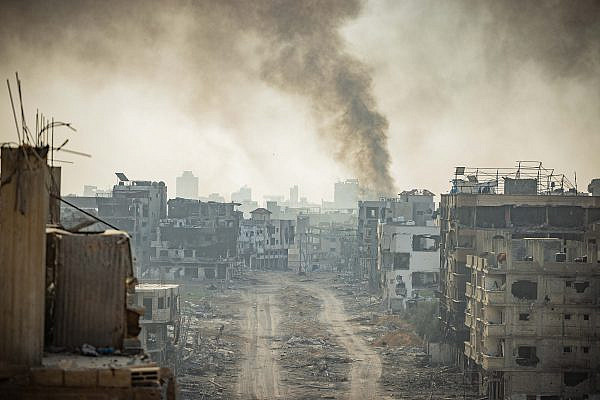

The impending demolition of the guesthouse is no isolated crime: We have watched countless demolitions in my community and those surrounding it, while settlers receive Israel’s support to build and expand on stolen land. In At-Tuwani and across Masafer Yatta, we will continue to welcome Palestinian, Israeli, and international activists committed to our cause.
And as long as this apartheid regime exists, we will keep resisting it — not out of choice, but out of the simple need to survive and to remain in our homeland.