
Every year, dozens of new films arrive highly anticipated. There is the familiar buzz leading up to their release, the millions of people across the globe that flock to theaters or watch from home, the waves of media coverage and critical reviews, and the circuit of annual awards ceremonies.
But then there are films that become events in their own right, generating discussions that extend beyond cinema to their wider political repercussions.
This has been the trajectory of “NAZA” since its premiere — or, indeed, since its belated announcement in the official competition at the Venice Film Festival in September, where it won the Special Jury Prize.
The 80-minute film, directed by Yuval Abraham and Rachel Szor, is built on anonymous interviews recorded over the past three years with Israeli military officers who used artificial intelligence to select targets and carry out strikes in the Gaza Strip during the genocidal war. Much of the underlying investigative material has appeared in The Guardian, +972 Magazine, and Local Call.
But what makes “NAZA” significant is not simply what it reveals about Israel’s genocide in Gaza. It is also the extraordinary attention the documentary has attracted, extending far beyond the audiences political cinema usually reaches.
I do not intend to catalogue all the news, discussions, and speculation surrounding it. It is enough to note that the release of its trailer became a news story in itself; that Israel announced a propaganda film intended to refute its findings; and that it has generated reactions among Palestinians and across the wider Arab world. There have even been AI-generated posters for the film circulating online, some finding their way onto the pages of Egypt’s Al-Ahram newspaper.
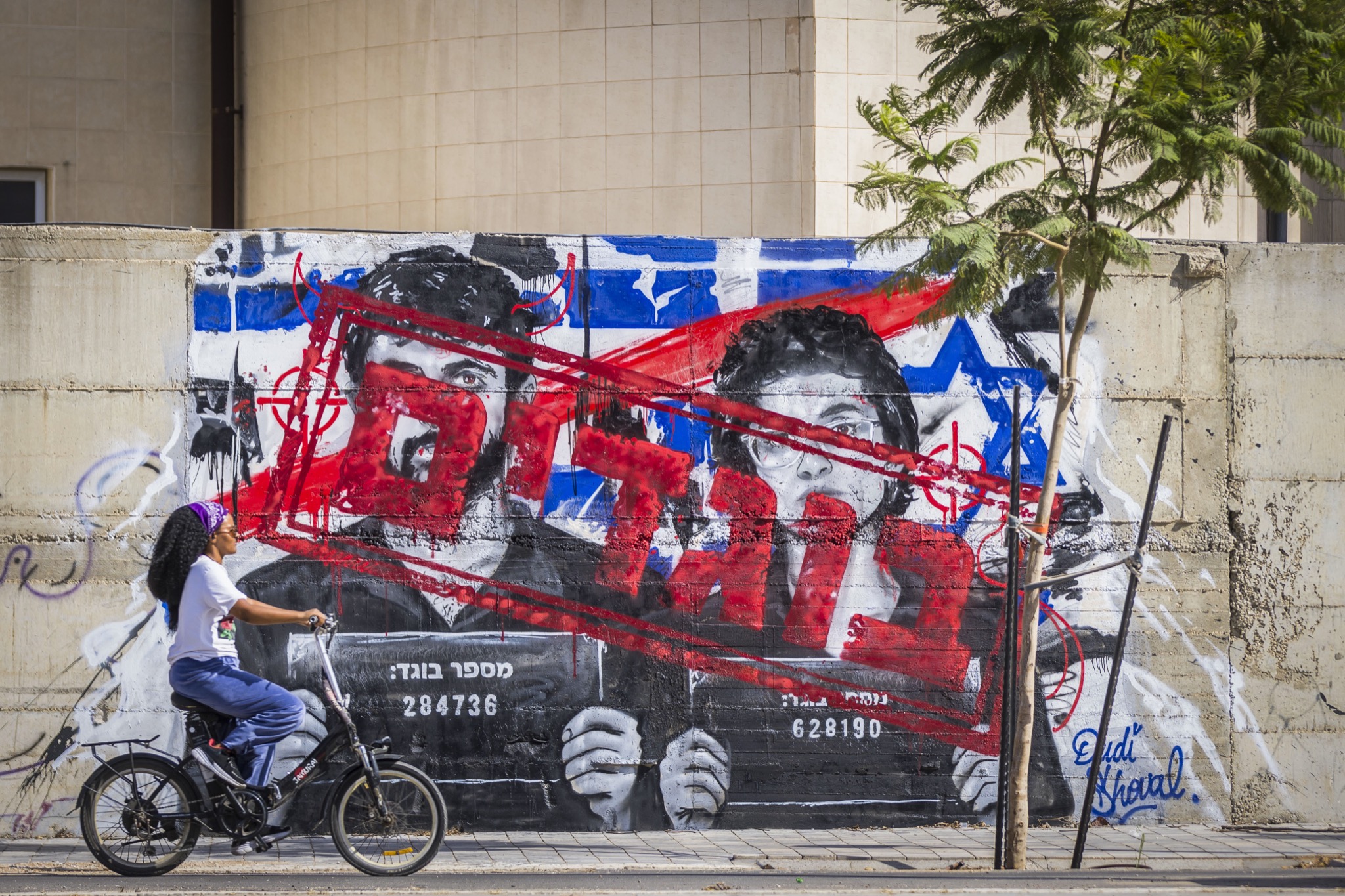
This degree of attention is unusual. I cannot recall another film dealing with the Palestinian cause that has achieved such prominence, with the possible exception of “The Voice of Hind Rajab,” directed by Kaouther Ben Hania, which premiered at Venice last year. The two films share something important: Both offer devastating portrayals of one aspect of the genocidal war on the Gaza Strip, and both address events unfolding in real time.
But the status of “NAZA” as an event has gone further than any of us might have expected. As film critics, we tend to avoid judging the success of political cinema, particularly documentaries, based only on box-office returns. Just as it is difficult to imagine a superhero film winning a jury prize at Venice or Cannes — or even competing in their official selections — it is equally difficult to imagine a political documentary achieving blockbuster success in cinemas.
Yet we may have to reassess those assumptions in light of reports that “NAZA” outperformed “Avengers Endgame: Encore,” a theatrical reworking of the 2019 blockbuster, at the Italian box office, becoming the number-one film upon its release. Even if the comparison is with a re-release rather than the original film at the height of its popularity, its symbolism is difficult to ignore. The original “Avengers Endgame” became the highest-grossing film in cinema history in 2019, overtaking the 2009 film “Avatar.” The fact that a documentary about Gaza could outperform a film belonging to one of the most commercially successful franchises in cinema history is remarkable.
Of all the news stories about “NAZA,” I have found none more striking than this comparison with “Avengers.” And this is precisely where Edward Said’s writing on Palestinian cinema becomes relevant.
In his short introduction to the 2006 anthology “Dreams of a Nation: On Palestinian Cinema,” Said focused on the visibility film can afford Palestinians. As he wrote, “the whole history of the Palestinian struggle has to do with the desire to be visible.” For Said, cinema — and Palestinian cinema, first and foremost — has played an essential role in providing a “visible incarnation of Palestinian existence in the years since 1948.”
The box-office success of “NAZA” would surely have caught Said’s attention. The remarkable turnout for a documentary exposing the Israeli military’s methods of mass killing — a dark subject hardly designed to entertain cinema audiences — has brought Palestinian visibility, and particularly the visibility of those killed in Gaza, to a level that previous documentaries and fiction films have struggled to reach.
The Gaza documentary “NAZA” earned a massive 24.5-minute #VeniceFilmFestival ovation as the crowd cheered and waved Palestinian flags.
This marks the longest-ever standing ovation at Venice, beating the 22-minute ovation for “The Voice of Hind Rajab” last year, and perhaps the… pic.twitter.com/WuE0Lr7ZFi
— Variety (@Variety) September 10, 2026
The documentary’s status as an event may grow further still when the film becomes freely available in late November, and if it secures an Oscar nomination. Consider “No Other Land,” the previous film made by Abraham and Szor alongside Palestinians Basel Adra and Hamdan Ballal. It did not become a major public event when it won a documentary award at the 2024 Berlin International Film Festival; the debate erupted later, after its Oscar nomination and subsequent win the following year.
There is nothing surprising about this, given the particular nature of the Academy Awards. The Oscars extend beyond cinematic and cultural spheres into popular entertainment, turning their winners into matters of public concern rather than subjects of interest primarily to specialists. The current success of “NAZA” may therefore be only one stage in a much broader public reception.
Who could have imagined that Said’s argument about the visibility cinema can offer Palestinians would find its most powerful expression today — and, to my knowledge, one of its widest reaches in the history of Palestinian cinema — in a comparison with Avengers, the American superheroes who save the planet?
The banality of killing
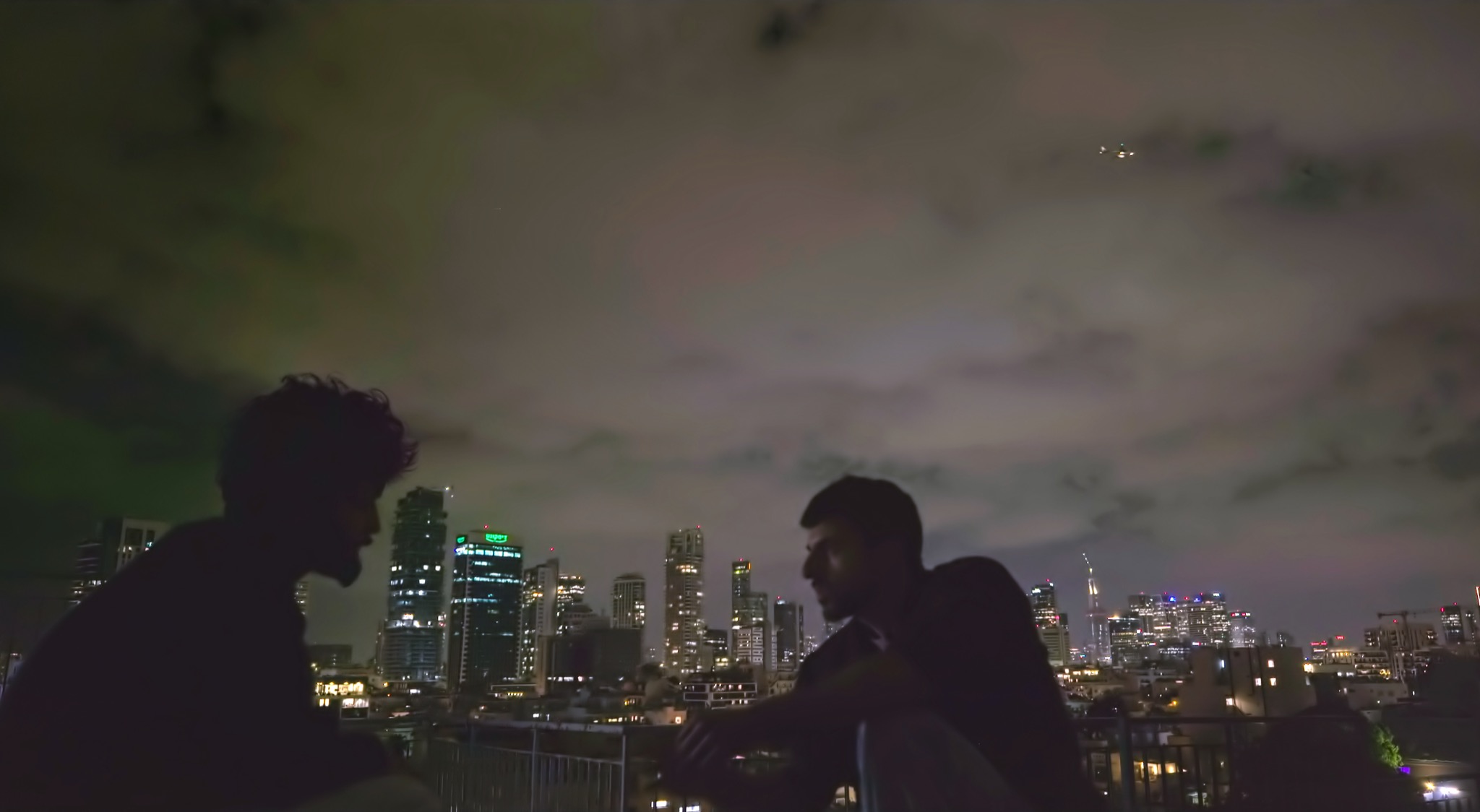
“NAZA” consists almost entirely of nighttime interviews on rooftops across Tel Aviv, in which Israeli officers describe to Abraham their operational roles in the genocidal war on Gaza. These are not confessions from perpetrators overwhelmed by guilt, which might turn the film into a form of absolution for their actions. Rather, they are matter-of-fact, technical testimonies explaining how the work is done: the functioning of a killing system that relies on artificial intelligence.
They speak coldly, closer to an instructional manual than an expression of feeling — not with remorse, but not with pride either.
Their superiors instructed them to complete a task, and they did. One officer describes activating the system, leaving for a lunch break, and then returning to his job, his office, his screen, as though he were playing a video game. One woman compares the experience to a war film.
This is a contemporary version of the phenomenon described by the Polish-British philosopher Zygmunt Bauman in “Modernity and the Holocaust.” Bauman examined the role of modern bureaucracy, technology, and administrative rationality in making mass killing possible. The new element today is the incorporation of artificial intelligence into those bureaucratic patterns.
The casual, almost spontaneous way in which the officers deliver their testimonies — and the technical nature of the tasks they describe — also recalls Hannah Arendt’s analysis in “Eichmann in Jerusalem.”
Killing becomes a task to be performed conscientiously and professionally, without the person carrying it out necessarily experiencing guilt. Each task is one small, seemingly insignificant link in a much larger system: a vast killing machine in which evil is concentrated in the most mundane professional routines.
The film obscures the perpetrators’ voices and identities, placing them in shadow against a backdrop of Tel Aviv buildings. Through windows and balconies, we glimpse the ordinary lives of residents in their high-rise apartments. At the same time, we hear officers describe how entire buildings, or several floors of them, were destroyed because a suspect was believed to be inside.
They recount the civilian casualties resulting from these strikes, which numbered in the hundreds. One officer acknowledged receiving authorization for a strike that was expected to kill as many as 500 people.
The residential towers of Tel Aviv, rising on colonized land, stand in stark visual contrast to the accounts of Gaza’s obliterated urban landscape. Until the film’s final minutes, there is no blood or rubble. What we see and what we hear pull in opposite directions, widening the gulf between the two realities.

That gulf brings to mind one of the finest films about the Nazi Holocaust: “The Zone of Interest,” directed by Jonathan Glazer, who also serves as an executive producer of “NAZA.” In “The Zone of Interest,” a Nazi officer’s family lives literally on the edge of the Auschwitz concentration camp, separated by a garden wall. The family goes about its daily life: The wife waters flowers in the garden or tries on a coat stolen from one of the victims. The horror of industrial-scale murder — which is never seen but only faintly and occasionally heard — is made more disturbing by its proximity to the mundane.
“NAZA” is, in this sense, the investigative documentary counterpart to “The Zone of Interest.” Yet “NAZA” contains something even more symbolically charged than the testimonies themselves.
In the film, we see the city’s towering buildings contrasted with the accounts of Gaza’s destruction. Then the film passes a stone building, old and weathered, identified as one of the last surviving structures of a Palestinian village that existed before Tel Aviv expanded over its ruins and those of other villages.
The building remains rooted in the earth, while a glass structure has been grafted onto it, looming over and engulfing it. This colonial modernity — the sleek glass imposed on ancient stone — is no less banal in its evil than the destruction of entire buildings in Gaza.
Documenting the perpetrators
“NAZA” is one of many documentaries produced in recent years during the genocidal war on the Gaza Strip. These have generally shown the devastation from the perspective of those experiencing it, many made by filmmakers and production companies in Britain and other countries outside the region.
“NAZA,” however, provides another part of the documentary record. Because its filmmakers are Israeli, it was able to reach those carrying out the attacks and offer an account of the decisions and operations that preceded the destruction depicted in other documentaries.
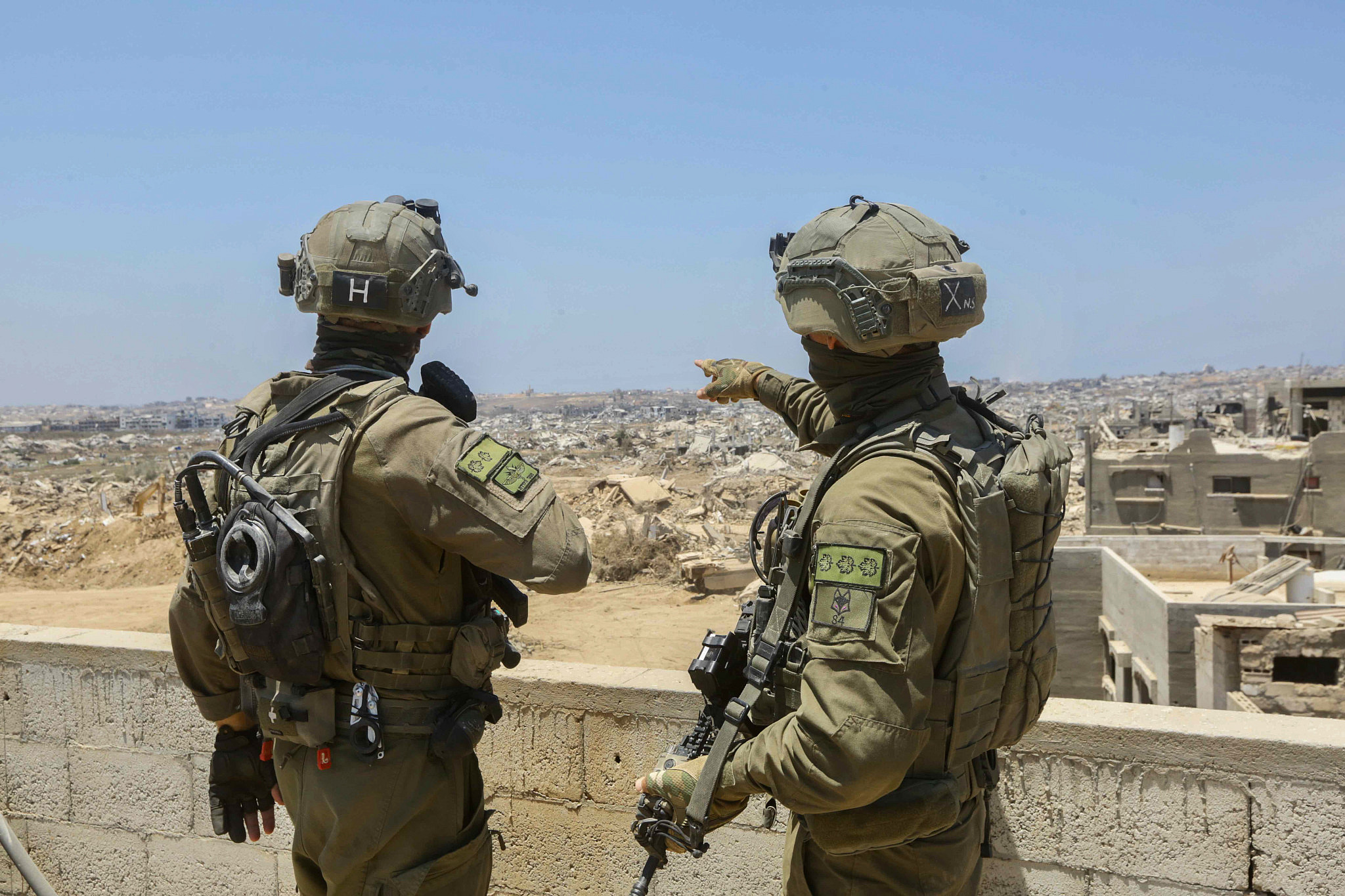
If “NAZA” occupies a distinctive position, it is because it offers testimony about the genocidal war from the side of its perpetrators, rather than its victims. Do the victims need such testimony? Yes, quite simply, because we live in a world governed by injustice — or, as Ghassan Kanafani put it, “a world that is not ours.”
This also raises the question of the film’s national identity. Although directed by two Israelis, “NAZA” is not, in its production or institutional affiliation, an Israeli film. It is a British production, made in partnership with The Guardian and JW Films, founded by British producer James Wilson.
It received no institutional support from Israel, and, indeed, became the target of various incitement campaigns. These began at the highest levels of Israel’s fascist government, with threats to revoke the directors’ citizenship, and extended to intimidating demonstrations outside a family home.
Of course, assigning any contemporary film to a single country is increasingly difficult. International co-productions have become common in festival films, independent cinema, and auteur filmmaking, making exclusive national classifications more characteristic of Hollywood and comparable film industries. In other cases, a film’s identity is often associated more closely with its author or director than with the countries involved in its production.
But “NAZA” is not an auteur film in the conventional sense. Neither Abraham nor Szor presents the work as an individual artistic project attributable to a single filmmaker. It is an investigative documentary, collaborative in its sources, production, and purpose. If we must assign it a single classification, then, it should be British.
And in any case, it is not an Israeli film that promotes a Zionist narrative that would deserve to be boycotted. In fact, the opposite is true: The film could potentially serve as supporting evidence in legal proceedings against Israel for war crimes, crimes against humanity, and genocide.

There is an important irony here. A film made possible in part by its directors’ access to Israeli sources has become a powerful vehicle for the Palestinian narrative, exposing the machinery behind the destruction already documented by Palestinians themselves.
From visibility to memory
The material at the heart of “NAZA” began as investigative journalism before becoming a documentary. But cinema can give this material a form of visibility that newspaper reports and television broadcasts cannot always achieve. The attention surrounding the film demonstrates this potential, from its announcement at Venice to its theatrical release and reception around the world.
Yet its significance cannot be measured by festival prizes, box-office returns, or the possibility of an Oscar alone. To the qualities of event and visibility discussed above, I would add a third: endurance. By endurance, I mean permanence — the ability to remain in memory. This is a quality of cinema that journalism and television do not possess in quite the same way.
We might recall the French director Jean-Luc Godard’s observation in an interview that “television produces forgetfulness, whereas cinema used to produce memories.” This is why we return to “Shoah,” the film by French director Claude Lanzmann, to hear the testimonies of Holocaust survivors, rather than revisit television reports that were produced at the time and then faded from memory.
Films endure. They remain available to be screened again, and, as they age, can be restored and brought back in new forms. Much of what we see today of revolutionary periods, for example, comes from documentary footage produced at the time: films that have survived as part of a collective memory, accumulating meaning over the years as they are shown to new audiences.
Most read on +972
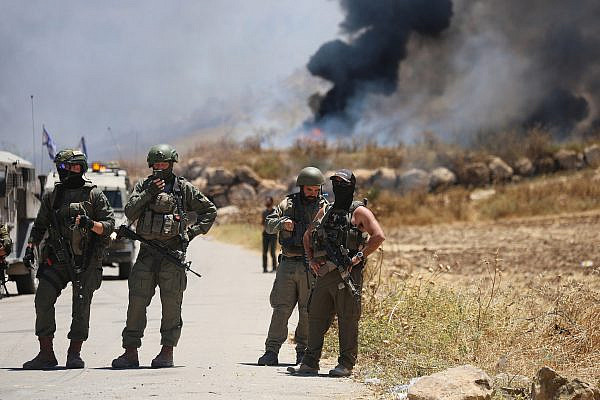


Some may try to diminish “NAZA”’s significance by arguing that we already know what it reveals, having watched the effects of Israel’s attacks unfold through live broadcasts and social media. At a superficial level, they have a point. The destruction in Gaza has been documented continuously, often by Palestinians risking their lives to record what was happening around them.
But the question is not whether we already know about the Israeli military’s methods of mass killing from news reports, television programs, and other coverage. The difference is that “NAZA” has transformed investigative material into a lasting cinematic work. It draws on exclusive testimony, assembles that testimony into an account of the machinery of killing, and gives it a cinematic form through which it can — and must — be remembered and revisited.