
This month marks a personal milestone for me: five years have passed since I first became an anti-occupation activist. Growing up in West Jerusalem, I had spent most of my life in a homogenous Jewish Israeli milieu, barely encountering Palestinians. But the events of May 2021, coined the “Unity Intifada” — Palestinians rising up en masse across Israel and the occupied territories, intercommunal violence engulfing Israel’s so-called “mixed cities”, and the Israeli army launching a devastating assault on Gaza — pushed me into the streets.
Those events, which began with the imminent eviction of Palestinian families in the East Jerusalem neighborhood of Sheikh Jarrah, quickly spread to Damascus Gate and then beyond the Al-Aqsa Mosque compound, exposing a reality I could no longer ignore. At the time, I was a student at Hebrew University in occupied East Jerusalem, and witnessing police violence against Palestinian residents living just minutes away was a wake-up call.
I started attending and photographing the weekly demonstrations against evictions in Sheikh Jarrah, and soon was bringing my camera to protective presence shifts in Masafer Yatta. Two years later, I joined Activestills, a collective of Palestinian, Israeli, and international photographers who document Israeli violence and Palestinian resistance. For Israeli members like myself, the collective is an effort to reject Israeli settler colonialism while critically reckoning with our own position within it.
It was through Activestills that I first met Palestinian photojournalist, filmmaker, and writer fellow member Ahmad Al-Bazz, who has been a member of the collective since 2012. During our first encounter in May 2023 — in Sheikh Jarrah, fittingly enough — he told me about the iReturn app, a tool developed by the Israeli NGO Zochrot that maps the hundreds of Palestinian villages ethnically cleansed during the 1948 Nakba. This suggestion led me on a personal journey of photographing depopulated Palestinian villages and cities, and unlearning the Zionist narratives about the “War of Independence” I grew up with.
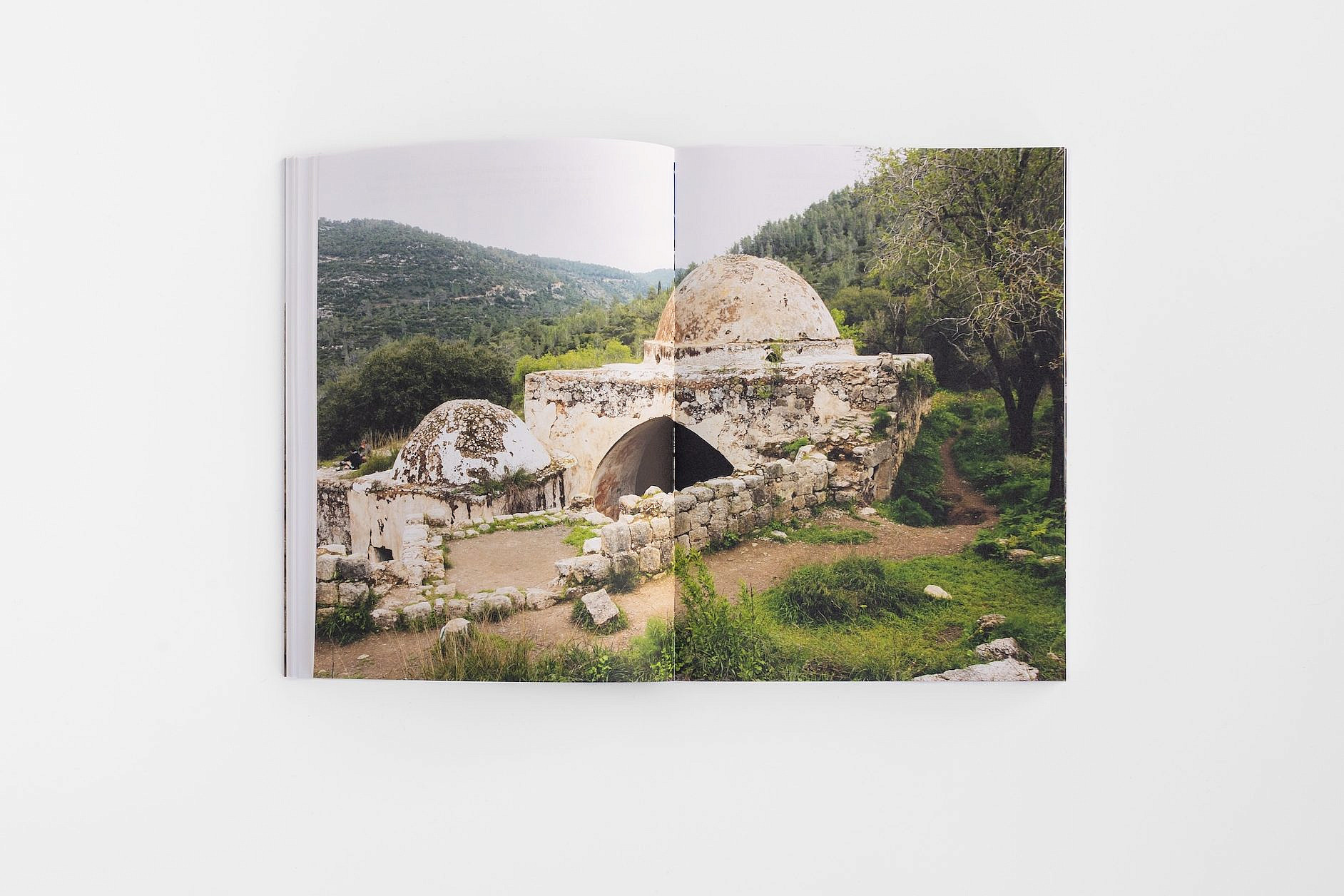
For Al-Bazz, this method is an everlasting pursuit. He recently returned to the West Bank from a book tour of his latest publication, “The Erasure of Palestine,” the culmination of a three-year project documenting the remnants of hundreds of Palestinian villages and cities depopulated and destroyed from 1948 into the present. I sat down with him to discuss his transformed understanding of historic Palestine, the narratives that structure how Jewish Israelis relate to Palestinian ruins, and the ambiguous relationship between photography and memory.
The interview has been edited for length and clarity.

First of all, congratulations on the publication of your new book. In the past, you wrote for +972 Magazine about the practice of returning to and photographing the Palestinian villages and cities depopulated in the Nakba of 1948. Could you tell me how this project began?
I live in Nablus in the West Bank, which is surrounded by a wall that prevents me from traveling to see the rest of the country. To do that, you need the golden ticket: the Israeli military movement permit. Before late 2020, I had only received random short-term permits, but that year, for the first time, I got a permit for six months. I felt this was an opportunity to go beyond the 18 percent or less [of Israel-Palestine] where I can typically move.
I also come from a family that lost properties in 1948. My grandmother was originally displaced from Beisan [now the Israeli city of Beit-She’an], where her family owned banana farms along with their house. And my grandfather lost a shop that he rented in downtown Haifa. I had both a personal and a communal connection to the Nakba — I grew up hearing about it and learning about it, but I had never seen these depopulated sites myself.
Once I got that permit, I decided that the main thing I wanted to do was visit the depopulated villages and the major Palestinian cities. I first joined tours organized by Palestinian rights organizations like Zochrot and Baladna, and later started going on my own. Then I teamed up with a friend, and we went almost every possible weekend, because I knew this could be a temporary opportunity.
I did this from late 2020 until the morning of October 7, when [my renewed] permit was revoked — as they were for almost all Palestinians in the West Bank. In those three years, I visited almost 200 locations. It was never intended to be a project — it was a journey to educate myself and to witness the Palestinian loss of 1948.
How did the experience of documenting these depopulated villages shape the way you perceived and moved through the 1948 territories?
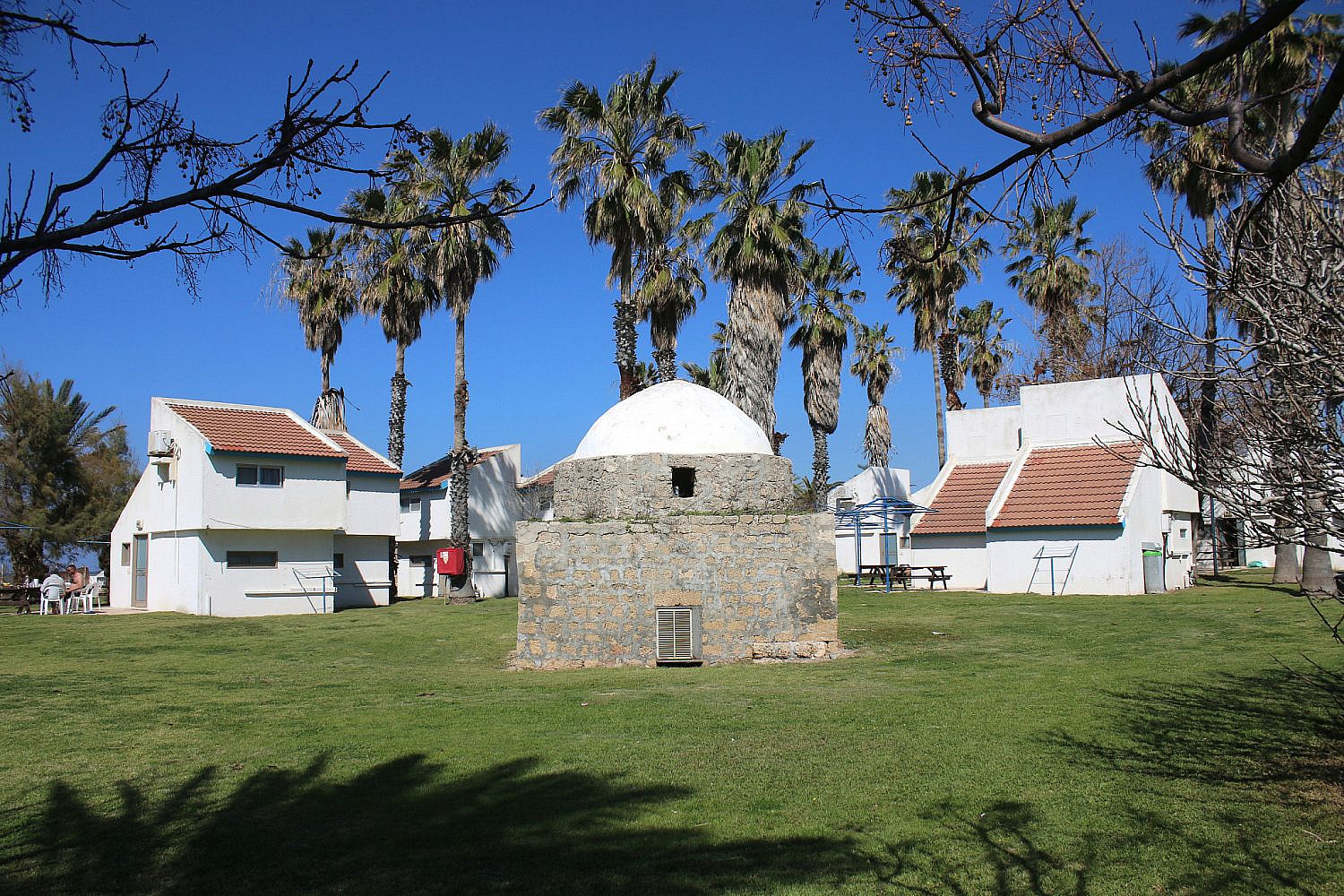
Once you cross the wall, everything feels very foreign. I knew that I was still in Palestine — I’m just crossing a wall that divides it — but what I saw on the ground felt very different from what I was used to. It looked Western, but not like any specific place. You might be standing in front of a very Western-looking city, yet know that it was built over a Palestinian one — like Tel Aviv, which was built on part of Al-Manshiyya and a few other villages. As a photographer, that pushed me to search for what remained and to photograph it. In that sense, the act felt like a form of visual decolonization.
It was also a weird feeling because you are suddenly among the settler community. They don’t know that you’re Palestinian, and you never feel completely okay about it. Yet architecture photography helped me connect with these sites. That was also the visual style of the book: you see the Palestinian layer and the Israeli layer in the background, and I wanted to show the contrast between the two.
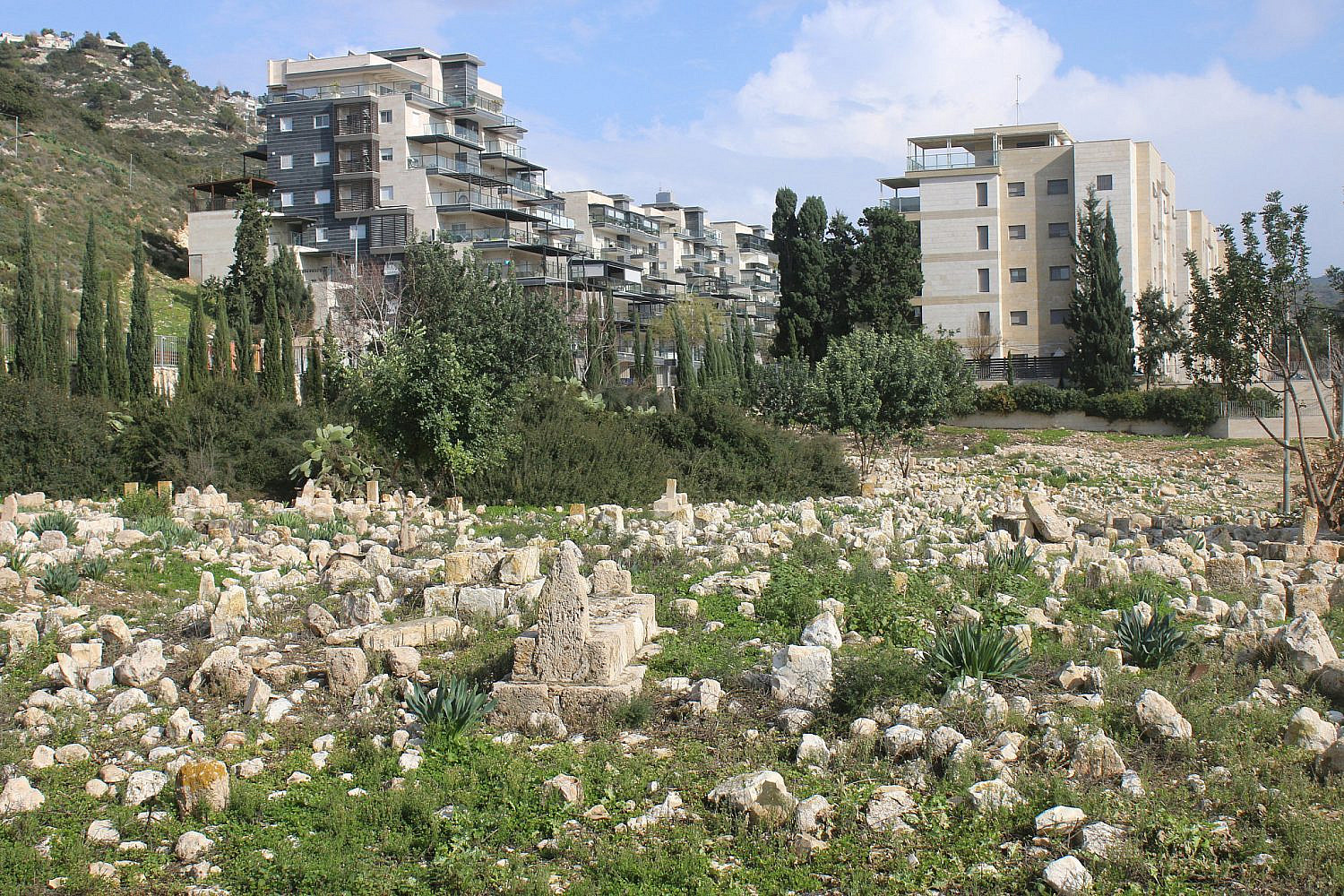
As you said, many of your photographs show how closely these depopulated Palestinian villages lie beside new Israeli construction, fenced off with vegetation growing over and obscuring them. What did the condition of these villages tell you about Israeli society?
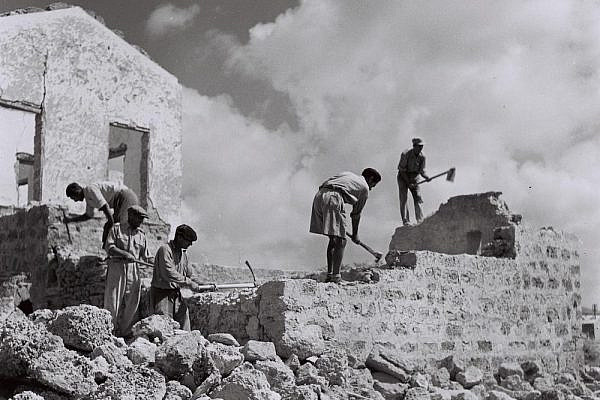
Palestinian sites take different forms today. Some are destroyed, completely erased, or reduced to rubble, sometimes in nature in the middle of nowhere. In other places, surviving structures are scattered between Israeli houses, as in Haifa, or in Ijzim [now the Israeli moshav Kerem Maharal) and Ein Hod, where wealthy Palestinian houses are inhabited by Israelis. Some sites are abandoned, while others are reused in strange ways: a Palestinian school may become an Israeli school, as in Al-Tira, or a mosque may be turned into an animal shelter, as in Kawfakha.

But when you compare what remains today with what was there in 1948, it tells you a great deal about the scale of destruction and ethnic cleansing. You can look at places like Al-Manshiyya or villages where only one last structure remains, while the original plans show hundreds of houses [that were] completely wiped out. [In other areas,] entire villages were erased. In places like the Jaffa district, not a single Palestinian village survived.
It is also very telling to look at what Israelis did with the structures that survived — the repeated efforts to remove Palestinian traces. For example, there have been recent calls by [Israeli National Security Minister Itamar] Ben Gvir to remove the Palestinian graveyard in Balad Al-Sheikh, near Haifa, because it contains the grave of [Izzeddin] Al-Qassam [the Syrian-born preacher and anti-colonial militant who became a symbol of Palestinian resistance during the British Mandate, and for whom Hamas’s military wing is named]. In Lifta, on the outskirts of Jerusalem there have been plans to redevelop the site into resorts or hotels.
At the same time, I learned that Israelis often do not feel guilt when they look at these structures. Their narrative allows them to see these places in a way that justifies what happened, instead of confronting the fact that ethnic cleansing was done for the sake of ethnic cleansing. That was one of the main conclusions of my research: even villages that cooperated with the Zionist movement and villages inhabited by Algerians were displaced. There are also cases like Zakariyya, whose people were displaced in 1950, two years after Nakba.
[Turkish anthropologist] Yael Navaro-Yashin has argued that ruins can assume a melancholic affect. When you arrive at a village to photograph it, do you feel the space itself has a particular atmosphere? And if so, how does that shape the way you look and what you choose to photograph?
During my book tour, I was often asked why no one appeared in the photographs. Most of the locations were serene and silent because they were empty of people. Over time, this absence became part of the book’s visual language: static spaces marked by erasure and depopulation.

I also visited villages around Gaza, like Simsim and Huj. These beautiful areas are in nature today, surrounded by settlements. We were there when it was very green and empty, but you could hear drones over the Gaza Strip, making sure that the refugees, the owners of these properties, stayed there [in Gaza]. It felt calm only because the owners were just next door, in the Gaza Strip, locked there.
You have this uneasy contrast between the silence of the depopulated villages and the noisy, crowded refugee camps.
Yes. I also work as a freelance journalist in refugee camps, especially in Balata [near Nablus] and Jenin. There, I have come to learn where many of their Palestinian residents originally came from. After visiting the depopulated villages, these places carry a different meaning for me: when someone names their village of origin, I can no longer separate the refugee camp from the ethnically cleansed village it replaced.
Were you surprised by the way these villages looked, or by how it felt to be there? If so, in what ways?
I was not surprised by how the villages looked; I had already imagined them. What truly shocked me were the cities. When we speak about 1948, we often focus on the villages and forget the scale of what was lost in urban Palestine. In Haifa, for example, you still see sealed homes, empty properties, and traces of a once vibrant Palestinian urban life. Learning that 70,000 of Haifa’s 73,000 Palestinians were expelled made that loss feel staggering. And in Jaffa, instead of what could have become the largest Palestinian city — perhaps something akin to Amman, Beirut, or Damascus — what emerged was its replacement: Tel Aviv.

Meanwhile, the owners of those [abandoned or destroyed] properties, or their children and grandchildren, are still in refugee camps. It makes clear why the term “Nakba” is used: Calling what happened in 1948 a catastrophe is not an exaggeration. The loss was immense, and in terms of land and territory, I think it was the greatest in Palestinian-Israeli history.
How did the practice of photography shape your physical journey between the depopulated sites?
Because I knew my permit was temporary, there was always a sense of urgency. We wanted to build the biggest archive we could, so some days were a marathon— I remember one Friday when we photographed ten different sites. I also chose to photograph mostly in winter and spring, and to avoid the summer. Partly it was practical, but it was also a visual choice: I wanted to show the agricultural land green and fresh, to capture something of how these places might have felt for the people who once lived and worked there, and to counter their portrayal in the Zionist imagination as barren and abandoned.
In our correspondence before the interview, you described several historians who helped you in writing the book as the “godfathers of the Nakba topic,” among them Salman Abu Sitta, Ilan Pappé, and Walid al-Khalidi, who passed away very recently. Could you tell me about the inspiration you drew from them?
I do not see my book as producing new historical knowledge — I am not a historian. But Pappé, for example, worked through the military archives and wrote “The Ethnic Cleansing of Palestine,” while Abu Sitta mapped the villages of Palestine and their locations in extraordinary detail. What I brought was a visual approach, drawing on that existing knowledge and giving it another form through photography.
To me, your book brings these historians’ research to life and serves a crucial documentary purpose, especially considering that some of these structures may eventually be destroyed. Beyond the book’s visual contribution, what arguments did you want to advance through it?
I think the book makes two main arguments. First, ethnic cleansing is not accidental, nor simply a byproduct of war. It is a long-term methodology and a central goal of the Zionist project, regardless of how Palestinians behave — whether they are passive or resisting. This is not a new claim: As Ilan Pappé argues [in “The Ethnic Cleansing of Palestine”], ethnic cleansing was carried out for its own sake.
Second, I wanted to challenge the narrower understanding of occupation as limited to the West Bank and Gaza. For Palestinians, 1948 is not past but present, because the refugees are still refugees. Tel Aviv is the core of the occupied territory. So, when someone says they are “against the occupation,” my question is always: “What do you mean by that?”
Looking back on this documentary journey, how has it shaped the way you understand 1948, and the role you hope your book can play for Palestinian, Israeli, and international audiences?
I do not currently see this as a project I can deliberately continue in the 1948 territories, partly because I do not have a permit, but I also feel that I have already seen enough to understand the scale of what was lost. At the same time, I cannot say it is fully finished, because reality keeps producing new forms of erasure — especially in places like the Jordan Valley of the West Bank, where you return and find that a community has simply disappeared. So whether the project expands depends less on a fixed plan and more on what reality itself continues to accumulate.
Most read on +972
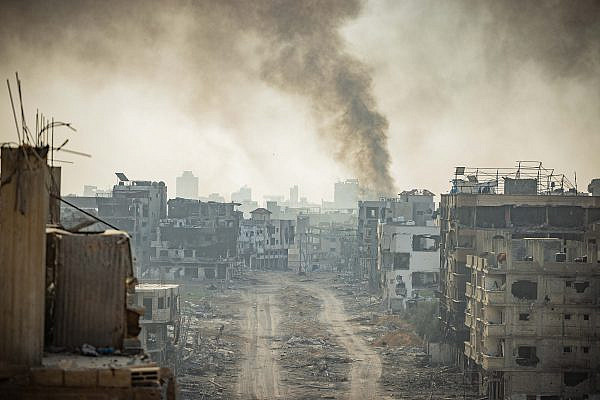
What this journey taught me, above all, is how central 1948 remains. For me, it is the starting point from which any just future must be imagined, because the loss of 1948 is also tied to the ongoing loss of the West Bank and Gaza — to the repeated squeezing and erasure of Palestinians.
As a photographer, the most I can do is document this reality. And even if it is difficult today to believe in the power of the work, especially after [the war in] Gaza, I still hope the project can push Palestinian, Israeli, and international audiences to reconsider 1948 not as a closed past, but as the necessary point of departure for thinking about justice, return, decolonization, and a better future for everyone between the river and the sea.