
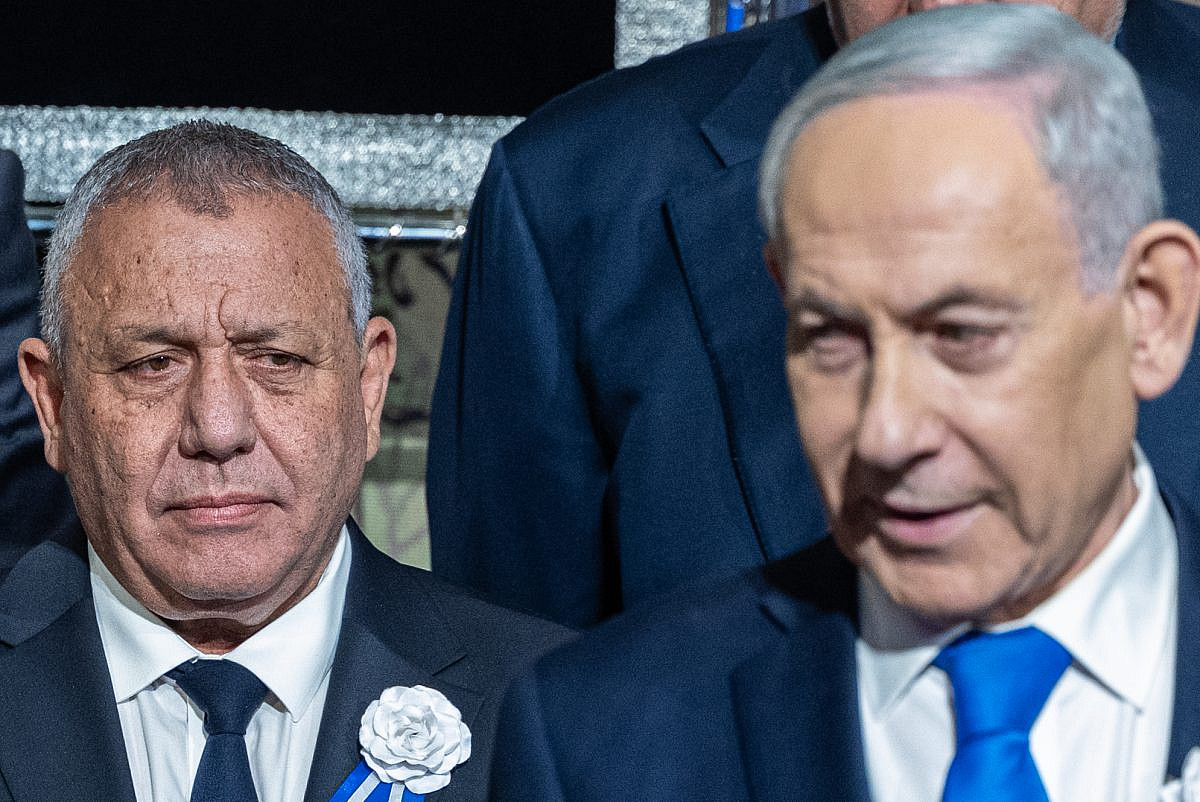
Much has been made of the defeat of Benjamin Netanyahu’s far-right coalition in last month’s Knesset election, leaving the sitting prime minister with no viable path to forming the next government without massive defections from opposition parties. Yet there is something else noteworthy that has gone almost unnoticed: The 27 seats won by Netanyahu’s Likud, and the 53 held by his bloc as a whole, are remarkably similar to what polls were predicting in the summer of 2023 — in other words, before the October 7 attacks and the ensuing war in Gaza.
Polls, of course, must be treated with great caution. Still, the figures suggest that it was the government’s assault on the Supreme Court and the independence of the judiciary that cost Netanyahu’s camp 11 seats since the 2022 election — not the greatest security disaster in the country’s history, the deaths of 2,000 Israeli civilians and soldiers, or the uncertainty, anxiety, and distress that have largely defined the past three years. In fact, were it not for the massive increase in turnout among Palestinian citizens, the results would have looked virtually indistinguishable from those of the four election rounds between 2019 and 2021.
How is it possible that Israeli voters barely punished Netanyahu and the right for October 7, making the task of replacing them so much more complicated than it could have been?
It is easy to blame Gadi Eisenkot’s cautious and uninspired campaign, or the internal divisions within the opposition. But I would like to offer a different explanation: that at least part of the failure stems from the inability of the so-called “Change Bloc” to articulate an alternative explanation for what led to Hamas’ attack on October 7, or to offer a meaningful vision for the future of the Gaza Strip and Israel’s relations with the Palestinians more broadly.
A massacre devoid of context
Until the final demise of Israel’s “peace camp” a decade and a half ago, one of its leaders’ mantras was that maintaining the status quo on the Palestinian front would eventually “explode in our faces.” But the explosion was a long time coming: Netanyahu skillfully navigated the status quo and easily fended off what little outside pressure there was for change. Warnings of a “diplomatic tsunami,” another intifada, or a regional war were met with ridicule.
The Arab Spring shattered the united pan-Arab front in support of Palestinian statehood and unleashed violent chaos across the Middle East that had little to do with Israel. During those years, successive Israeli governments could boast that Israel was an “island of stability” — or a “villa in the jungle” — and that there was no need to make concessions.
In practice, Israeli governments not only maintained the status quo but also turned up the heat, leading to its eventual collapse: Israel rendered the blockade of the Gaza Strip effectively permanent, and resisted efforts to integrate Hamas into the Palestinian political system and involve it, directly or indirectly, in the diplomatic process, believing that the rift between Hamas and Fatah served its interests.
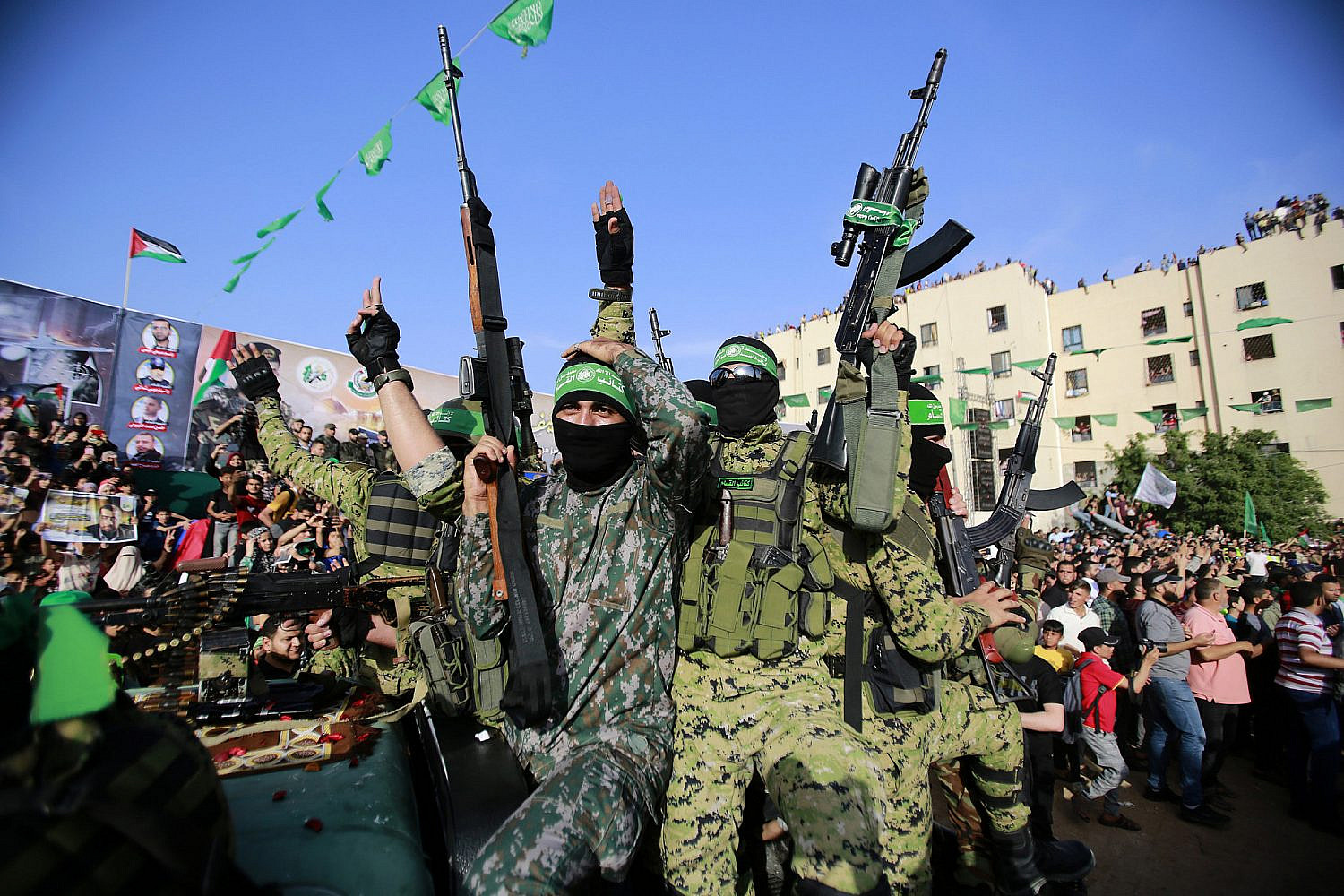
With Trump’s help, Israel also succeeded in dismantling the Arab consensus that had conditioned further normalization on an Israeli–Palestinian agreement. Netanyahu’s “fully right-wing” government, formed in 2022, moved to annex the West Bank and change the status quo on the Temple Mount — an issue that had been central to the collapse of the 2000 Camp David summit. Yet by October 2023, Israel appeared to be on the verge of an agreement with Saudi Arabia — the very country that had spearheaded the 2002 Arab Peace Initiative and now seemed ready to abandon its central premise of Palestinian self-determination.
When the explosion Netanyahu’s opponents had warned of finally came in 2023 — and with such terrifying intensity — the leaders of the old opposition were nowhere to be found.
There was Naftali Bennett, architect of the “shrapnel in his rear end” doctrine (perhaps the most disastrous metaphor coined by an Israeli politician in the past two decades); Benny Gantz, whose approach to the conflict, like that of most Israeli senior security officials, was limited to the tactical management of events on the ground and an almost religious faith in preserving the status quo; and Yair Lapid, who has always been indifferent to the entire Palestinian issue, treating it as nothing more than a public relations problem.
October 7, an event whose shockwaves reshaped the world order from Iran through Damascus to Washington, did not lead any of them to alter their outlook.
The shock of the collapse of Israel’s military defenses and Hamas’ brutality made any discussion of peace or a political solution virtually impossible in the immediate aftermath of the attack. But having sidelined the Palestinian issue for years, Israel’s centrist leaders found themselves incapable of formulating any alternative narrative to that of the far right, even as the initial shock subsided in the months and years that followed the massacre.
In the Israeli consciousness, October 7 became an event devoid of historical, political, or diplomatic causes. The political and media elite devoted themselves entirely to the narrative that “Hamas are Nazis” and “the world is antisemitic,” without seriously reckoning with how Israel’s prosecution of the war in Gaza had turned most of its supporters into fierce critics.

The opposition’s ideological vacuum
For over three years, Israel has been consumed by a profound leadership crisis. But that crisis is not limited to the governing coalition or the prime minister. The situation in the opposition is no better.
Throughout the war in Gaza, virtually the entire Jewish opposition found itself in a state of utter political confusion: latching onto every half-baked proposal floated in the public discourse, and agreeing with nearly all of the government’s moves while simultaneously attempting to attack it ferociously — sometimes even from the right — over how those moves were implemented.
The reduction of the political debate to the question of Qatari influence on the Prime Minister’s Office, and the transfer of “suitcases of cash” from Doha to Hamas — a policy the Lapid-Bennett government continued, with only minor technical changes — was symptomatic of a political system that had all but given up on addressing the substance of the matter.
And this ideological vacuum is not merely a matter of “values”; it also has significant consequences for the conduct of the war. No opposition leader or public figure offered Israelis a coherent framework for understanding October 7 within the broader history of the conflict and assessing Israel’s response in light of it. Instead, the Jewish opposition was swept along by the right and its dubious notion of “total victory.”
I doubt that, had they been asked in November 2023, opposition leaders would have called for the total destruction of the Gaza Strip, the killing of nearly 100,000 people, and the gunning down of civilians at aid distribution centers. Yet the absence of an alternative political vision led them to endorse most of these horrific measures, pushing Israel ever deeper into the abyss.
The tragic low point was the enthusiastic embrace by most opposition leaders of the idea of forcibly displacing Gaza’s population in February 2025. This demonstrated the extent to which obsessive poll calculations had supplanted moral and ideological principles. Tellingly, the plan was abandoned as quickly as it had emerged, once Trump, its architect, reversed course and presented his 20-point plan for a ceasefire.
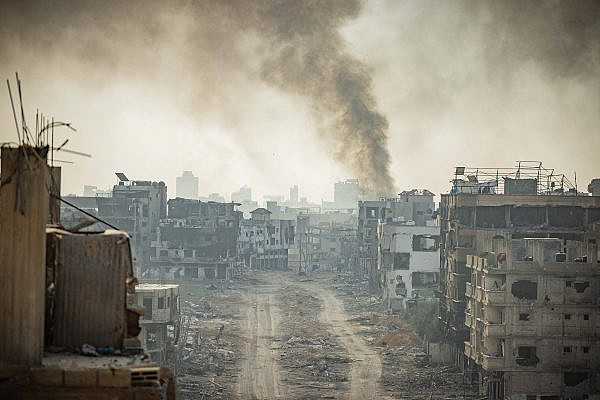
The lies and pretense continue to this day. Not a single major Jewish opposition leader dares to acknowledge that the long-term threat to Israel’s security lies not in the military capabilities of a substantially weakened Hamas, but in the living conditions in the devastated Gaza Strip, where 2 million displaced Palestinians have been condemned to a life of destitution and hopelessness, setting the stage for the next “strategic surprise.”
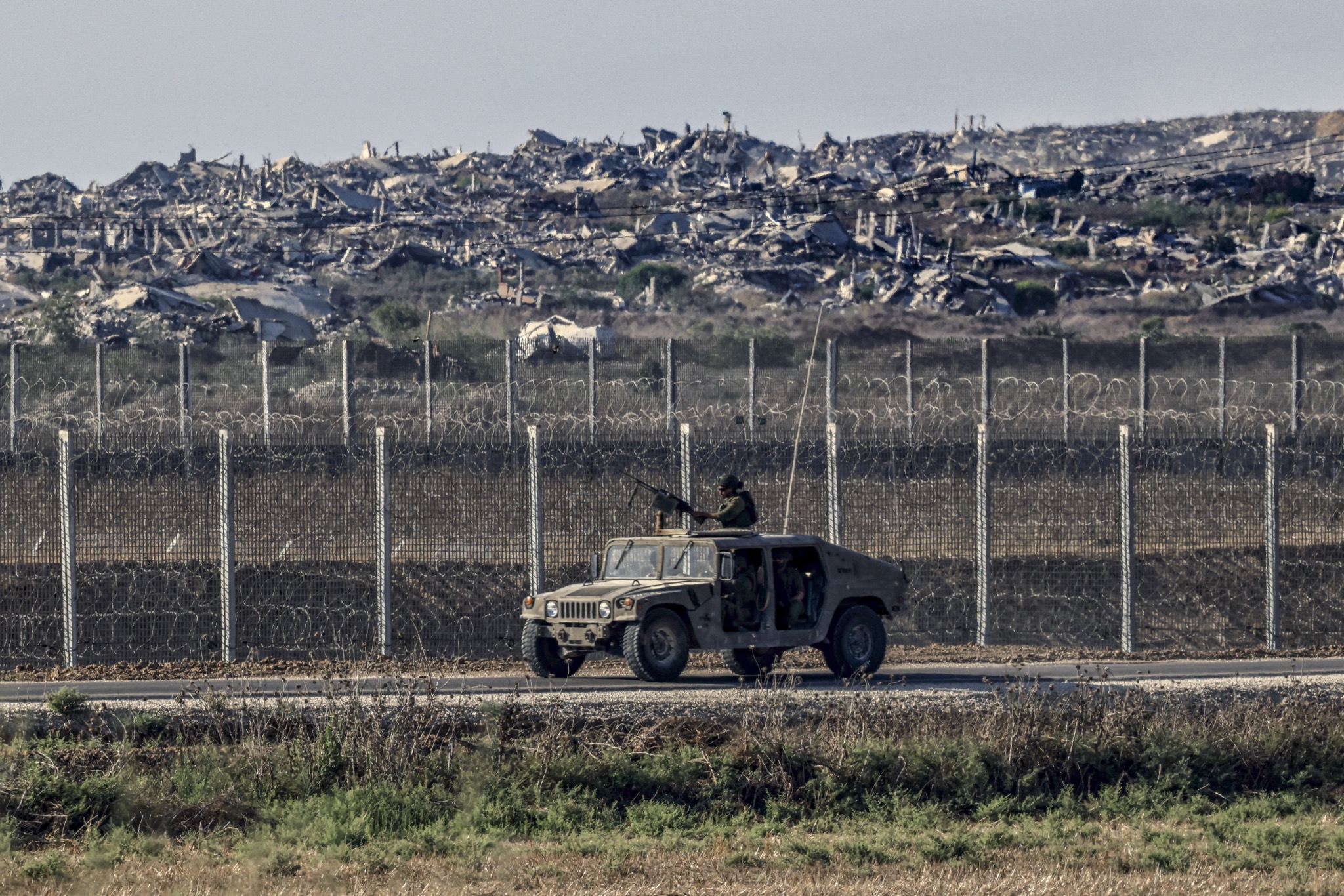
It is entirely possible, of course, that all “Change Bloc” leaders genuinely see things this way. But if all Gazans are Nazis, if Israel bears no responsibility for whatever happens in the West Bank and Gaza, and if Israel is condemned to eternal war, then Netanyahu and his supporters’ argument about his achievements in the war seems fairly reasonable: All of Israel’s enemies have been weakened, and the army is prepared for more years, even decades, of unavoidable bloodshed.
And if the center left has nothing to offer beyond the policies of the right, implemented with slightly greater competence and responsibility, then it is only natural that voters remain locked into what Israeli media likes to call “tribal” voting patterns, along identity and class lines. When everyone agrees on the path forward, it is only natural for voters to favor the candidate who is most clearly committed to their own camp.
Out of the abyss
The ideological and interpretive vacuum surrounding the Palestinian issue stands in stark contrast to the Israeli political center’s extensive engagement with the concept of democracy and the role of the country’s democratic institutions, foremost among them the Supreme Court. Indeed, in this particular battle, the opposition bloc had a vision and a plan of action, an active and well-organized civil society, a coherent narrative, and an agenda it could implement if it managed to form a government.
But what do Eisenkot, Bennett, or Avigdor Liberman intend to do about the Palestinian question — the existential challenge that has accompanied the State of Israel since its founding? How will they make use of the limited political capital and goodwill they receive from the international community if and when a new “change government” is formed, while millions of people in Gaza are living in tents? And what is the role of a left-of-center party like the Democrats, if not to articulate a clear ideological alternative that the center still dares not formulate?
For years, the Zionist left took pride in being the only political camp with a vision for resolving the conflict, and thus the only one that held the key to securing Israel’s future. After October 7, one might have expected at least one of its leaders to clearly state that the right wing was responsible for the catastrophe — not because of a tactical failure, but because its political and ideological worldview had driven Israel into the very catastrophe the left had warned about for years.
Instead, a tragic role reversal has taken place. The center left has relinquished its claim to the future, not even daring to whisper the words “Palestinian state,” while the right has become the camp offering its own horrifying solution: First, the destruction of Palestinian cities; then, expulsion. Now, they are fantasizing about importing the Gaza model to the West Bank, as well as to the Negev and the Galilee.
Most read on +972


This ideological void, the product of a decade and a half of acquiescence to right-wing policies, could not be rectified within the few months of an election campaign. All the more so when indifference to the Palestinian issue repeatedly leads liberal centrist leaders — Lapid, Gantz, and now Eisenkot — to populate their parties with figures from the ideological right.
But burying your head in the sand comes at a cost. Those who accepted the right’s taboo against forming a coalition with Arab parties, and sold the public the illusion that victory was possible without such a partnership, now find themselves in a parliamentary deadlock.
Similarly, those who ignore the Palestinian issue and cede the political arena to the right will perpetuate Israel’s decline and isolation, doing little more than delaying the return to power of Kahanism — a political force whose strength derives from the continuation of the conflict.
Israel desperately needs a genuine alternative to the path charted by the right. It needs a new narrative and a new language of peace and partnership. And it needs a just, humane, and practical resolution to the conflict — one that is not judged by the next poll or by the reactions it elicits in television studios, but by its capacity to build a genuine political camp capable of leading the country out of the abyss.
A version of this article was first published in Hebrew on Telem. Read it here.